
 Lina Irawan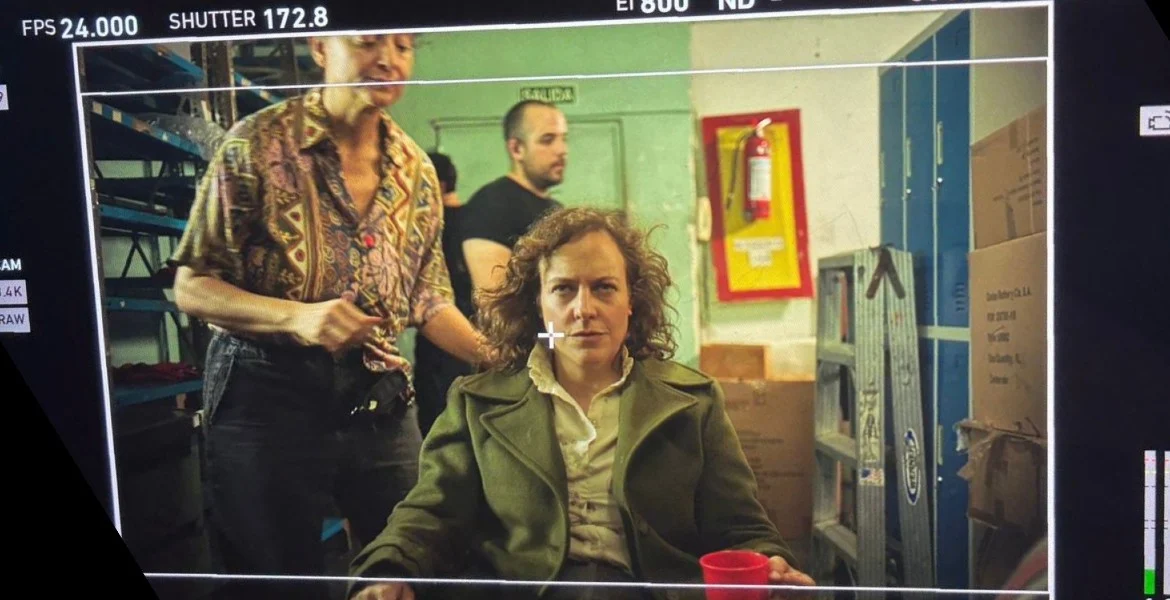
Principal photography for the highly anticipated feature film ¿Quién engañó a Carmen Vidal? (Who Framed Carmen Vidal?) officially commenced on Monday, March 16, in Montevideo, Uruguay. The production marks the return of director and actress Eva Dans to her signature role as the titular detective, following the critical success of the 2020 debut, Carmen Vidal, mujer detective. This latest installment, a stylized noir comedy, represents a significant step forward in production scale and regional cooperation, being produced by Uruguay’s Anfibia Cine in co-production with the Argentine firm Películas V.
The film continues the narrative arc of Carmen Vidal, a character who has quickly become a standout figure in contemporary Southern Cone cinema. In this new chapter, the story takes a dramatic turn as Vidal suffers from amnesia and finds herself in Buenos Aires. The plot plunges her into a complex web of intrigue involving hackers, high-level politicians, shadowy businessmen, street vendors, and rival private investigators. By blending the dark, moody aesthetics of traditional film noir with the sharp, often absurdist humor of Uruguayan comedy, the project aims to further solidify the "Carmen Vidal" brand as a unique intellectual property in the Latin American film market.
A Significant Leap in Production Scale
One of the most notable aspects of ¿Quién engañó a Carmen Vidal? is the professional and financial evolution it represents compared to its predecessor. The 2020 film, Carmen Vidal, mujer detective, was a quintessential "indie" effort, produced by Anfibia Cine and Evacorp with limited resources. Executive Producer Alina Kaplan, who has steered both projects, noted that the first film was a labor of love, financed almost entirely through private means and characterized by a "guerrilla-style" approach to filmmaking.
"The first film was made ‘a pulmón’ (by the skin of our teeth), with private financing; it was truly small in every sense," Kaplan explained in a statement to LatAm cinema. "We were a team of 15 technicians resolving everything together. In contrast, ¿Quién engañó a Carmen Vidal? has received various Uruguayan public funds, which provides us with a different level of structural support, allowing each professional to focus strictly on their specific role. For this shoot, we have a crew of 35 technicians."
This more than doubling of the crew size is indicative of the growing confidence in Eva Dans’ vision and the viability of the genre within the region. The transition from a 15-person multi-tasking crew to a 35-person specialized team reflects a broader trend in the Uruguayan film industry, where domestic productions are increasingly moving from micro-budget origins to more robust, institutionally backed frameworks.
Institutional Backing and Financial Framework
The production’s expanded scale is underpinned by a sophisticated mosaic of public funding and tax incentives. The project successfully secured four major Uruguayan grants, which are essential for the sustainability of high-quality cinema in smaller markets. These include:
- ACAU/PUA Development Fund: Support provided by the Agencia del Cine y el Audiovisual del Uruguay for the early stages of scriptwriting and project planning.
- FONA (Promotion of National Audiovisual): A prestigious fund established by the Municipality of Montevideo and television broadcasters to support local content.
- ACAU Production Fund: Direct state investment into the filming phase of the project.
- Montevideo Filma: A fund specifically designed to promote the city of Montevideo as a filming location and to support local audiovisual culture.
Furthermore, the production utilizes the PUA (Programa de Apoyo al Sector Audiovisual) Cash Rebate for national productions. This financial tool is a cornerstone of Uruguay’s strategy to become a regional filming hub, offering a percentage-based refund on eligible local expenditures. By combining these resources, Anfibia Cine and Películas V have managed to elevate the production value of the sequel, ensuring that the visual and technical quality matches the ambitious narrative scope of the script.
Regional Synergy: The Uruguay-Argentina Connection
While the film’s narrative is largely set in Buenos Aires, the production strategy highlights the logistical ingenuity required in regional filmmaking. The five-week shooting schedule is divided into four weeks in Montevideo and one week in the Argentine capital.
"Another difference is that while the first film takes place in Montevideo, the second occurs almost entirely in Buenos Aires," Kaplan noted. "However, because we obtained Uruguayan financing and it is a majority Uruguayan production, almost everything is filmed in Uruguay. In Buenos Aires, we will perform exterior shots and capture specific locations."
This approach—using Montevideo to double for certain Buenos Aires locales—is a common practice in the industry, driven by the favorable filming conditions and cost-efficiencies found in Uruguay. The co-production with Películas V, led by executive producer Vanesa Pagani in Argentina, ensures that the film maintains its authentic "Rio de la Plata" identity while benefiting from the logistical strengths of both nations. This cross-border collaboration is seen as a vital model for Southern Cone cinema, allowing filmmakers to access a wider pool of talent and funding.
Artistic Direction and the Ensemble Cast
Eva Dans once again takes on the triple role of writer, director, and lead actress. Her portrayal of Carmen Vidal has been praised for subverting the tropes of the "hard-boiled" detective, replacing the traditional male cynicism with a uniquely feminine, deadpan humor. Joining her is a cast of distinguished actors from both sides of the river, creating a bridge between the Uruguayan and Argentine acting communities.
The Uruguayan contingent includes Roberto Suárez, a veteran of the stage and screen known for his eccentric and profound performances; Verónica Perrota, an award-winning actress and director; and Luciano Demarco. Representing the Argentine side are Iair Said, a rising star in Argentine comedy and drama, and Luis Machín, one of the most respected actors in Latin America, known for his versatility in both film and television.
The technical team also features a mix of returning collaborators and new talent. Lucía Malandro returns as Art Director, tasked with evolving the visual language she established in the first film. The cinematography is handled by Argentine Director of Photography Soledad Rodríguez, whose expertise is expected to enhance the "noir" elements of the film—playing with shadows, urban textures, and the distinct light of the Rio de la Plata. Claudia Gallo serves as the Production Manager, overseeing the complex logistics of the two-city shoot.
Genre Analysis: The Resurgence of Latin Noir
The "Carmen Vidal" series arrives at a time when Latin American cinema is increasingly experimenting with genre-bending. Historically, the region’s cinema was often synonymous with social realism or political drama. However, in the last decade, there has been a surge in "Genre Cinema"—horror, sci-fi, and noir—that uses familiar tropes to explore local identities.
¿Quién engañó a Carmen Vidal? utilizes the "noir" framework—the detective, the conspiracy, the urban labyrinth—not just for style, but as a vehicle for satire. By placing a female detective with amnesia at the center of a plot involving contemporary issues like hacking and political corruption, Dans is able to comment on the complexities of modern life in the Southern Cone. The amnesia element, in particular, serves as a potent metaphor for the often-disjointed nature of urban existence and the search for identity in a rapidly changing social landscape.
Broader Implications for the Audiovisual Sector
The start of production on ¿Quién engañó a Carmen Vidal? is a positive indicator for the health of the Uruguayan film industry. The country has recently gained international attention for its highly skilled crews and robust incentive programs, which have attracted major streaming platforms like Netflix and Amazon to film high-budget series in the country.
However, the success of a local "franchise" like Carmen Vidal is equally important. It demonstrates that there is a market for home-grown stories and characters that can resonate across borders. By securing a co-production with Argentina and utilizing state-of-the-art financial incentives, the producers of ¿Quién engañó a Carmen Vidal? are providing a blueprint for how mid-sized Latin American productions can scale up without losing their creative soul.
As the crew moves through the streets of Montevideo over the coming weeks, the focus will be on capturing the specific, moody atmosphere that fans of the first film have come to expect, while introducing the higher stakes and broader world-building of the sequel. Following the completion of the five-week shoot, the film will move into post-production, with a domestic and international festival run expected to precede its theatrical release.
The film stands as a testament to the persistence of independent creators like Eva Dans and the importance of a supportive institutional ecosystem. In an era where global streaming content often homogenizes storytelling, the return of Carmen Vidal offers a refreshing, locally-rooted alternative that embraces the shadows and the laughter of the Rio de la Plata.

 Eva Lovia
 Julia Chirkova
 Julia Prastini
 Nila Kartika Wati
 Jia Lissa