
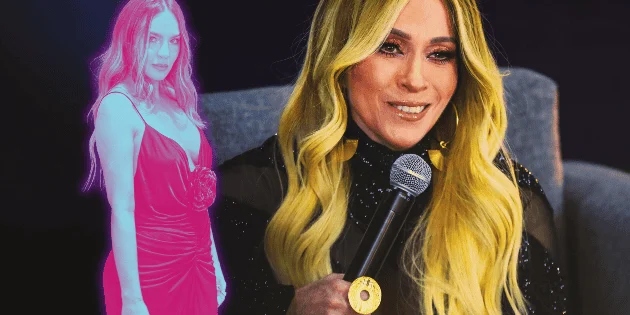
The recent participation of prominent pop figures Belinda and Danna Paola in the theatrical phenomenon "Mentiras: All Stars" has inadvertently shone a spotlight back onto Yuri, one of the most iconic and enduring voices of Mexican pop from the 1980s. During a recent live performance, Yuri addressed the resurgence of classic 80s hits through contemporary interpretations, delivering a statement that swiftly circulated across digital platforms and ignited widespread discussion: "Nunca van a cantar como yo" (They will never sing like me). This declaration has reopened a perennial debate within the music industry regarding generational talent, the interpretation of legacy material, and the evolving landscape of musical performance.
The Genesis of the Viral Statement: Yuri’s Unfiltered Perspective
The comment emerged from one of Yuri’s recent concerts, where the celebrated Veracruz-born singer took a moment to reflect on the current musical scene. Her observations were specifically directed at the wave of young artists who are now tackling the beloved anthems of the 1980s, particularly in the context of "Mentiras: All Stars." "Fíjense en lo que está pasando con la obra de ‘Mentiras’. Danna, Belinda y todas esas chavas jóvenes que ahora cantan las canciones ochenteras," she remarked to her audience, directly referencing Danna Paola and Belinda.
Yuri’s commentary extended beyond a mere observation of contemporary covers. She delved into the perceived treatment of artists from her generation. "Y a las ochenteras nos peluseaban," she asserted, employing a colloquialism that suggests artists of her era were often dismissed or undervalued by newer trends or audiences. However, her critical edge was tempered with an initial acknowledgment of the younger talents. She conceded that the new interpretations were "bien" (good) and "bonito" (beautiful). It was in the very next breath that she delivered the now-famous line, creating a stark contrast: "¿Lo hacen bien o mal? Claro que lo hacen bien, lo hacen bonito, pero nunca van a cantar como yo." This phrase, delivered with a mix of playful confidence and undeniable conviction, immediately captured the attention of concert-goers and subsequently, the broader public.
The ambiguity of Yuri’s tone became a central point of contention and discussion. While some social media users and media outlets interpreted the statement as a direct critique or a declaration of vocal superiority, others suggested that Yuri might have intended it with a degree of irony, humor, or as a self-assured quip typical of an established icon. Regardless of the precise intent, the impact was undeniable, setting off a chain reaction of opinions and analyses across fan communities and entertainment news platforms.
"Mentiras: All Stars": The Crucible of Generational Talent
The context for Yuri’s remarks is crucial, rooted deeply in the ongoing success and cultural resonance of "Mentiras," a musical that has become a cornerstone of Mexican theatrical production. Launched in 2009, "Mentiras" is a jukebox musical built entirely around the greatest hits of Mexican pop from the 1980s. Its clever narrative, engaging characters, and nostalgic soundtrack have made it a perennial favorite, drawing millions of spectators over more than a decade. The show’s enduring popularity lies in its ability to transport audiences back to a golden era of pop, celebrating artists like Yuri, Daniela Romo, Emmanuel, Lupita D’Alessio, and many others whose songs form the backbone of the production.
The recent iteration, "Mentiras: All Stars," represents an evolution of the beloved musical. It brings together a star-studded cast comprising figures from various generations of Mexican entertainment, aiming to inject new life and diverse interpretations into the classic repertoire. This particular staging serves as a vivid bridge between the past and the present, featuring established veterans alongside contemporary idols.
Belinda, a prominent figure in Latin pop since her childhood, has been a significant draw for "Mentiras: All Stars." Her involvement extends beyond the stage; she also portrayed the character Daniela in the "Mentiras" series adaptation, further cementing her connection to the musical’s universe. Her distinct vocal style and modern aesthetic offer a fresh perspective on songs originally performed decades ago. Danna Paola, another formidable talent with a successful career spanning acting and music, has recently joined the theatrical spectacle. Her incorporation into the cast has been met with excitement, as her powerful voice and charismatic stage presence bring a new dimension to the iconic 80s tracks. Notably, Danna Paola has taken on interpretations of songs closely associated with Yuri herself, making her a direct point of reference for Yuri’s comments. The show thus acts as a vibrant laboratory where the legacies of the 80s are reinterpreted through the lens of 21st-century artistry.
Yuri’s Enduring Legacy: A Titan of Mexican Pop
To fully grasp the weight of Yuri’s statement, one must understand her stature within the panorama of Latin American music. Born Yuridia Valenzuela Canseco, Yuri emerged in the late 1970s and truly soared to stardom in the 1980s, quickly establishing herself as "La Güera de Oro" (The Golden Blonde) of Mexican pop. Her career is characterized by an impressive vocal range, dynamic stage presence, and a string of chart-topping hits that defined an era. Songs like "Maldita Primavera," "El Apagón," "La Maldita Primavera," "Qué Te Pasa," and "Detrás de mi ventana" (which Belinda later covered) are not merely popular songs; they are cultural touchstones deeply embedded in the collective memory of Spanish-speaking audiences.
Yuri’s career, spanning over four decades, is a testament to her vocal prowess and adaptability. She has navigated changing musical trends, maintaining relevance and a loyal fanbase. Her live performances are legendary for their energy, elaborate productions, and, most importantly, her consistent vocal delivery. This long and distinguished career has afforded her a unique perspective on the evolution of pop music and the art of performance, making her comments on younger artists not just an opinion, but a statement from a recognized authority. Her assertion, "Nunca van a cantar como yo," therefore, can be seen as a declaration rooted in a profound understanding of her own vocal capabilities, honed over decades, and a protective pride in the distinct sound that defined her generation.
The New Guard: Belinda and Danna Paola’s Contributions
Belinda Peregrín Schüll and Danna Paola Rivera Munguía represent the vanguard of a new generation of Latin pop artists who command immense influence and appeal. Belinda, who began her career as a child star in telenovelas, seamlessly transitioned into music, crafting a successful career characterized by catchy pop anthems, fashion-forward aesthetics, and a significant social media presence. Her interpretations, whether of her own hits or covers, are often infused with a distinct blend of pop sensibility, electronic influences, and a unique vocal timbre.
Danna Paola, similarly, has built a formidable career since childhood, excelling in both acting and music. Her powerful voice, emotive delivery, and ability to connect with contemporary audiences have made her one of the most sought-after artists in the Spanish-speaking world. She is known for her versatility, effortlessly moving between pop, R&B, and even more experimental sounds. When these artists take on 80s classics, they are not simply mimicking the originals. They are bringing their own contemporary interpretations, vocal nuances, and performance styles, introducing these beloved songs to new audiences while offering fresh perspectives to existing fans. This act of reinterpretation is precisely what "Mentiras: All Stars" aims to achieve: a celebration of legacy through modern artistry.
Chronology of Commentary and Public Reaction
Yuri’s recent remarks are not an isolated incident but rather fit into a broader, albeit subtle, pattern of inter-generational commentary. On a previous occasion, specifically in 2023 or 2024 (the original text mistakenly stated 2025, which is in the future), Yuri had already commented on Belinda’s interpretation of "Detrás de mi ventana" for the "Mentiras" series. At that time, Yuri expressed a more straightforward appreciation, noting that Belinda "tiene una forma distinta de cantar" and explicitly praised her proposal: "Es su estilo que es diferente al mío, pero lo hace bien." This earlier statement highlights a nuanced perspective from Yuri, acknowledging differences in style while still validating the artistic merit of the younger performer.
The current viral comment, however, has elicited a far more polarized reaction. Social media platforms, the primary arbiters of instant public opinion, exploded with discussions. Hashtags related to Yuri, Belinda, and Danna Paola trended, reflecting the intense interest. Users divided into several camps:
- Team Yuri: Supporters lauded her confidence and defended her right to assert her legendary status, agreeing that her vocal abilities remain unparalleled. They emphasized her decades of experience and unique voice.
- Team Belinda/Danna Paola: Fans of the younger artists argued that comparing vocal styles across generations is unfair and that modern interpretations offer a valuable evolution of the music. They highlighted the unique contributions and talents of Belinda and Danna Paola.
- Neutral Observers: Many users debated the nature of the comment itself, discussing whether it was a genuine critique, a playful jab, or a strategic move to generate buzz for all parties involved. Memes and humorous takes also proliferated, adding to the lighter side of the discourse.
As of the current reporting, neither Belinda nor Danna Paola has issued a direct public statement in response to Yuri’s viral comment. This silence could be interpreted in various ways: a strategic decision to avoid escalating a potential media feud, a focus on their ongoing commitments to "Mentiras: All Stars," or simply a belief that their performances speak for themselves. The absence of a direct rebuttal, however, does not diminish the intensity of the public conversation, which continues to unfold across digital spheres.
Broader Implications: Legacy, Innovation, and the Music Industry
Yuri’s statement, while seemingly a simple declaration of vocal superiority, taps into several broader, enduring debates within the music industry and cultural discourse:
- The Nature of Artistic Legacy: How should classic songs and performances be preserved and honored? Is it through faithful replication, or does artistic evolution demand reinterpretation? The "Mentiras" phenomenon itself thrives on the latter, demonstrating that beloved material can resonate anew through fresh voices.
- Generational Divide in Art: The tension between established icons and emerging talents is a constant in creative fields. Veteran artists, having paved the way and set benchmarks, often view new interpretations through the lens of their own contributions. Younger artists, conversely, seek to establish their unique identity while acknowledging their predecessors.
- Vocal Prowess vs. Performance Artistry: The debate also subtly touches upon what constitutes "good" singing. Is it pure technical vocal ability, or does it encompass stage presence, emotional delivery, artistic vision, and connection with a modern audience? Yuri’s strength lies in her formidable vocal technique, while Belinda and Danna Paola often integrate broader performance elements into their artistry.
- The Power of a Viral Moment: In the age of social media, a single, provocative statement from a public figure can instantly become a global talking point, regardless of its original intent. This incident underscores how quickly remarks can be amplified, interpreted, and re-interpreted, shaping public perception and sparking widespread debate.
- Impact on "Mentiras: All Stars": Paradoxically, this controversy might serve to further elevate the profile of "Mentiras: All Stars." By drawing attention to the generational interpretations of 80s hits, it implicitly highlights the show’s core premise and the talents of its diverse cast, potentially attracting even more viewers curious to witness the performances that sparked such a lively debate.
Ultimately, Yuri’s "Nunca van a cantar como yo" is more than just a viral soundbite; it is a catalyst for a deeper conversation about the dynamic interplay between musical history and contemporary artistry. It reminds audiences of the enduring power of classic songs, the indelible mark left by legendary performers, and the exciting ways in which new generations continue to breathe life into the melodies that define an era. As "Mentiras: All Stars" continues its run, the debate sparked by Yuri’s declaration will undoubtedly remain a fascinating subplot, underscoring the vibrant and often passionate dialogue that surrounds the world of pop music.

0 Comments