
The digital streaming landscape is set for a notable shift as the 2013 science fiction feature Pacific Rim prepares to exit the Netflix library on March 27. Directed by Academy Award winner Guillermo del Toro, the film has maintained a significant cultural and technical footprint since its release, often cited by critics and industry analysts as a benchmark for visual effects and scale in modern blockbuster filmmaking. As the licensing agreement between the streaming giant and the film’s distributors reaches its conclusion, audiences are presented with a final window to revisit a production that redefined the "mecha" and "kaiju" genres for a global Western audience.
Produced by Legendary Pictures and distributed by Warner Bros. Pictures, Pacific Rim was conceived as a high-budget homage to Japanese monster cinema and piloted-robot animation. The narrative is set in a near-future Earth where humanity faces an existential threat from the Kaiju—colossal biological entities that emerge from an interdimensional portal at the bottom of the Pacific Ocean known as "The Breach." To combat these threats, the nations of the world set aside geopolitical differences to fund the Jaeger Program, creating massive humanoid war machines controlled by two pilots whose minds are synchronized via a neural bridge termed "The Drift."
The Narrative Core of the Jaeger Program
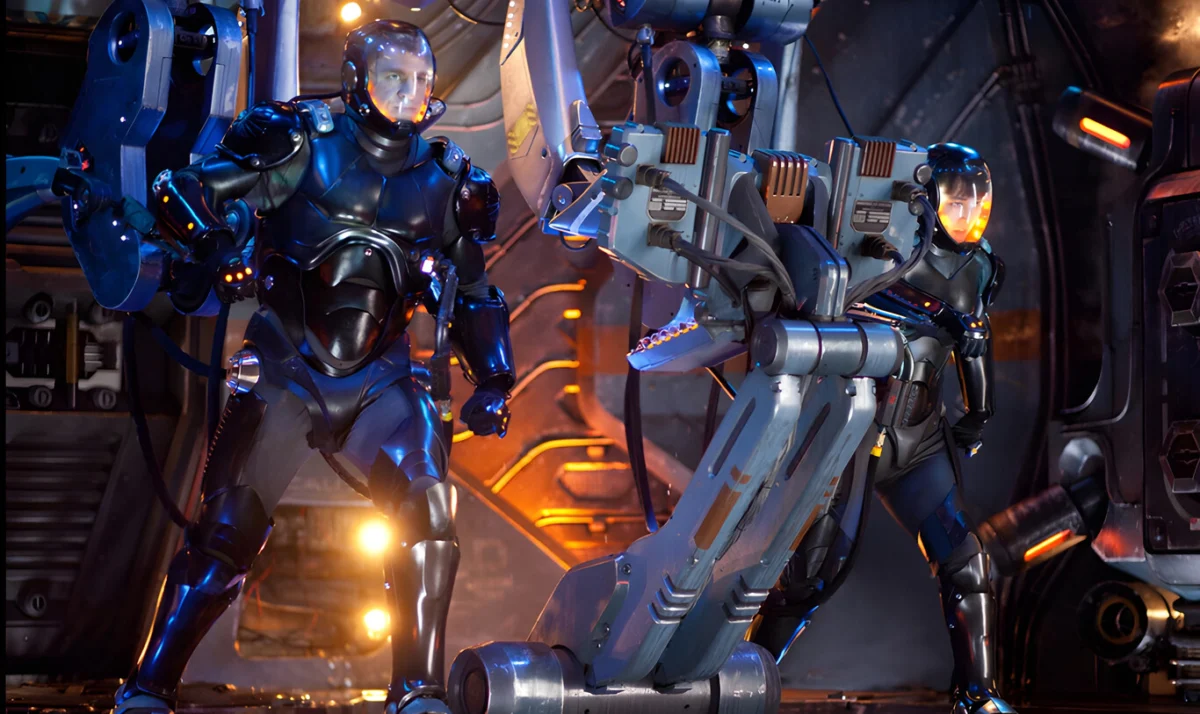
The story follows Raleigh Becket, a former pilot portrayed by Charlie Hunnam, who is called out of retirement by Marshal Stacker Pentecost (Idris Elba) to lead a desperate final offensive. The emotional weight of the film is anchored in the "Drift" mechanic, which requires pilots to share memories, instincts, and emotions to withstand the mental strain of operating the massive machinery. This narrative device allowed del Toro to explore themes of trauma, partnership, and collective human resilience, distinguishing the film from contemporary action features that often prioritized spectacle over character-driven stakes.

Supporting Becket is Mako Mori, played by Rinko Kikuchi, whose character arc involves overcoming childhood trauma associated with the Kaiju attacks. The chemistry between the leads and the ensemble cast—which includes Charlie Day, Burn Gorman, and frequent del Toro collaborator Ron Perlman—provided a humanizing element to a film dominated by 250-foot-tall robots and city-leveling monsters.
Technical Innovation and the Physics of Scale
One of the primary reasons Pacific Rim continues to receive praise a decade after its theatrical debut is its unique approach to visual effects. Under the guidance of Industrial Light & Magic (ILM), the production team focused on a concept del Toro referred to as "the operatic beauty of the apocalypse." Unlike many modern blockbusters that utilize rapid-fire editing and weightless CGI movements, Pacific Rim prioritized the physics of scale.
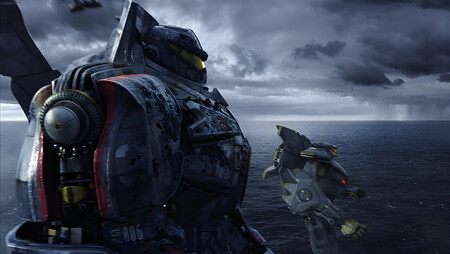
The director insisted that the Jaegers, such as the American-made Gipsy Danger or the Russian-designed Cherno Alpha, move with a sense of immense weight and hydraulic resistance. Every step taken by a Jaeger was designed to displace thousands of tons of air and water, creating a sensory experience that emphasized the sheer mass of the machines. This was achieved through sophisticated fluid simulations and atmospheric lighting, ensuring that the battles—largely set at night or during torrential rain—retained a sense of grounded reality.
Furthermore, the production utilized massive practical sets. The "Conn-pod," or the cockpit of the Jaegers, was a four-story-tall gimbal-mounted set that physically shook and tilted, forcing the actors to react to actual movement rather than relying solely on green-screen prompts. This commitment to practical foundations contributed to the film’s enduring visual fidelity, which many critics argue surpasses the digital clarity of more recent, higher-budget productions.

Critical Reception and Global Market Performance
Upon its release in July 2013, Pacific Rim was met with generally positive reviews from the international press. Variety described the film as a "triumph of pure imagination," noting that del Toro successfully balanced the awe of a child’s perspective with the narrative maturity required for a global epic. The Hollywood Reporter highlighted the film’s "soul and personality," crediting the director with injecting life into what could have been a generic "clash of metals."
Financially, the film represented a significant gamble for Legendary Pictures, with a production budget estimated at $190 million and an additional $100 million spent on marketing. While its domestic performance in the United States was considered modest, earning approximately $101.8 million, it found massive success in international markets. According to data from Box Office Mojo, the film grossed over $411 million worldwide. A significant portion of this success came from China, where it earned $114 million, becoming the highest-grossing Warner Bros. release in that market at the time. This international enthusiasm proved the global viability of the "Pacific Rim" intellectual property, leading to further expansions of the franchise.
A Chronology of the Pacific Rim Franchise
The success of the 2013 original laid the groundwork for a broader media franchise, though subsequent entries saw varying degrees of critical and commercial success.
- Pacific Rim (2013): The foundational film directed by Guillermo del Toro. It established the lore of the Precursors (the alien architects of the Kaiju) and the technology of the Drift.
- Pacific Rim: Uprising (2018): A sequel directed by Steven S. DeKnight, with del Toro serving as a producer. Starring John Boyega, the film took place ten years after the first and introduced a new generation of pilots. While it earned $290 million globally, it was criticized for losing the "weight" and atmospheric grit of the original.
- Pacific Rim: The Black (2021–2022): An anime-style series released on Netflix, produced by Legendary Television and Polygon Pictures. The series explored a post-apocalyptic Australia overrun by Kaiju, focusing on two siblings searching for their parents in a derelict Jaeger.
- Expanded Universe: The franchise has also seen numerous comic book tie-ins, such as Pacific Rim: Tales From Year Zero, which served as a prequel to the 2013 film, detailing the very first Kaiju attack in San Francisco.
Industry Implications and the Future of the IP
The departure of Pacific Rim from Netflix highlights the ongoing volatility of streaming catalogs and the complexities of licensing agreements. As major studios like Warner Bros. Discovery and Legendary Entertainment navigate their own streaming platforms and third-party partnerships, high-profile titles frequently move between services. While the film will no longer be available on Netflix after March 27, it remains a staple of the Legendary "MonsterVerse" era of filmmaking, which eventually paved the way for the successful Godzilla vs. Kong series.
Analysts suggest that the enduring popularity of Pacific Rim is a testament to the "auteur-driven blockbuster." In an era where many franchise films are criticized for a "formulaic" aesthetic, del Toro’s specific artistic fingerprints—his love for clockwork mechanisms, bioluminescence, and Gothic horror—gave Pacific Rim a distinct identity. The film’s focus on international cooperation, where diverse nations (China, Russia, Australia, and the US) are portrayed as essential components of global survival, also remains a poignant thematic element.
Broader Impact on Science Fiction Cinema
Beyond its financial figures, Pacific Rim influenced a decade of creature features. It demonstrated that Western audiences were receptive to high-concept "mecha" stories, provided they were executed with a high degree of technical craft. The film also served as a pivotal moment for Guillermo del Toro’s career, proving his ability to manage massive budgets and complex visual effects pipelines before he went on to win the Academy Award for Best Director and Best Picture for The Shape of Water (2017).
For viewers, the removal of the film from Netflix marks the end of an era for its accessibility on the platform. It serves as a reminder of the film’s core message: that in the face of insurmountable odds and "monsters at our door," the most effective weapon is not the machine itself, but the human connection required to pilot it.
As the March 27 deadline approaches, the film stands as a significant entry in the 21st-century sci-fi canon. Whether it eventually finds a new home on a different streaming service or drives audiences back to physical media, the legacy of the Jaegers and their battle against the Breach remains a definitive example of visionary filmmaking in the digital age. Audiences have only a few days remaining to witness the "colossal and destructive" spectacle that defined a genre before it exits the world’s most prominent streaming library.

0 Comments