

The Mexican telecommunications sector is currently navigating a period of profound structural transformation, as evidenced by the sharp contraction of the pay-television market. While industry analysts and stakeholders previously identified the rapid proliferation of streaming services as the primary catalyst for this decline, recent data suggests a more complex internal reality. By the close of 2025, the pay-TV industry in Mexico reached a critical inflection point, recording its most significant subscriber loss in years. Far from being a simple case of digital disruption, the exodus of users is increasingly attributed to a sustained surge in service costs and a perceived erosion of value in traditional programming bundles.
According to the latest industry report from The Strategic Intelligence Unit (The CIU), the pay-TV segment in Mexico concluded 2025 with approximately 15.1 million active subscriptions. This figure represents a precipitous 9.3% annual decline, the sharpest drop documented in the modern era of Mexican telecommunications. To understand the magnitude of this contraction, one must look back to 2020, when the market peaked at 19.8 million subscribers during the height of the global pandemic. In just five years, the industry has shed nearly five million users, signaling that the "cord-cutting" phenomenon has evolved from a niche trend into a mainstream economic movement.
The Economic Catalyst: Price as the Primary Driver of Disconnection
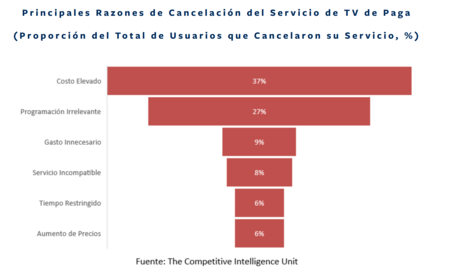
While the convenience of Video on Demand (VOD) is undeniably attractive, the data reveals that the primary reason for service termination is financial. Approximately 37% of users who canceled their pay-TV subscriptions cited high costs as the decisive factor. This economic pressure is the result of a multi-year trend of price hikes that have outpaced the purchasing power of many Mexican households.

In 2023, the entry-level price for a basic pay-TV package hovered around 239 MXN per month. Fast forward to 2026, and these same entry-level plans have surged to a range between 250 and 450 MXN. For consumers seeking comprehensive "Triple Play" bundles—which include high-speed internet, telephony, and premium television channels—the monthly commitment often falls between 600 and 950 MXN. Premium configurations, often including 4K capabilities and integrated streaming platforms, can easily exceed 1,200 MXN.
Radamés Camargo, Analysis Manager at The CIU, notes that while some of these increases are tied to inflationary adjustments and the rising costs of international content licensing, the cumulative effect has become unsustainable for a significant portion of the population. In a landscape where the cost of living continues to rise, pay-TV has transitioned from a household staple to a discretionary luxury that is often the first to be cut from the monthly budget.
A Chronology of Decline: From Growth to Contraction
The trajectory of the Mexican pay-TV market over the last decade provides essential context for the current crisis. Between 2010 and 2016, the industry experienced a "golden age" of expansion, driven by the entry of aggressive competitors and the popularization of low-cost satellite services like Sky and Dish. During this period, pay-TV was seen as an aspirational service that provided a window into global entertainment and sports.
However, the tide began to turn around 2018. As internet penetration increased and fiber-optic networks expanded, the value proposition of linear television began to weaken. The following timeline illustrates the accelerating erosion of the market:
- 2020: Pay-TV reaches its historical peak of 19.8 million subscribers as home-bound consumers seek diverse entertainment options during lockdowns.
- 2022: The market begins to stagnate. Rising inflation leads operators like Izzi and Totalplay to implement their first major post-pandemic price adjustments.
- 2023: For the first time, the annual growth rate turns negative. Streaming platforms begin to secure exclusive rights to major sporting events, such as the Premier League and local Liga MX matches, further devaluing the standard cable package.
- 2024: The decline accelerates to 6.3%. Operators begin pivoting toward "aggregator" models, bundling Netflix or Disney+ into their bills to stem the tide of cancellations.
- 2025: The industry hits a record low of 15.1 million subscribers, marking a 9.3% year-on-year drop.
Content Mismatch and the Loss of Programming Affinity
Beyond the financial barriers, the pay-TV industry is facing a crisis of relevance. The CIU’s data indicates that 27% of former subscribers canceled their service because they no longer felt an "affinity" with the programming provided. This highlights a fundamental disconnect between the rigid, linear scheduling of traditional TV and the personalized, on-demand expectations of modern audiences.
In Mexico, a unique irony has emerged: many consumers pay for expensive cable packages only to spend the majority of their time watching free-to-air (open) television channels. Two of Televisa’s flagship open-air channels remain the most consumed content across the entire pay-TV grid. When users realize they can access their favorite news programs and soap operas via a simple digital antenna or through free streaming apps, the justification for a 400 MXN monthly cable bill vanishes.
Furthermore, the "sports wall" that once protected pay-TV has crumbled. Historically, live sports were the "anchor" that kept subscribers tethered to cable. However, with the migration of the NFL, Formula 1, and major soccer leagues to platforms like Paramount+, ViX, and Amazon Prime Video, the traditional provider has lost its most potent retention tool.
The Streaming Paradox: Growth Amidst Consolidation
It is impossible to discuss the decline of pay-TV without acknowledging the ascent of streaming. By the end of 2024, Subscription Video on Demand (SVOD) platforms in Mexico reached 14.3 million subscriptions, representing a 6.3% annual increase. The 2024 National Survey of Audiovisual Content Consumption (ENCCA) revealed that 55% of Mexicans now consume content primarily via the internet.
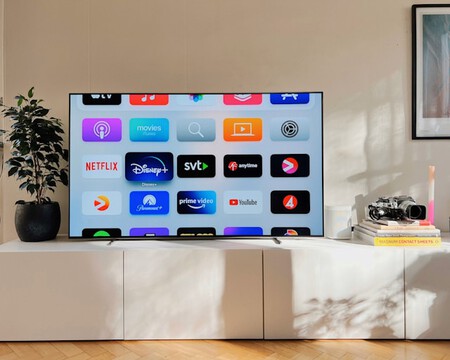
However, the streaming market is not immune to the same pressures affecting cable. The CIU reports that 14% of streaming users have canceled at least one subscription in the last six months. This suggests that the Mexican consumer is becoming increasingly "platform-agnostic" and highly price-sensitive. The difference lies in flexibility; while pay-TV often involves fixed-term contracts and complex installation hardware, streaming allows for "churning"—the practice of subscribing for a month to watch a specific series and then immediately canceling.
Industry Response: The Shift to Aggregator Models
In response to these existential threats, Mexican telecommunications giants like Izzi, Megacable, and Totalplay have been forced to reinvent their business models. Recognizing that they can no longer compete on content alone, they are positioning themselves as "connectivity hubs."
The strategy has shifted from selling "television" to selling "access." These companies are now acting as billing intermediaries for the very streaming services that were once their rivals. By offering "all-in-one" invoices that include internet, a mobile line, and three different streaming apps, they hope to remain an essential part of the household utility stack.
Totalplay, for instance, has leaned heavily into high-speed fiber optics (offering up to 10,000 Mbps in some areas) to ensure that even if a customer stops watching cable, they remain a high-value internet subscriber. Similarly, Izzi has secured exclusive streaming partnerships, such as offering ViX Premium to its subscribers, to maintain a competitive edge in the sports market.

Broader Implications and the Future of the Sector
The implications of this shift extend beyond the balance sheets of media companies. The decline of pay-TV represents a fundamental change in how information and culture are disseminated in Mexico. As audiences fragment into digital silos, the "shared cultural moment" provided by linear television is dissipating.
From a regulatory perspective, the Federal Telecommunications Institute (IFT) continues to monitor these trends to ensure that the transition to digital-first consumption does not leave behind lower-income populations who may lack the credit cards or high-speed infrastructure required for streaming.
The long-term outlook for pay-TV in Mexico is sobering. With only 9.6% of former users expressing any interest in returning to the service, the industry is unlikely to see a resurgence in subscriber numbers. Instead, the sector must prepare for a future where pay-TV is a niche product for high-income households or sports enthusiasts, while the rest of the country moves toward a hybrid model of free-to-air television and targeted digital subscriptions.
Ultimately, the lesson of 2025 is that technology alone does not kill an industry; a failure to adapt to the economic realities and changing values of the consumer does. The pay-TV providers that survive the next decade will be those that prioritize flexible pricing and seamless integration with the digital ecosystem, rather than those clinging to the legacy models of the past. For the Mexican viewer, the "crown" has officially passed to the internet, and the screen has never been more crowded or more expensive.

0 Comments