
 Raisa Andriana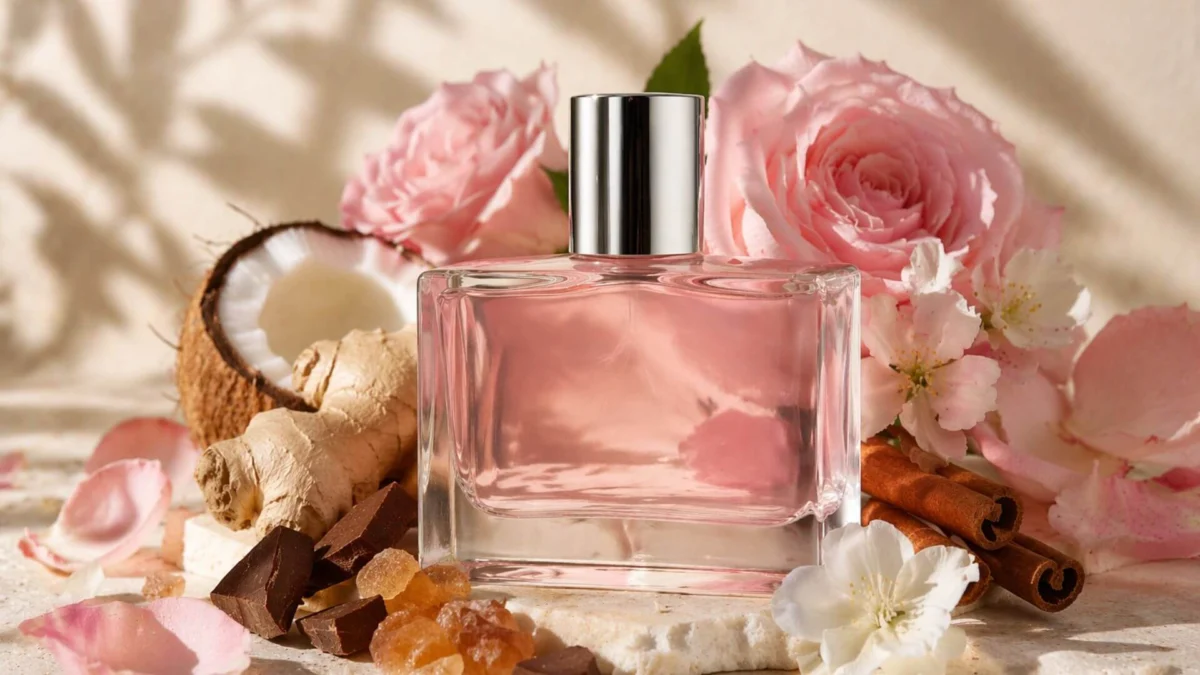
The landscape of contemporary perfumery is currently undergoing a significant transformation as traditional olfactory codes are being reimagined for a new generation of consumers. Among the most prominent trends in this shift is the resurgence of "powdery" scents—fragrances that evoke the texture of fine talc, iris, and musk. Historically associated with mid-century vanity tables and the classic formulas favored by previous generations, these accords are being stripped of their "vintage" stigma and integrated into avant-garde compositions. This creative evolution has led to a fascinating intersection where the clean, dry sensation of powder meets the indulgent, edible allure of the gourmand family. One of the most notable examples of this fusion is the recent introduction of Rose Chocolat by Le Monde Gourmand to the Spanish market, a fragrance that challenges the traditional boundaries of both scent categories.
The Convergence of Traditional and Modern Olfactory Families
The perfume industry has long categorized scents into distinct families: floral, oriental, woody, and fresh. However, the late 20th century saw the birth of the "gourmand" category, characterized by synthetic notes that mimic the smell of food, such as vanilla, chocolate, and honey. For decades, these scents were often criticized by purists for being overly simplistic or saccharine. Conversely, powdery scents were frequently pigeonholed as "old-fashioned," linked to the heavy use of iris and violet in the early 1900s.
In the current market, these two seemingly disparate worlds are merging. Fragrance houses are moving away from the "repostero" or bakery-style cliché of gourmands—which can be cloyingly sweet—and are instead using gourmand notes to provide depth to lighter, airy compositions. The result is a sophisticated "skin scent" that offers the comfort of childhood nostalgia through powdery notes, balanced by the adult sophistication of dark cocoa or spicy infusions. This duality represents a strategic shift by brands to capture a demographic that seeks both the cleanliness of a "just-showered" aroma and the sensual complexity of a signature evening perfume.

Technical Composition and Olfactory Development of Rose Chocolat
Le Monde Gourmand’s Rose Chocolat serves as a primary case study for this hybrid trend. The fragrance is structured to provide a multi-sensory experience that evolves significantly from the initial spray to the dry-down. Its complexity lies in its ability to balance "edible" ingredients with dry, woody, and musky fixatives, ensuring the scent remains wearable for daily use rather than being relegated to a novelty item.
The Opening: Lactonic and Aqueous Elements
The top notes of the fragrance feature coconut water and masala chai. In olfactory chemistry, coconut water provides a lactonic (milky) quality that is aqueous rather than creamy, preventing the scent from feeling too heavy in its initial moments. This is paired with masala chai, an accord that introduces a spicy, aromatic profile. The inclusion of tea notes is a growing trend in niche perfumery, as they offer a refreshing yet complex opening that grounds the sweeter elements to follow.
The Heart: The Balance of Sweet and Spice
As the fragrance transitions into its heart, the "gourmand" elements become more pronounced but remain restrained. The cacao flower provides a floral interpretation of chocolate, which is inherently more velvety and less sugary than a standard chocolate accord. This is further nuanced by ginger, which adds a dry, sharp piquancy. The heart is rounded out by caramel and cinnamon, providing a "toasted" warmth. Analysts note that the use of spices like cinnamon and ginger serves to "cut" through the sweetness of the caramel, creating a balanced middle phase that avoids the cloying nature of traditional dessert-based perfumes.
The Base: The Powdery Foundation
The longevity and final character of Rose Chocolat are defined by its base notes: pink musk and sandalwood. Pink musk is responsible for the "talco" or powdery effect mentioned by industry experts. It creates a sensation of fine cotton or soft skin, providing a clean finish that lingers long after the top notes have evaporated. Sandalwood acts as the primary fixative, adding a creamy, woody structure that ensures the fragrance adheres to the skin.

A Chronology of the Powdery Scents Resurgence
To understand the significance of this trend, one must look at the timeline of powdery fragrances over the last century:
- 1920s–1950s: The Golden Age of Powder. Fragrances like Chanel No. 5 and Shalimar utilized aldehydes and iris to create a sophisticated, cosmetic-like powderiness that defined the era’s luxury.
- 1990s: The Rise of the Gourmand. The launch of Thierry Mugler’s Angel in 1992 shifted the global palate toward "edible" scents, largely pushing powdery florals into the background as "retro."
- 2010s: The Musk Revolution. Brands like Narciso Rodriguez began to reintroduce powdery musks, focusing on "clean skin" scents that resonated with a minimalist aesthetic.
- 2020s: The Hybrid Era. Current trends, driven by social media platforms like TikTok and Instagram, have popularized "layered" scents. Consumers are now looking for complex hybrids—scents that are simultaneously "clean" (powdery) and "delicious" (gourmand).
Market Positioning and Economic Impact in Spain
The introduction of Rose Chocolat to the Spanish market via Sephora at a price point of 32 euros highlights a significant shift in the "accessible luxury" segment of the beauty industry. Historically, complex olfactory profiles were the exclusive domain of high-end niche brands where bottles could cost upwards of 200 euros. However, brands like Le Monde Gourmand are democratizing these sophisticated blends.
Market data from 2023 and early 2024 suggests that the "mid-tier" fragrance market in Spain is growing at a faster rate than the ultra-luxury segment. Consumers, particularly those in the Gen Z and Millennial demographics, are increasingly prioritizing "olfactory variety" over owning a single expensive signature scent. This has created a demand for high-quality, 30-to-50-euro fragrances that allow for a "fragrance wardrobe" approach.
Comparative Analysis: Rose Chocolat vs. Narciso Rodriguez
While Rose Chocolat represents the gourmand-powder hybrid, it is often compared to established benchmarks in the powdery category, such as Fleur Musc for Her by Narciso Rodriguez. However, the two occupy different niches within the same family.

- Fleur Musc for Her: This fragrance focuses on the "clean" side of the spectrum. It utilizes a prominent rose note that mimics damp petals, supported by a heavy dose of musk. It is structural, elegant, and leans into the "floral-woody-musk" category. It is currently priced at approximately 55.95 euros in Spanish retailers like Druni.
- Rose Chocolat: This scent is more experimental. It uses the powdery base as a canvas for gourmand notes like caramel and cacao. While Fleur Musc smells like a luxury soap or fine cosmetic powder, Rose Chocolat smells like a sophisticated confectionary enjoyed in a botanical garden.
The distinction is vital for consumers. Those seeking a professional, "office-safe" scent often gravitate toward the Narciso Rodriguez model, while those looking for a "comfort" scent for social settings or spring evenings find the Le Monde Gourmand approach more appealing.
Psychological Implications of Olfactory Choices
Psychologists specializing in sensory perception suggest that the rise of powdery-gourmand hybrids is linked to a post-pandemic desire for "comfort and cocooning." Powdery scents are neurologically linked to early childhood memories of care and cleanliness, while gourmand scents trigger the brain’s reward centers associated with food and pleasure. By combining these two, perfumers are creating a "safety blanket" in olfactory form.
Furthermore, the "clean girl" aesthetic that has dominated fashion and beauty over the last two years has evolved. While it initially focused on purely fresh, citrusy scents, it has moved toward "soft" scents. The "softness" is provided by the talc-like powderiness, while the gourmand elements provide a "human" warmth that prevents the scent from feeling too clinical or sterile.
Future Outlook for the Fragrance Industry
As we look toward the latter half of the decade, the success of scents like Rose Chocolat suggests that the boundaries between scent families will continue to blur. Industry analysts predict a rise in "savory gourmands"—scents that use salt, bread, or even vegetable notes—balanced with traditional powdery fixatives.

Sustainability will also play a crucial role. The synthetic musks used to create powdery effects are being redesigned to be more biodegradable, and the demand for "upcycled" ingredients (such as cacao shells used to create cacao extracts) is increasing. Rose Chocolat, with its accessible price and modern profile, is a harbinger of a more inclusive and creative era in perfumery, where the "rules" of what a perfume should be are being rewritten by the consumers themselves.
In conclusion, the return of powdery scents is not a mere exercise in nostalgia. It is a sophisticated reinvention that, when paired with the modern gourmand trend, offers a versatile and emotionally resonant olfactory experience. Whether it is the 32-euro Rose Chocolat or the more traditional Narciso Rodriguez, these fragrances provide a sense of identity and comfort in an increasingly complex world.




 Julia Chirkova
 Julia Prastini
 Jia Lissa
 admin
admin
 Pevita Pearce