
 Raisa Andriana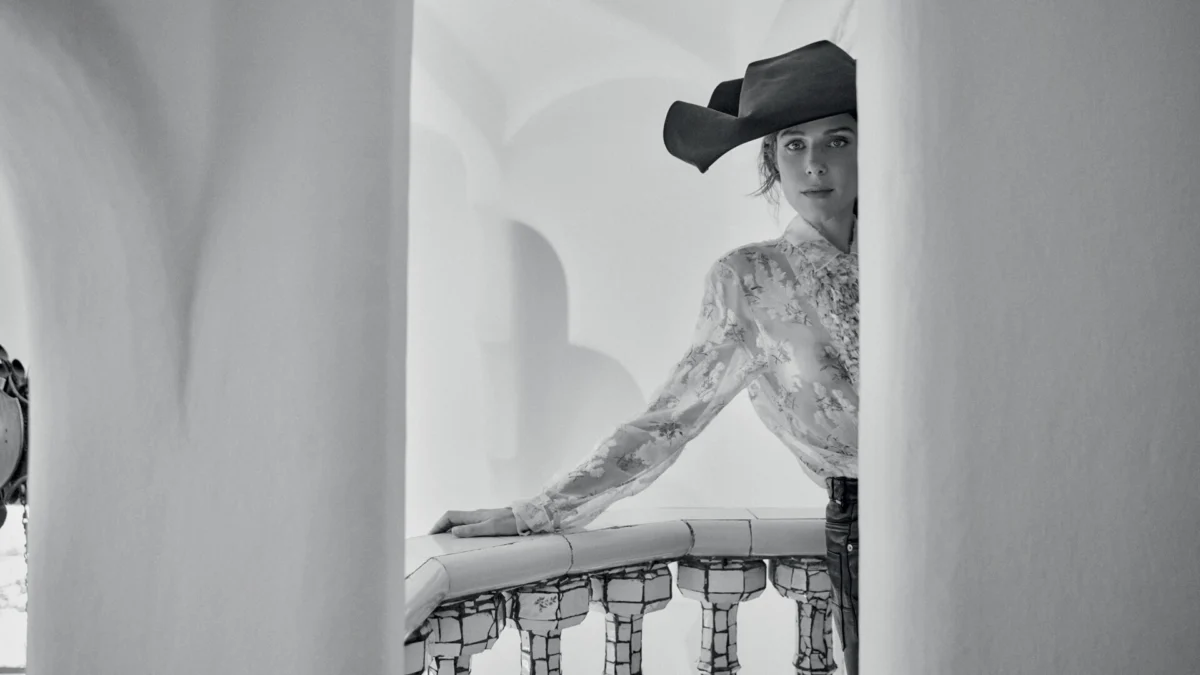
The city of Barcelona has entered a landmark year in 2026, serving as the global epicenter for design and heritage following its official designation as the UNESCO-UIA World Capital of Architecture. This prestigious title coincides with the centennial of the passing of Antoni Gaudí, the visionary architect whose modernist masterpieces define the city’s skyline. Against this backdrop of historical commemoration and creative renewal, acclaimed actress Iria del Río has partnered with Dior to showcase the fashion house’s Spring-Summer 2026 collection. The collaboration serves as more than a fashion editorial; it is a dialogue between the performing arts, high-fashion narrative, and the architectural soul of Catalonia. Del Río, a figure synonymous with the burgeoning "New Spanish Cinema," utilizes this moment of professional "temple"—a term she uses to describe her current state of serenity and command—to analyze the shifting dynamics of the industry, the rigors of the theatrical stage, and the profound impact of architectural environments on the creative process.

Barcelona 2026: A Confluence of Architecture and Performance
The designation of Barcelona as the World Capital of Architecture is not merely a ceremonial title but a reflection of the city’s ongoing commitment to urban innovation and the preservation of its unique aesthetic identity. In 2026, the city hosts the UIA World Congress of Architects, an event that has drawn thousands of international experts to discuss the future of sustainable living. For Iria del Río, born in Barcelona in 1987, the city’s transformation serves as a poignant setting for her latest professional milestones. The actress’s recent work has taken her to the city’s most iconic landmarks, including Torre Bellesguard, La Pedrera, and Palau Güell. These locations, characterized by Gaudí’s signature use of organic forms and symbolic masonry, provide a structural counterpoint to the fluidity of the Dior collection she wears—a wardrobe featuring silk jacquards, Donegal sequined tweeds, and intricate embroidery.
The year 2026 also marks exactly 100 years since the tragic death of Antoni Gaudí in June 1926. As the Sagrada Família nears its long-awaited completion, the city has seen a resurgence in the study of Gaudí’s "total art" philosophy. This philosophy, which suggests that every element of a structure—from the facade to the smallest decorative detail—must contribute to a unified narrative, mirrors del Río’s own approach to character building. In her view, the "costume" or "vestuario" is not an external addition but a fundamental piece of the psychological puzzle that allows an actor to inhabit a role.

The Artistic Journey of Iria del Río: From Malaga to the Teatre Lliure
Iria del Río’s career trajectory in 2026 exemplifies the dual nature of the modern Spanish actor: a balance between the high-stakes visibility of international film festivals and the disciplined, artisanal environment of the theater. Her recent appearance at the Malaga Film Festival for the presentation of Mala bestia garnered significant critical acclaim, positioning her as one of the most versatile performers of her generation. However, the film remains in a state of distribution "limbo," awaiting a formal theatrical release. This phenomenon is increasingly common in the Spanish film industry, where the "festival bounce" provides prestige but does not always guarantee immediate commercial slots in a crowded post-streaming market.
Simultaneously, del Río has returned to her roots at the Teatre Lliure in Barcelona. The Teatre Lliure, founded in 1976, has long been a bastion of experimental and socially conscious theater. Del Río is currently performing in Dones valentes (Brave Women), a play based on the investigative journalism of Txell Feixas Torras. The production, adapted by Glòria Balañà i Altimira and Aina Tur, explores the complex realities of women in the Middle East and Asia. For del Río, the transition from the "against-the-clock" pace of film sets to the "artisanal" rhythm of the rehearsal room is essential for her growth. She describes the theater as an ecosystem that allows for deep collective investigation, a contrast to the rapid-fire adaptation required by cinema.

Analyzing the ‘Limbo’ of Contemporary Spanish Cinema
The delay between a film’s festival premiere and its public release is a subject of ongoing debate within the Spanish audiovisual sector. While festivals like Malaga, San Sebastián, and Sitges serve as vital launchpads, the transition to commercial theaters involves complex negotiations with distributors and exhibition chains. Del Río views this waiting period with a mixture of "illusion and vertigo." She notes that while the festival serves as the first point of contact with critics, the true life of a film begins when it meets the general public.
The Impact of Film Festivals on Independent Productions
Data from the Spanish Ministry of Culture and Sport indicates that while domestic film production has remained robust, the window for theatrical exhibition has narrowed. Independent films, even those with festival accolades, often face competition from major studio tentpoles and the rapid release cycles of digital platforms. Del Río’s experience with Mala bestia reflects a broader industry trend where the "pre-release" phase can last for months, if not years. This delay requires actors to manage their public image and professional momentum carefully, often balancing multiple projects in different stages of completion.

Dones Valentes: Exploring Feminist Narratives in the Middle East
The play Dones valentes represents a significant shift in del Río’s thematic focus. By portraying the lives of women in diverse regions of the Middle East, the production challenges Western perceptions of the Arab world. Del Río emphasizes that the research for the play—drawn from interviews conducted by Txell Feixas—revealed a feminism that is "very alive and in constant evolution." The actress notes that the experience has fundamentally changed her perspective, moving away from the idea that these regions are "too complex to understand" and instead embracing a "sea of nuances and experiences" that she can no longer ignore.
This role aligns with the broader evolution of female characters in Spanish media. Del Río observes that women are being written with more complexity, imperfection, and vitality than in previous decades. She attributes this shift to the increasing number of female authors and directors taking the helm of major projects. Specifically, she highlights her collaboration with director Bárbara Farré, whose non-literal, experimental approach to filmmaking represents a departure from traditional narrative structures.

The Intersection of Haute Couture and Character Development
The relationship between cinema and fashion is historically intertwined, with houses like Dior frequently drawing inspiration from the cinematic arts. In the Spring-Summer 2026 collection, designed by Maria Grazia Chiuri, there is a clear emphasis on the "imaginario femenino"—a recognizable and powerful feminine imaginary. For del Río, fashion is not merely about aesthetics; it is a narrative tool.
During her shoot at the Palau Güell and Torre Bellesguard, del Río wore pieces that echoed the architectural textures of the surroundings. A silk jacquard blouse from the "Dior Secret Garden" line and a "Dior Highwaymen" hat in black silk were chosen to reflect the gothic and modernist undertones of the locations. Del Río notes that while she may have an initial concept of a character, it is often the "propuesta" of the costume department that allows the character to fully "click." This synergy between the garment and the actor’s body is what she describes as a "key piece" in understanding the identity of the role.

Broader Impact and Implications for the Spanish Cultural Sector
The convergence of Barcelona’s architectural milestone, the Gaudí centennial, and the professional peak of actors like Iria del Río signals a period of cultural abundance for Spain. However, this abundance comes with the responsibility of maintaining the "temple" or serenity that del Río describes. The Spanish performing arts sector is currently navigating a period of transition, where traditional forms of theater and cinema are being integrated with new digital and globalized realities.
Economic and Cultural Implications of Barcelona’s Global Designation
The economic impact of Barcelona 2026 is projected to be significant, with an estimated 15% increase in cultural tourism related to the World Capital of Architecture events. This influx of global attention provides a unique platform for Spanish talent to showcase their work on an international stage. For Iria del Río, this means her work at the Teatre Lliure and her upcoming film projects are being viewed through a lens that values both local heritage and global relevance.

As the year progresses, the industry will continue to watch how projects like Mala bestia navigate the distribution landscape and how the themes explored in Dones valentes resonate with a broader audience. For now, del Río remains focused on the "horizon," balancing her personal life with a career that refuses to be confined to a single medium or style. Her journey reflects the resilience and sophistication of a modern artist working within a city that is, quite literally, being celebrated as a masterpiece of human design. In the words of del Río, while the "nerve" of the profession remains alive and demanding, she is the one who now commands the rhythm.



 Eva Lovia
 Julia Chirkova
 Julia Prastini
 Nila Kartika Wati
 Lina Irawan
 Jia Lissa