
 Raisa Andriana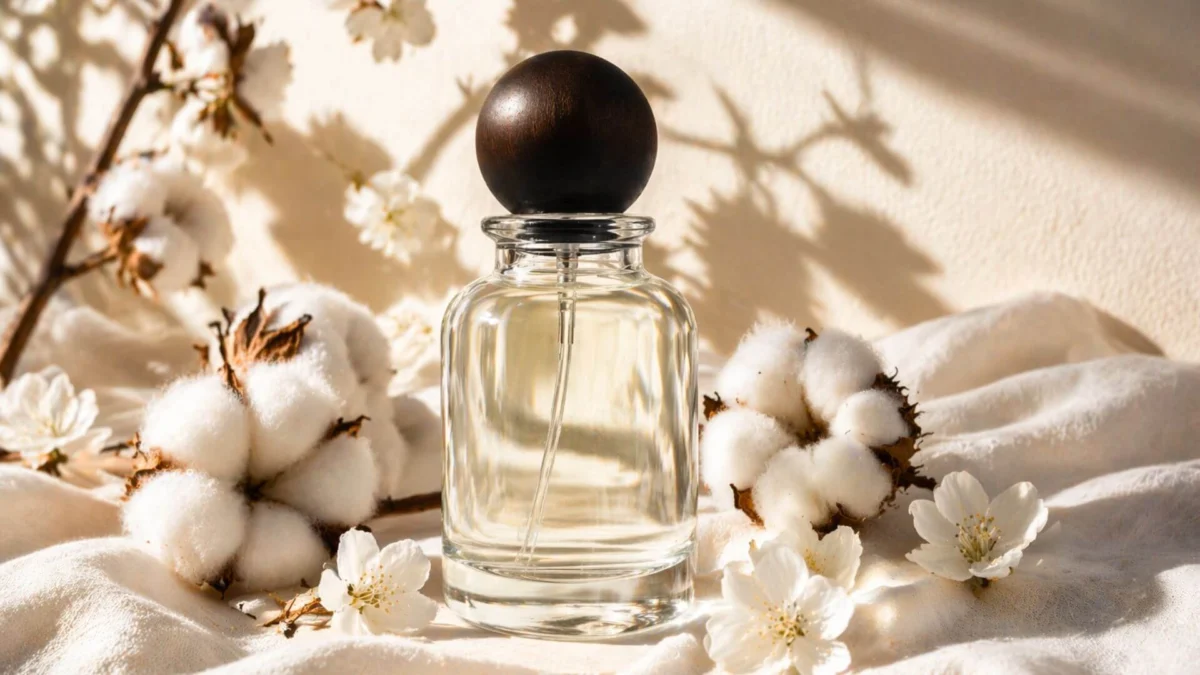
The olfactory world has long served as a silent communicator of identity, but in the current era of perfumery, the focus has shifted from overt displays of power to the subtle, intimate projection of cleanliness and personal well-being. Fragrance is no longer viewed merely as a cosmetic accessory; it has evolved into an extension of the self that projects both identity and emotional state. In this landscape, the "cotton flower" accord has emerged as a cornerstone of modern elegance, offering a sensory experience that evokes the comforting aroma of sun-dried linens and freshly laundered textiles. As consumers move away from heavy, polarizing scents in favor of "skin scents" and "quiet luxury," the cotton flower note has become a primary vehicle for achieving a sophisticated, approachable aura that transcends seasonal trends.
The Olfactory Composition of the Cotton Flower Accord
To understand the rise of cotton flower in high-end perfumery, one must first address the technical reality of the ingredient. Unlike rose or jasmine, the cotton flower (from the Gossypium plant) does not yield an essential oil through traditional steam distillation or solvent extraction. Instead, what perfumers refer to as "cotton flower" is a meticulously crafted accord—a synthetic recreation designed to mimic the tactile and olfactory sensation of raw cotton and clean fabric.
This recreation typically relies on a complex architecture of white musks, aldehydes, and light floral notes. White musks, such as Galaxolide or Habanolide, provide the "fluffy," expansive base that suggests softness and longevity. Aldehydes are utilized to provide a "soapy" or "sparkling" top note, reminiscent of the heat of an iron or the crispness of mountain air. By blending these with transparent florals like lily of the valley or hedione, perfumers create a scent profile that is perceived as "white," "pure," and "weightless." This technical achievement allows for a fragrance that feels like a "second skin," providing a sense of hygiene and calm that is highly valued in increasingly urbanized and high-stress environments.

Market Trends: The Rise of "Functional" and "Clean" Fragrance
The surge in popularity of cotton flower scents is corroborated by global market data. According to recent industry reports from firms such as Euromonitor and Mintel, the "clean" and "niche" fragrance sectors have seen an annual growth rate of approximately 12% over the last three years, outpacing the traditional designer fragrance market. This shift is driven by a consumer base that prioritizes "wellness-centric" scents—fragrances that are designed to lower cortisol levels and provide a sense of psychological safety.
Market analysts suggest that the "Clean Girl" aesthetic, which dominated social media platforms like TikTok and Instagram throughout 2023 and 2024, has fundamentally altered purchasing habits. Consumers are now seeking products that suggest a state of natural perfection rather than artifice. In this context, cotton flower perfumes serve as the ultimate olfactory embodiment of this aesthetic. They offer an aspirational quality: the scent of a woman who is perpetually put-together, regardless of the season or the time of day.
A Chronology of the Clean Scent Movement
The evolution of the "clean" scent profile can be traced through several pivotal moments in fragrance history:
- The Aldehydic Revolution (1921): The launch of Chanel No. 5 introduced high concentrations of aldehydes, which, while floral, gave the perfume a "starched" and "clean" quality that was revolutionary for its time.
- The Aquatic Wave (1990s): Fragrances like Issey Miyake’s L’Eau d’Issey and CK One moved the industry toward transparency and water-inspired freshness, reacting against the heavy, spicy orientals of the 1980s.
- The Rise of the "Laundry" Niche (2003): The founding of brands like Clean Beauty focused entirely on scents like "Warm Cotton" and "Fresh Laundry," proving there was a dedicated market for functional, domestic aromas in a luxury format.
- The "Skin Scents" Era (2020–Present): The current market is defined by molecular fragrances (like Glossier You or Molecule 01) and cotton-centric accords that prioritize intimacy and a "your skin but better" effect.
Analysis of Leading Cotton Flower Fragrances
As the industry matures, three specific fragrances have been identified by experts as benchmarks for how the cotton flower note can be interpreted through different price points and stylistic lenses.

Coconut Lush by Monkoku: The Contemporary Hybrid
Monkoku’s Coconut Lush represents a modern attempt to bridge the gap between gourmand (edible) scents and clean accords. The fragrance opens with ambrette seed, a natural plant-based musk that offers a warm, slightly nutty undertone, paired with a milk accord to provide a creamy texture. The heart of the fragrance features the cotton flower note, supported by jasmine and white tea.
This composition is significant because it utilizes the cotton flower to "degrease" the sweetness of the coconut and cacao base. The result is a fragrance that maintains a "freshly washed" sensation even as it dries down into deeper notes of sandalwood and tonka bean. At a price point of approximately 38.95 euros, it serves as an entry-level luxury option for consumers seeking the cotton flower experience without the high-end niche investment.
Sol Salgado by Thomas de Monaco: The Mineral Evolution
At the opposite end of the spectrum is Sol Salgado by Thomas de Monaco, priced at 275 euros. This Extrait de Parfum demonstrates the "premiumization" of the clean scent. Rather than focusing solely on the "laundry" aspect, Thomas de Monaco incorporates mineral and saline elements. The cotton note is paired with linden blossom and mimosa, creating a powdery, yellow-floral brightness.
The inclusion of salt and ambergris in the heart notes suggests a "sun-kissed skin" effect, moving the cotton flower out of the laundry room and into a coastal, naturalistic setting. This fragrance targets the connoisseur market, where the "clean" profile must be accompanied by complexity, high concentration, and exceptional raw materials.

Buongiorno Amore Mio by Acqua di Parma: The Heritage Interpretation
Acqua di Parma, a brand synonymous with Italian sophistication, offers Buongiorno Amore Mio (270 euros). This fragrance leans heavily into the tradition of Italian "Colonia" but updates it with modern aldehydic structures. The cotton flower here is the protagonist, flanked by bergamot and iris root (orris).
The use of orris is particularly noteworthy; it is one of the most expensive ingredients in perfumery and provides a "buttery," sophisticated powderiness that elevates the cotton note from a simple "clean smell" to a high-fashion statement. The dry down of ambroxan and ambrette musk ensures that the "clean" sensation persists for hours, fulfilling the consumer’s demand for longevity in a category (fresh scents) that is traditionally fleeting.
Psychological Implications and Expert Reactions
Olfactory psychologists note that the preference for cotton flower and clean musks is deeply rooted in the limbic system. "Scents that remind us of clean clothes or fresh air are often associated with safety, order, and maternal care," says Dr. Elena Ramirez, a specialist in sensory branding. "In a world characterized by geopolitical and environmental uncertainty, these ‘clean’ scents act as a psychological anchor, providing a controlled environment of purity."
Industry insiders suggest that the "cotton flower" trend is also a reaction to the oversaturation of the "Oud" and "heavy amber" trends that dominated the 2010s. Perfumers are now being tasked by major houses to create "breathing room" in their compositions. The goal is to create fragrances that do not "invade" the space of others but rather create a polite, elegant "scent bubble."

Broader Impact on the Fragrance Industry
The shift toward cotton flower and similar accords is forcing a move toward sustainable synthetic chemistry. Since these notes cannot be harvested naturally, the industry is investing heavily in "white biotechnology"—creating musk molecules that are biodegradable and derived from renewable sources. This aligns with the broader luxury market’s move toward sustainability, as "clean" scents are now expected to be "clean" in both aroma and environmental footprint.
Furthermore, the success of these fragrances has sparked a cross-pollination between home scenting and personal fragrance. Brands are increasingly launching "detergent-inspired" perfumes alongside "perfume-inspired" detergents, blurring the lines between personal grooming and household maintenance.
Conclusion: The Future of Olfactory Identity
The emergence of cotton flower as a premier note in the fragrance industry is more than a fleeting trend; it is a reflection of a societal shift toward minimalism, wellness, and refined intimacy. By stripping away the heavy resins and cloying sweets of the past, modern perfumery is rediscovering the power of the "blank slate." Whether through the affordable complexity of Monkoku or the high-artistry of Thomas de Monaco and Acqua di Parma, the cotton flower accord remains the definitive tool for those seeking to project an image of effortless, timeless elegance. As we move into the latter half of the decade, the demand for scents that provide "calm and peace" is expected to remain the primary driver of innovation in the global luxury fragrance market.




 Eva Lovia
 Julia Chirkova
 Julia Prastini
 Jia Lissa
 admin
admin