
 Lina Irawan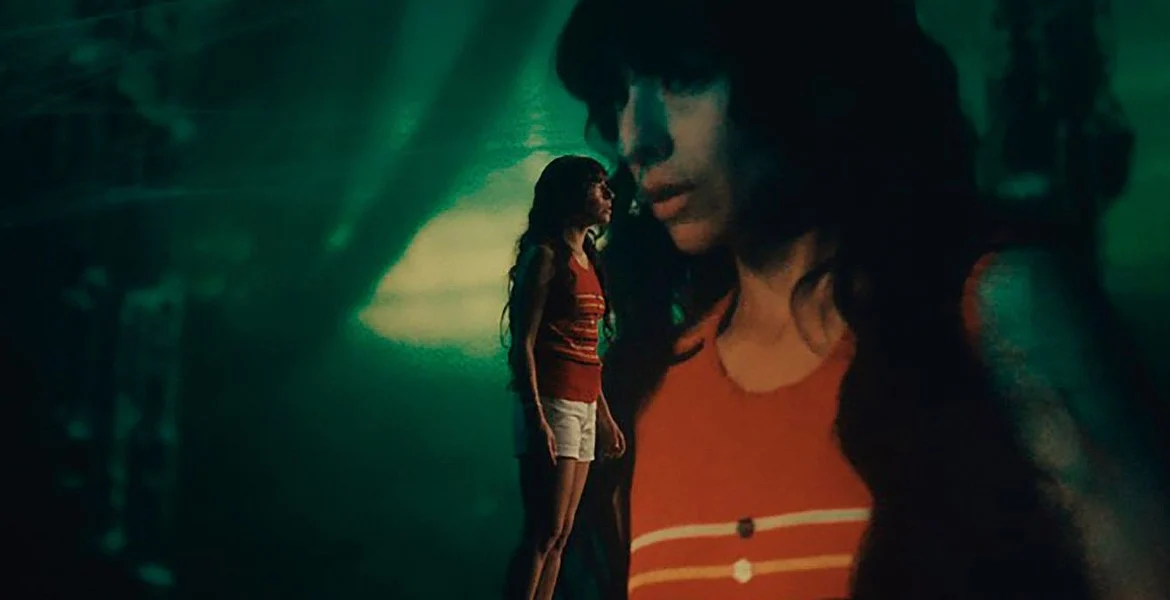
The 79th edition of the Locarno Film Festival, scheduled to take place from August 5 to August 16, marks a pivotal moment for Latin American cinematography, with the region securing a formidable representation across the festival’s most prestigious categories. This year’s selection includes six feature films and one short film in official competition, alongside three high-profile titles screening out of competition. A notable trend in this year’s programming is the dominance of debut directors, with four of the six competing feature films being "óperas primas" (first features), signaling a generational shift and a robust future for the region’s storytelling.
Founded in 1946, the Locarno Film Festival has long served as a critical gateway for independent and auteur cinema to reach global audiences. Held in the picturesque Swiss town on the shores of Lake Maggiore, the festival is renowned for its commitment to discovering new voices. The 79th edition continues this tradition by placing Latin American narratives at the forefront of its competitive slates, emphasizing themes of identity, historical memory, and the intersection of reality and surrealism.
The Pursuit of the Golden Leopard: Concorso Internazionale
The Concorso Internazionale, the festival’s main competitive section, features 17 films vying for the prestigious Pardo d’Oro (Golden Leopard). Among these, two major Latin American productions have been selected, alongside a third film with significant regional ties.
Brazil returns to the main competition with "A Margem do Rio," directed by the duo Matheus Farias and Enock Carvalho. This feature debut is produced by Gatopardo Filmes and Moçambique Audiovisual, in collaboration with Vitrine Filmes and the German outfit Tama Filmproduktion. Set in the city of Recife, the film follows Izaquiel, a cleaning worker who spends his nights navigating the city’s mangroves in search of clandestine encounters. His life undergoes a transformation upon meeting Jeremias, an enigmatic fisherman who leads him through a landscape where desire, fear, and violence are inextricably linked. The film is expected to offer a visceral exploration of urban margins and the hidden lives within them.
Chilean cinema is represented by the visionary duo Cristóbal León and Joaquín Cociña with their latest work, "Princesa Burro." Following the success of their previous film, "Los hiperbóreos," the directors continue to push the boundaries of narrative and visual style. "Princesa Burro" is a multi-national co-production involving León & Cociña Films and Globo Rojo (Chile), Metonymie (France), Viking Film (Netherlands), Montelona (Uruguay), and Autentika Films (Germany). The plot centers on Diana, a princess in an ancient kingdom where love is forbidden by the King. When her lover is exiled, Diana uses a magical bracelet to traverse parallel universes to find him, eventually discovering that the King has been manipulating her choices. The film deals with themes of destiny and resistance, with international sales managed by the Spanish firm Bendita Film Sales.
Rounding out the regional presence in the main competition is "Lejos de los árboles," directed by Spanish filmmaker Meritxell Colell Aparicio. While the director is Spanish, the film is deeply rooted in Latin American geography and culture. It follows a Mexican sound artist traveling from the Amazon rainforest to the Peruvian Andes to create a sonic map of endangered languages. The film is a co-production between Allegra Films (Spain), Animalita (Peru), and Exit Media (Italy), highlighting the importance of cross-continental collaboration in documenting indigenous heritage.
Emerging Voices: Concorso Cineasti del Presente
The Concorso Cineasti del Presente, a section specifically dedicated to first and second features by emerging talents, features four Latin American titles this year. This section is often regarded as a barometer for the future of world cinema, and the strong presence of Latin American directors here underscores the region’s creative vitality.
From Colombia, Manuel Ponce de León presents his feature debut, "Todos mis viajes son de regreso." Produced by Los Niños Films and Mito Films, the narrative is set against the backdrop of 19th-century Colombia. It follows Karl and Petronella, a young Swedish couple navigating a river in search of fortune amidst the desolate landscapes left by the War of Independence. As they journey deeper into the interior, their path becomes increasingly surreal and atmospheric, reflecting the psychological toll of the era’s instability.
Argentina contributes two distinct films to this category. "Los días libres," the debut feature by Lucila Mariani, is a co-production involving Maravilla Cine (Argentina), Persona Non Grata Pictures and Vulcana Cinema (Brazil), Woo Films (Mexico), and Valiente Films (France). Set in the near future, the story follows Bego, a 12-year-old girl struggling with her identity during a solar eclipse that seems to affect the behavior of both humans and animals. She discovers "shifting," a practice popular among youth who believe they can access alternate realities through lucid dreaming.
The second Argentine entry is "La ilusión de un verano sin fin," directed by Alessandra Sanguinetti. Produced by Everlasting Summer in collaboration with MUBI and Impact Partners (USA), this documentary was filmed over 25 years. It chronicles the lives of cousins Guillermina and Belinda in the Argentine pampa, capturing their transition from childhood play to the complexities of adulthood. The film serves as a profound meditation on memory, the passage of time, and the construction of female identity in rural settings.
Brazil’s Ana Vaz returns to Locarno with her second documentary, "Hanabi," following her acclaimed "É noite na América." Produced by Tambores and a norte (Brazil/France) with Les Volcans (France), the film investigates the radioactive legacy of the Fukushima nuclear disaster. Shot over a decade in Japan, Vaz uses her signature experimental style to explore the invisible scars left by environmental catastrophe.
Grand Scale Cinema: Piazza Grande and Special Screenings
The Piazza Grande, Locarno’s iconic open-air screening venue that accommodates up to 8,000 spectators, will feature "Il Cileno" by Chilean filmmaker Sergio Castro-San Martín. Known for works such as "La mujer de barro" and "El Negro," Castro-San Martín’s new film is an international collaboration between Dispàrte (Italy), Equeco (Chile), and Cinédokké (Switzerland). Set in 1976, the film follows Aldo, a Chilean militant exiled in Turin. A doctor with anarchist ties offers him a chance to reunite with his family, provided he returns to his former trade as an explosives expert for revolutionary groups. The film’s inclusion in Piazza Grande reflects its potential for broad audience appeal and its high production values, with sales handled by Fandango.
The festival also caters to younger audiences through the Locarno Kids Screenings. This year, the section includes "Los nuevos" by Uruguayan director Rodrigo Plá, a production by Buenaventura Cine (Mexico) and Mr Miyagi Films (Spain). Additionally, the Colombian-Spanish co-production "Mu-ki-ra," directed by Estefanía Piñeres Duque and produced by Letrario and Abano Producións, will be showcased, highlighting the region’s growing footprint in quality children’s programming.
In the Pardi di Domani – Concorso Internazionale, which focuses on short films, the Venezuelan-American co-production "No Tengo Boca, Aun Así Debo Gritar" has been selected. Co-directed by Diego Andrés Murillo and Eduardo Andrés Díaz, the short film represents the continuing resilience of Venezuelan filmmakers amidst challenging domestic conditions.
Historical Context and Economic Implications
The 79th edition of Locarno arrives at a time when Latin American film industries are navigating significant economic shifts. Historically, the region has relied heavily on state subsidies, which have faced fluctuations due to political changes in countries like Argentina and Brazil. However, the heavy presence of co-productions in this year’s lineup—involving partners from France, Germany, the Netherlands, Italy, and the United States—demonstrates a strategic pivot toward international financing models.
Locarno has a storied history of elevating Latin American cinema. In 2014, the Brazilian film "Ventos de Agosto" received a Special Mention, and in 2018, Chilean director Dominga Sotomayor became the first woman to win the Leopard for Best Direction for "Tarde para morir joven." This year’s selection follows in those footsteps, focusing on "óperas primas" to ensure that the region’s cinematic evolution remains constant.
Chronology of Latin American Success at Locarno
To understand the weight of this year’s selection, one must look at the timeline of the region’s engagement with the festival over the last decade:
- 2014: Increased visibility for Brazilian and Argentine "New Wave" cinema.
- 2015: The festival launched "Open Doors," a section focusing specifically on the Maghreb and then shifting focus to Latin American regions in subsequent years to foster industry connections.
- 2018: A landmark year for Chile with Dominga Sotomayor’s win, cementing the country’s status as a powerhouse of auteur cinema.
- 2021: Post-pandemic recovery saw a surge in co-productions, with films like "Juntos jamás" highlighting the importance of European partnerships.
- 2024: The 79th edition marks a record for debut features from the region, indicating a successful transition to a new generation of filmmakers.
Analysis of Global Industry Trends
The selection for the 79th edition reflects several broader trends in the global film industry. First, the blurring of lines between documentary and fiction is evident in works like "La ilusión de un verano sin fin" and "Hanabi." These films utilize long-term observational techniques to build narratives that are as compelling as scripted drama.
Second, the theme of "parallel realities" and "surrealism" in films like "Princesa Burro" and "Los días libres" suggests that Latin American filmmakers are moving beyond the "social realism" that defined the region’s output in previous decades. Instead, they are utilizing genre elements—fantasy, science fiction, and psychological thriller—to address contemporary anxieties regarding identity, politics, and the environment.
Finally, the role of international sales agents like Bendita Film Sales and Fandango, along with platforms like MUBI, indicates that Latin American films are being positioned for global distribution earlier in their lifecycle. This commercial integration is vital for the sustainability of independent cinema in the region.
As the festival commences on August 5, the global film community will be watching closely to see if the Pardo d’Oro returns to Latin American soil. Regardless of the awards outcome, the 79th Locarno Film Festival has already confirmed that the region remains a vital and indispensable pillar of contemporary world cinema.



 Eva Lovia
 Julia Chirkova
 Julia Prastini
 Nila Kartika Wati
 Jia Lissa