
 Nila Kartika Wati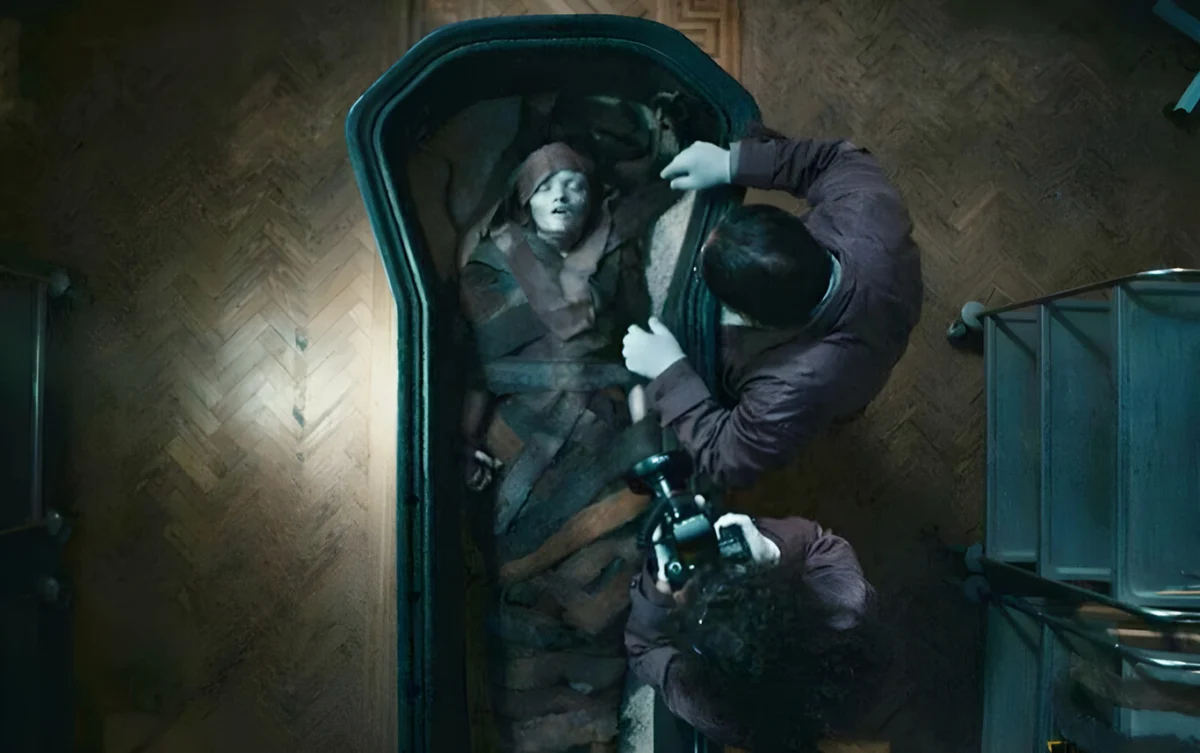
The film’s arrival comes at a time when horror cinema is navigating a complex period of critical skepticism and audience demand for original storytelling. While many entries in the genre often struggle to maintain high critical scores, La posesión de la momia has managed to bridge the gap between niche horror enthusiasts and mainstream audiences. The production’s success is largely attributed to its commitment to "experienced horror"—a philosophy that prioritizes the visceral, subjective reaction of the viewer over traditional narrative safety. By leveraging the expertise of Lee Cronin, known for his ability to depict the disintegration of the family unit through supernatural intervention, the film offers a harrowing look at trauma, possession, and the weight of ancient history.
The Narrative Foundation and Chronology of Terror
The story of La posesión de la momia centers on a young girl named Katie, whose life is irrevocably altered when she is abducted from her family by a mysterious, unknown figure. This abduction serves as the catalyst for a series of events that span several years, beginning with a dark, ancient ritual. The kidnapper, acting as a conduit for forgotten forces, utilizes the child’s body as a physical vessel for an entity known as Nasmaranian, a malevolent spirit originating from the shadows of Ancient Egypt. Unlike traditional cinematic mummies portrayed as lumbering, bandaged monsters, this entity represents a parasitic consciousness that requires a living host to manifest in the modern world.

The chronology of the film takes a dramatic turn when, following the ritual, Katie is mummified and entombed within a sarcophagus, hidden away from the world. The discovery of her remains occurs years later under catastrophic circumstances: a major aviation accident. During the recovery efforts following the plane crash, investigators stumble upon the ancient artifact. This leads to the eventual identification of Katie and her return to her biological family. However, the reunion is far from a domestic drama; the girl who returns is no longer the child they lost. The family soon realizes that the sarcophagus was not a coffin, but a prison, and by bringing Katie home, they have invited an ancient apocalypse into their household.
The narrative structure follows the family’s desperate attempts to understand the nature of Katie’s condition. As the possession takes hold, the film transitions from a mystery into a relentless display of body horror and psychological warfare. The entity, Nasmaranian, begins to exert its influence not just over Katie’s physical form, but over the sanity of everyone within her proximity. This leads to a climax that critics have described as one of the most intense sequences in contemporary horror, characterized by its uncompromising violence and emotional weight.
Production Pedigree and Creative Direction
The collaboration between Lee Cronin and James Wan is a defining feature of the film’s identity. James Wan, the architect of The Conjuring universe and the Saw franchise, brings a polished, atmospheric production value that ensures the film feels both expansive and claustrophobic. His influence is evident in the film’s pacing and its ability to build tension through sound design and environmental storytelling. Conversely, Lee Cronin’s directorial fingerprints are visible in the film’s more graphic and disturbing elements.

Cronin, who previously demonstrated his mastery of domestic horror in Evil Dead Rise, applies a similar lens to La posesión de la momia. He focuses on the "physicality of fear," utilizing gore and body horror as tools to illustrate the internal corruption of the protagonist. In interviews regarding the film’s development, Cronin acknowledged that while the film stands as a unique entity, it contains subtle nods to the Necronomicon and the wider Evil Dead mythos. This shared DNA suggests a broader, interconnected universe of demonic entities, providing a layer of "Easter eggs" for long-term fans of the genre while maintaining a standalone story accessible to new viewers.
A critical component of the film’s success is its commitment to cultural and linguistic authenticity. The production opted to cast Egyptian actors in key roles, ensuring that the themes of Egyptian mythology were handled with a degree of respect and realism often missing from Western interpretations. May Calamawy, widely recognized for her breakout role in Marvel’s Moon Knight, delivers a standout performance as a detective tasked with investigating the bizarre circumstances surrounding Katie’s return. Her performance provides a grounded, investigative perspective that balances the more supernatural elements of the plot. The use of the Arabic language in ritualistic scenes adds an immersive layer to the film, enhancing the sense of ancient, untapped power.
Financial Performance and Market Reception
From a commercial perspective, La posesión de la momia has proven to be a highly profitable venture for its distributors. Produced on a relatively modest budget of $22 million—a standard figure for mid-range horror productions—the film surpassed all industry expectations by grossing over $90 million at the global box office. This fourfold return on investment underscores the enduring viability of the horror genre, which continues to outperform other genres in terms of profitability ratios.
The film’s reception on digital platforms has been equally robust. Since its debut on HBO Max (Max), it has dominated the trending charts, appealing to a demographic that increasingly prefers to consume high-quality horror in a home-viewing environment. On the review aggregator site Rotten Tomatoes, the film holds a 76% audience approval rating. While professional critics were more divided—citing the film’s mid-section pacing as a minor flaw—the audience score reflects a strong appreciation for the film’s scares, special effects, and emotional core. In the context of horror, where audience scores often skew lower due to the subjective nature of fear, a 76% rating is considered a significant achievement.
Technical Execution and Artistic Merits
Technically, the film is a masterclass in modern horror craft. The "body horror" elements are achieved through a combination of sophisticated prosthetics and seamless digital enhancements. The transformation of Katie as the Nasmaranian entity takes control is depicted with a visceral realism that emphasizes the pain and distortion of the human frame. This focus on "bone-chilling" horror—as described by the director—serves to make the supernatural feel dangerously physical.
The cinematography employs a palette of cold, sterile tones for the modern investigative scenes, contrasted with warm, oppressive, and dusty hues for the sequences involving the Egyptian artifacts. This visual duality highlights the intrusion of the ancient world into the modern day. Furthermore, the film’s runtime of just over two hours allows for a slow-burn build-up that pays off in a high-stakes finale, avoiding the rushed conclusions that often plague supernatural thrillers.

Broader Impact and the Future of the Genre
The success of La posesión de la momia carries broader implications for the film industry in 2026. It reaffirms the trend of "elevated genre" filmmaking, where horror is used as a vehicle to explore deeper themes such as grief, cultural identity, and the consequences of historical trauma. By successfully integrating Egyptian mythology into a modern possession framework, the film opens the door for more diverse mythological explorations in mainstream cinema.
Moreover, the film’s connection to the Lee Cronin and James Wan "horror-verse" suggests that audiences are increasingly interested in cinematic universes that are linked by tone and theme rather than just recurring characters. The subtle references to the Necronomicon have sparked significant discussion among fans, leading to speculation about future crossovers or expansions of this dark, supernatural world.
As the film continues its successful run on streaming services, it stands as a testament to the power of creative collaboration. By combining the atmospheric tension of Wan with the visceral intensity of Cronin, La posesión de la momia has secured its place as a definitive entry in the 2026 horror canon. It serves as a reminder that while the critics may provide a guide, the true measure of a horror film’s success lies in its ability to haunt the collective imagination of the public. Whether through its disturbing imagery, its cultural authenticity, or its relentless pacing, the film provides a comprehensive "horror experience" that satisfies the cravings of even the most seasoned fans of the macabre.




 Jia Lissa
 admin
admin
 Raisa Andriana
 Pevita Pearce
 Eva Lovia
 Julia Chirkova