
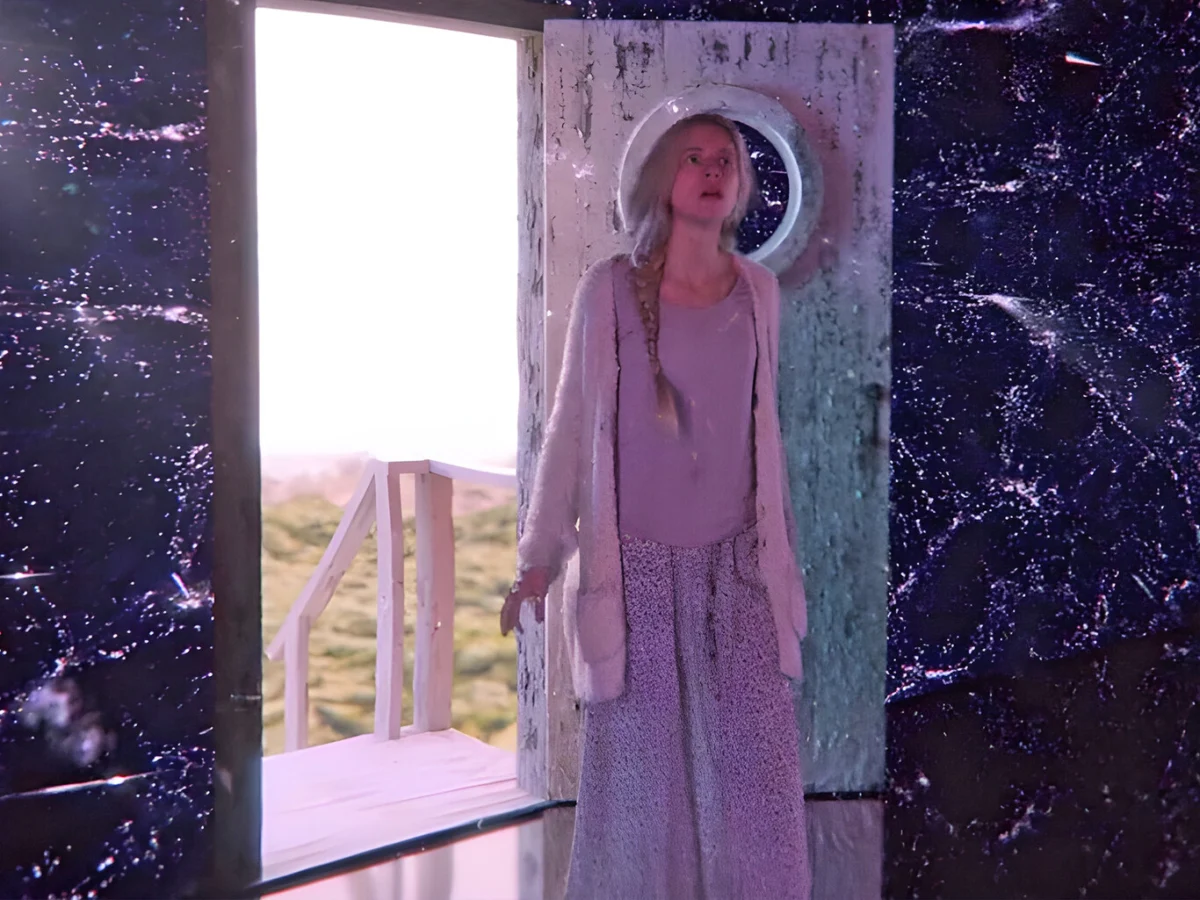
The cancellation of The OA remains one of the most polarizing moments in the history of streaming television, marking a significant shift in how audiences interact with complex narrative structures and how platforms manage high-concept intellectual property. Originally debuting on Netflix in December 2016, the series was the brainchild of creators Brit Marling and Zal Batmanglij, who had previously collaborated on independent films such as Sound of My Voice and The East. At its inception, The OA was positioned as a flagship piece of "prestige" science fiction, predating the massive cultural dominance of later hits like Stranger Things and Dark. However, despite its critical acclaim and a fiercely loyal cult following, the series was abruptly terminated after its second season in 2019, leaving a planned five-season story arc unfinished and sparking a unique phenomenon where fans believed the cancellation itself was a sophisticated marketing stunt.
The Narrative Foundation and the Rise of Prairie Johnson
The OA introduced audiences to Prairie Johnson, an adopted young woman who returns to her family after being missing for seven years. Upon her return, she is no longer blind—a medical miracle that she refuses to explain to her parents or the FBI. Instead, she identifies herself as "The OA" (Original Angel) and assembles a disparate group of five locals—four high school students and a teacher—to whom she recounts her story in midnight meetings. Her tale involves a descent into a secret research facility run by a scientist named Hunter Aloysius "Hap" Percy, who is obsessed with proving the existence of an afterlife through experiments on individuals who have had Near-Death Experiences (NDEs).
The show’s core mechanic involved "The Five Movements," a series of interpretive dance-like gestures that, when performed with "perfect feeling" by five people, could heal the sick, bring the dead back to life, and eventually, open portals to other dimensions. This blend of magical realism, hard science fiction, and spiritual philosophy set the show apart from contemporary procedural dramas. Marling and Batmanglij crafted a narrative that demanded total immersion, rewarding viewers who paid attention to minute details that would later pay off in the second season’s multiverse expansion.
The Expansion into the Multiverse and the Infamous Meta-Ending
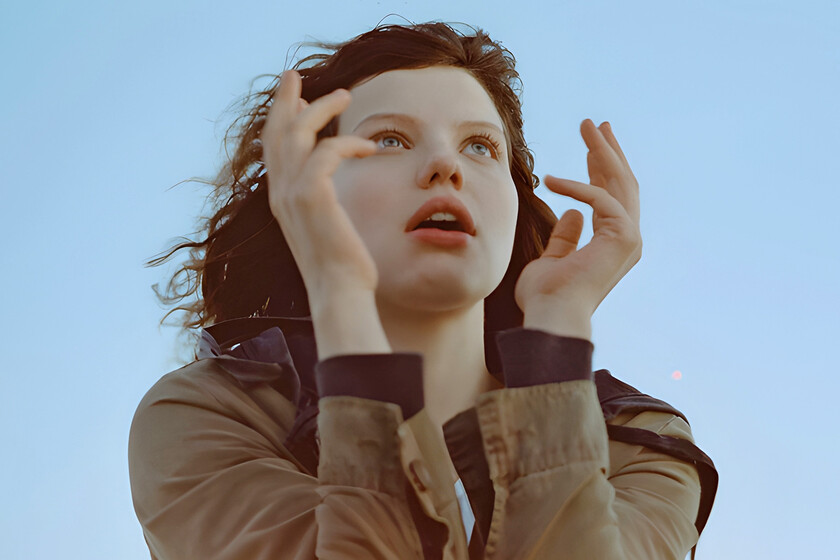
While the first season was largely a claustrophobic character study set in a suburban town and a subterranean prison, the second season, released in March 2019, dramatically expanded the scope. It introduced the concept of "dimension jumping," where characters could inhabit different versions of themselves in parallel realities. The season followed Prairie (now Nina Azarova in a parallel San Francisco) as she navigated a tech-noir mystery involving a psychic house and a dream-collecting algorithm.
The finale of the second season, titled "Overview," provided the catalyst for the subsequent fan theories regarding the show’s cancellation. In the final moments, the characters perform the movements to jump to a new dimension. They arrive on what appears to be a contemporary television set in the United Kingdom. In this reality, the character "The OA" is an actress named Brit Marling, and the character "Hap" is her husband, an actor named Jason Isaacs (who plays Hap in the show). During the filming of a stunt, the actress Brit Marling suffers a serious fall, and Jason Isaacs calls for an ambulance, identifying her as his wife.
This total collapse of the "fourth wall" suggested that the third season would take place in "our" reality, or a reality nearly identical to it, where the events of the show were being filmed as a production for Netflix. This narrative choice was unprecedented and blurred the lines between fiction and reality, setting the stage for the public’s refusal to accept the show’s end.
The 2019 Cancellation and the "Marketing Stunt" Theory
On August 5, 2019, Netflix officially announced that The OA would not return for a third season. The timing of the announcement, coupled with the meta-ending of Season 2, led to an immediate and widespread conspiracy theory among the fanbase. Supporters argued that because the Season 2 finale ended with "Brit Marling" being injured on a film set, the "cancellation" in the real world was simply a narrative device to explain why the show (within the show) had stopped production.

Fans pointed to several "clues" to support this theory:
- The Meta-Ending: The internal logic of the show had already moved the story into our dimension.
- Social Media Activity: Cryptic posts from the creators and cast members were scrutinized for hidden meanings.
- The Five-Season Plan: Marling and Batmanglij had publicly stated they had a mapped-out five-season trajectory, leading fans to believe Netflix wouldn’t abandon a pre-planned masterpiece.
However, as weeks turned into months, the reality of the situation became clear. The cancellation was not a "glitch in the matrix" or a brilliant PR move; it was a standard business decision based on the platform’s evolving metrics.
Data and Industry Context: The Economics of the "Kill"
The cancellation of The OA was a harbinger of a broader shift in Netflix’s content strategy. During the 2016–2019 period, Netflix transitioned from a growth-at-all-costs model—where it saved shows like Longmire or Arrested Development—to a model focused on high-turnover and broad-appeal hits.
Industry analysts pointed to several factors that likely led to the show’s demise:
- Completion Rates vs. Cost: High-concept sci-fi is expensive to produce. While The OA had a dedicated audience, internal Netflix data likely showed a "drop-off" in viewership between the first and second seasons. For Netflix, the value of a show often lies in its ability to attract new subscribers; by the third season, a niche show often reaches a saturation point where it is no longer bringing in new "starters."
- The Cost-Plus Model: Netflix typically uses a "cost-plus" model, where they pay for the production costs plus a premium. This premium increases significantly after the second and third seasons, making older shows more expensive to maintain unless they are massive hits like Stranger Things.
- The Change in Leadership: During this era, Netflix’s content leadership began prioritizing "efficiency" in spending, leading to the cancellation of other beloved but expensive niche series like Sense8, Santa Clarita Diet, and Tuca & Bertie.
Fan Reactions and the #SaveTheOA Movement
The response to the cancellation was among the most organized and passionate in the history of social media activism. The #SaveTheOA campaign went far beyond standard Twitter hashtags.
Key events in the protest included:
- The Times Square Billboard: Fans crowdfunded thousands of dollars to lease a digital billboard in New York City’s Times Square to demand the show’s return.
- Flash Mobs: Groups of fans gathered in major cities worldwide to perform "The Five Movements" in public spaces, mimicking the show’s method of reality-shifting.
- The Hunger Strike: Most notably, a fan named Empress went on a multi-day hunger strike outside Netflix’s Los Angeles headquarters. While the creators eventually reached out to her to express their concern and gratitude, the strike highlighted the deep emotional resonance the show had with its audience.
- Floral Tributes: Fans sent thousands of yellow roses (a recurring symbol in the show) to Netflix offices.
Despite these efforts, Netflix executives remained firm. Cindy Holland, then-Vice President of Original Content at Netflix, issued a statement praising the creators’ vision but confirming that the story had reached its end on the platform.
Broader Implications for the Streaming Era
The death of The OA served as a cautionary tale for creators of "puzzle-box" television. It demonstrated that narrative ambition and critical acclaim do not always guarantee a conclusion in the algorithm-driven world of streaming. This has led to a shift in how some creators approach their work, with an increasing number of limited series or "closed-ended" seasons to avoid the "cliffhanger cancellation" trap.
Furthermore, the "meta-stunt" theory revealed a new level of audience engagement. Viewers are no longer passive consumers; they are active participants who use the themes of a show to interpret real-world corporate decisions. The fact that fans could logically argue that a cancellation notice was a piece of fiction speaks to the success of Marling and Batmanglij in creating a truly immersive world.
Conclusion: The Enduring Mystery
Today, The OA is often cited as one of the "greatest shows cancelled too soon." It remains a staple of "Best Sci-Fi" lists and continues to find new audiences on the platform. While Marling and Batmanglij have moved on to other projects, such as the 2023 limited series A Murder at the End of the World, they have frequently expressed their desire to one day finish the story of Prairie Johnson.
The legacy of the show is defined by its refusal to be easily categorized. It was a series that asked its audience to believe in the impossible, to find connection in isolation, and to see the world through a lens of empathy rather than cynicism. While the third, fourth, and fifth dimensions of the story may never be seen on screen, the two seasons that exist remain a testament to a time when streaming platforms were willing to take massive, weird, and beautiful risks on original ideas. For the fans who still perform the movements, the cancellation wasn’t the end of the story—it was just another dimension they had to learn to navigate.

0 Comments