
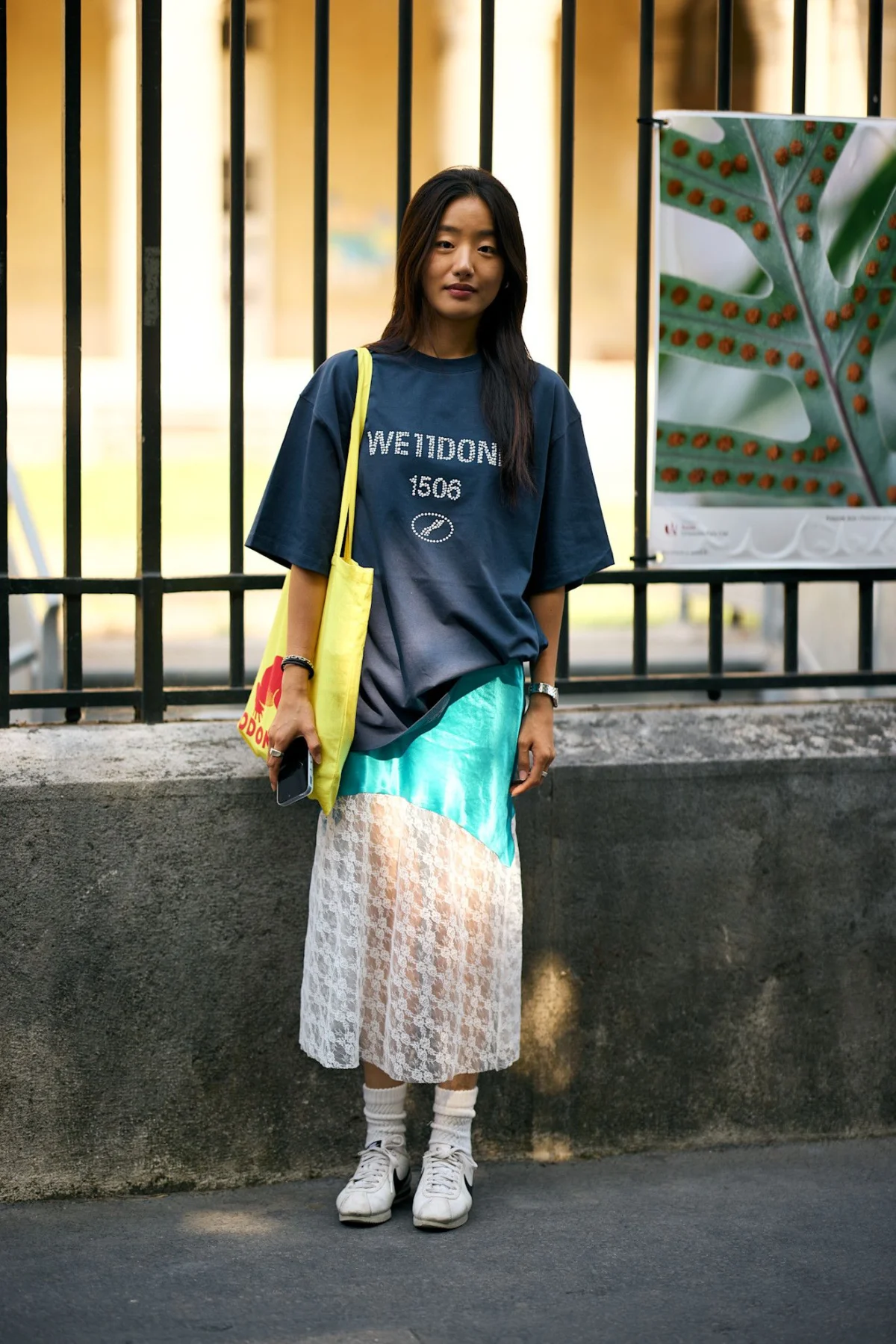
The fashion landscape of Spring-Summer 2026 is being defined by a sophisticated dialogue between two seemingly disparate decades: the free-spirited 1970s and the reductive minimalism of the 1990s. This seasonal shift has culminated in the rise of a specific aesthetic pairing that dominates both high-fashion runways and urban street style: the bohemian midi or maxi skirt coupled with classic white canvas sneakers. This combination represents a broader industry movement toward "functional elegance," where the romanticism of the past is tempered by the utilitarian requirements of modern life. As nostalgia for the 70s and 90s continues to resurge, these style codes have unified to offer a versatile uniform that prioritizes comfort without sacrificing visual impact.

The bohemian skirt, characterized by its flowing silhouette and evocative patterns, serves as a pillar of creative expression and sartorial freedom. Traditionally paired with platform sandals or leather boots, the 2026 iteration of the boho trend has found an unlikely but perfect partner in the low-profile white sneaker. This footwear choice, a staple of 90s "cool girl" fashion, provides a minimalist counterpoint to the volume and complexity of the boho skirt. Industry experts, including renowned designers like Michael Rider, have noted that this pairing effectively "grounds" the ethereal nature of the skirt, making it suitable for a wider variety of professional and social contexts.
The Chronological Evolution of a Trend
To understand the dominance of this look in 2026, one must examine the historical trajectory of its components. The bohemian aesthetic reached its cultural zenith in the mid-1970s, influenced by icons such as Stevie Nicks and the global "hippie" movement. During this era, long skirts were symbols of anti-establishment sentiment and artistic liberation. Simultaneously, white canvas sneakers—which originated as athletic footwear in the early 20th century—underwent a transformation in the 1990s. During that decade, brands like Keds, Superga, and Vans were adopted by the grunge and minimalist movements, becoming synonymous with an effortless, "undone" elegance.

The synthesis of these two items began to emerge in the early 2020s as part of the "cottagecore" and "indie sleaze" revivals. However, the 2026 version is distinct in its refinement. Modern manufacturing techniques have allowed retailers like Zara and H&M to produce skirts with more intricate lace, sustainable linens, and precision-cut asymmetries. Similarly, the "canvas sneaker" has been elevated from a basic gym shoe to a luxury item, with houses like The Row and Miu Miu releasing high-end versions that emphasize clean lines and premium materials. This evolution reflects a 50-year cycle for the 70s influence and a 30-year cycle for the 90s influence, meeting at a point of perfect market saturation.
Market Data and Consumer Sentiment
The shift toward the boho-sneaker combination is backed by significant retail data. According to global fashion search engines, queries for "bohemian midi skirts" have increased by 42% compared to the previous fiscal year. More tellingly, the search for "white canvas sneakers" has maintained a steady 15% year-over-year growth, indicating their status as a permanent wardrobe staple rather than a fleeting fad.

Market analysts suggest that this trend is a direct response to the "comfort economy" that has persisted in the post-pandemic era. Consumers are increasingly unwilling to return to the restrictive nature of high heels for daily wear. The white sneaker offers a podiatric reprieve while maintaining a "preppy" and polished silhouette that aligns with the "quiet luxury" movement. In the retail sector, high-street giants have reported that their "Boho-Chic" collections are selling out faster than traditional summer dresses, with a notable 60% of customers purchasing a pair of neutral-toned sneakers alongside their skirt orders.
Strategic Styling: From Street Style to High Fashion
The versatility of the boho-sneaker duo is demonstrated through several key style archetypes that have surfaced in major fashion capitals. These variations allow the trend to adapt to different personalities and environments.

The Subtle Color Contrast
For those seeking a sophisticated yet approachable look, the trend utilizes skirts with discrete touches of color. Zara’s Summer 2026 collection highlights skirts that feature muted floral embroidery or pale pastel tints. When paired with a minimalist sneaker, such as those from Keds, the footwear acts as a neutral base that prevents the outfit from appearing overly busy. This approach is frequently cited as the ideal "weekend family look," balancing the needs of a social outing with the practicality required for active movement.
The Asymmetric Denim Innovation
A significant departure from traditional boho fabrics is the use of denim. H&M has introduced asymmetric denim skirts with ruffled hems that mimic the movement of silk but retain the durability of twill. This "unconventional boho" look is often finished with a crisp button-down shirt and canvas sneakers, creating a bridge between rugged workwear and feminine romanticism.

Maximalist Prints and Visual Balance
Maximalism remains a force in 2026, with skirts featuring bold, large-scale prints. To prevent these patterns from overwhelming the wearer, the industry consensus recommends the "Minimalist Counterweight" technique. By using a simple white sneaker—like the classic Superga Cotu—the visual noise of the print is effectively neutralized at the hemline, creating a harmonious silhouette.
Texture and Breathability: The Fringe and Lace Factors
As global temperatures during the summer months continue to reach record highs, the functionality of the boho skirt has become a selling point. Fringed skirts and eyelet lace provide natural ventilation. The 90s-style canvas sneaker, usually made of breathable cotton lona, complements this focus on thermoregulation. High-fashion icons like Florence Pugh and Dakota Johnson have been photographed adopting this "heatwave-ready" uniform, further cementing its status in the cultural zeitgeist.

Industry Implications and Expert Reactions
The fashion industry’s embrace of this trend indicates a move toward more sustainable and long-lasting wardrobe choices. Canvas and linen are natural fibers that align with the growing consumer demand for eco-friendly textiles. Designers have noted that the "Boho-Sneaker" look is inherently more sustainable because it relies on "forever pieces"—items that do not go out of style and can be repaired or recycled easily.
Michael Rider, a prominent voice in the current fashion cycle, has stated that the simplicity of the white canvas sneaker is its greatest strength. "It provides an elegant, uncomplicated finish to the complexity of the boho aesthetic. It’s about a return to the basics that actually work for a woman’s life," Rider remarked in a recent industry symposium. This sentiment is echoed by luxury houses that have traditionally shunned casual footwear; even the most conservative brands are now including canvas options in their Spring-Summer lineups.

Broader Cultural Impact and Future Outlook
Beyond the immediate world of retail, the boho-sneaker trend reflects a cultural desire for a "slower" lifestyle. The bohemian skirt is evocative of travel, art, and leisure, while the sneaker represents the pragmatic reality of the urban dweller. Together, they form a "uniform of the modern wanderer." This aesthetic is particularly popular among the "digital nomad" demographic, which requires clothing that is packable, versatile, and appropriate for varied climates and social settings.
As we look toward the latter half of the decade, the influence of the 70s and 90s shows no signs of waning. However, the focus is shifting toward "trans-seasonal" pieces. The midi skirt, once seen as a strictly summer item, is being adapted for autumn with heavier weights, while the white sneaker remains the year-round foundation.

The convergence of Zara’s accessible elegance and the high-end minimalism of brands like The Row suggests that the boho-sneaker trend has achieved a rare "cross-class" appeal. It is a look that exists simultaneously in luxury boutiques and high-street windows, proving that when comfort and style are perfectly balanced, a trend can transcend its origins to become a classic. In the summer of 2026, the message from the fashion world is clear: the most stylish way to move forward is to take the best of the past and wear it with a pair of simple, white canvas shoes.

0 Comments