
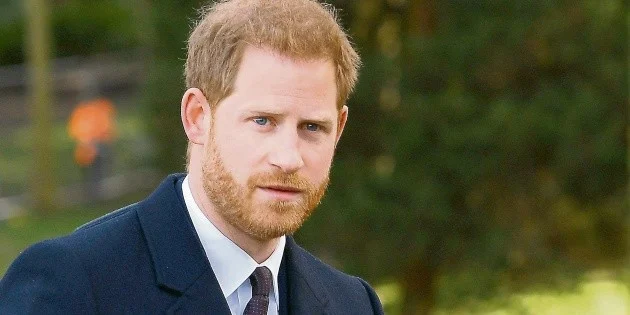
Prince Harry, the Duke of Sussex, finds himself at the centre of a significant financial and legal challenge following his defeat in a high-profile High Court case against Associated Newspapers Limited (ANL), publishers of the Daily Mail and Mail on Sunday. The Duke, alongside other prominent figures including Sir Elton John, David Furnish, Elizabeth Hurley, Sadie Frost, and Baroness Doreen Lawrence, had accused the media group of widespread unlawful information gathering, including phone tapping and other illicit methods. Following a ruling unfavourable to the plaintiffs, ANL has now demanded a substantial interim payment of £10 million (€11.68 million) from the claimants to cover its initial legal costs.
The demand for this provisional sum was made at a recent High Court hearing, where ANL’s legal team argued for the immediate recovery of a portion of their expenses. The seven claimants have been given a strict 14-day deadline to comply with this payment. This interim figure represents a fraction of ANL’s total claimed costs for the entire proceedings, which reportedly stand at an staggering £34 million (nearly €40 million), a sum the media group is seeking to recover in full through subsequent compensation arrangements. The outcome marks a critical juncture in Prince Harry’s ongoing legal battles with the British tabloid press, underscoring the formidable financial risks associated with such litigation.
Background to the Protracted Legal Dispute
The lawsuit, initiated in October 2022, was a consolidated claim brought by seven high-profile individuals alleging that Associated Newspapers had engaged in extensive illegal activities to obtain private information. The allegations included hiring private investigators to tap phones, bug homes and cars, "blagging" confidential information from third parties, and even paying police officials for sensitive data. Prince Harry’s involvement in the case was particularly poignant, reflecting his long-standing grievances against the British tabloid press, which he has frequently blamed for intrusions into his private life and, tragically, for contributing to his mother Princess Diana’s death. He has consistently maintained that the media’s aggressive tactics have caused immense personal distress and undermined his right to privacy.
The Duke of Sussex has been a vocal critic of the "never complain, never explain" mantra historically adopted by the Royal Family, asserting that this traditional stance had previously prevented him from taking meaningful action against media outlets he believed were acting unlawfully. His decision to pursue this and other legal actions signifies a radical departure from royal protocol, highlighting his determination to challenge what he perceives as unethical journalistic practices. The other claimants, including music icon Sir Elton John and actress Elizabeth Hurley, similarly sought to expose and halt what they described as a systematic pattern of illicit information gathering that had severely impacted their lives and privacy.
A Chronology of the High Court Proceedings
The legal journey leading to the March 31 verdict has been complex and arduous.
- October 2022: Prince Harry and six other claimants officially file a High Court claim against Associated Newspapers Limited, alleging unlawful information gathering.
- March 2023: ANL attempts to have parts of the claims "struck out" at a preliminary hearing, arguing that some allegations were time-barred or lacked sufficient evidence. The High Court, however, allows the case to proceed, setting the stage for a full trial.
- January 2024: The full trial commences at the High Court in London, presided over by Justice Matthew Fancourt. The proceedings are marked by intense legal debates and detailed examination of evidence, including witness testimonies from the claimants and former journalists. The trial lasts for ten weeks, scrutinizing thousands of documents and exploring the intricate details of the alleged unlawful activities.
- March 31, 2024: Justice Fancourt delivers his verdict. The High Court rules against Prince Harry and the other claimants, determining that there was insufficient evidence to prove that the information published by the Daily Mail and Mail on Sunday had been obtained through illegal methods such as phone tapping or the installation of surveillance devices.
- April 2024 (Post-Verdict): Associated Newspapers initiates proceedings to recover its legal costs. A hearing is held where ANL demands an interim payment from the defeated claimants.
Throughout the trial, the claimants’ legal teams presented extensive arguments, detailing specific instances where they believed private information could only have been obtained through illegal means. They highlighted patterns of suspicious reporting, unusual timing of stories, and the alleged use of private investigators with known histories of illicit activities. However, ANL steadfastly denied all accusations, asserting that its journalists relied solely on legitimate sources and ethical journalistic practices. The publisher maintained that the claims were a "pre-planned and orchestrated attempt to drag the Mail titles into the phone-hacking scandal" and were "baseless and highly defamatory."
The Judge’s Ruling and Conflicting Reactions
Justice Fancourt’s ruling hinged on the lack of definitive proof directly linking ANL’s publications to the alleged unlawful methods. He concluded that while some evidence suggested potential historical instances of unlawful information gathering by certain individuals or entities, there was not enough specific, direct evidence to establish that ANL itself, or its journalists, had obtained the particular information cited in the claims through illegal means. The judge’s decision underscored the high evidentiary bar required in such complex privacy cases, especially when challenging well-resourced media organizations.
Prince Harry’s reaction to the judgment was swift and scathing. He publicly condemned the ruling as a "total and obvious cover-up," expressing profound disappointment and suggesting that the court had failed to hold the media accountable. His statement reflected a deeply held conviction that the pervasive nature of illicit journalistic practices remained unaddressed by the legal system, perpetuating a cycle of privacy invasion.
In stark contrast, Associated Newspapers hailed the verdict as a resounding victory. A spokesperson for ANL declared the outcome a vindication for its journalists and a triumph "for the freedom of the press in general." The publisher argued that the claims were an attempt to stifle legitimate journalism and that the ruling reaffirmed the importance of a robust and independent media. This narrative framed the case as a defence of journalistic integrity against unwarranted attacks, particularly from public figures.
The Intensifying Battle Over Legal Costs
Three weeks after the substantive judgment, the legal conflict has shifted to the contentious issue of legal costs. Antony White KC, representing Associated Newspapers, argued forcefully during a recent hearing that Prince Harry and the other claimants should bear the vast majority of ANL’s legal expenses. The demand for an interim payment of £10 million, to be paid within 14 days, is a precursor to a larger claim for the total £34 million in costs incurred by ANL throughout the lengthy proceedings.
This situation presents a significant financial burden for the claimants. While they possess legal insurance, Financial Times reported that their collective coverage only extends up to £16.2 million (€18.9 million). This means that if ANL’s full cost claim is upheld, the plaintiffs could face substantial out-of-pocket expenses, potentially running into millions of euros for each individual. The claimants’ lawyers have voiced concerns that ANL’s aggressive demands for costs could allow the publishing group to "circumvent budgetary restrictions" typically applied in such cases, potentially exposing their clients to disproportionately high individual bills. The specific apportionment of these costs among the seven claimants will be a key aspect of the High Court’s final determination.
Broader Implications for Privacy Law and Media Scrutiny
This High Court ruling and the subsequent battle over costs carry significant implications for the landscape of privacy law and media accountability in the UK.
- Evidentiary Burden: The case reinforces the formidable evidentiary challenge faced by individuals seeking to prove unlawful information gathering by media organizations. The difficulty in obtaining direct, incontrovertible evidence of phone tapping or other clandestine activities often leaves claimants reliant on circumstantial evidence, which may not always meet the high legal threshold for proof.
- Financial Deterrent: The sheer scale of legal costs involved, particularly in complex cases against well-resourced media groups, acts as a powerful deterrent for potential claimants. Even with legal insurance, the risk of substantial personal financial exposure can dissuade individuals from pursuing legitimate grievances, thereby potentially undermining the accessibility of justice for privacy infringements.
- Media’s Stance on Freedom of the Press: The outcome bolsters the argument of media organizations that they are being unfairly targeted by "vexatious" litigation, allowing them to champion "freedom of the press" as a defence against privacy claims. This narrative can influence public perception and policy debates surrounding media regulation.
- Prince Harry’s Legal Strategy: For Prince Harry, this loss represents a setback in his broader campaign against the tabloid media. While he has achieved success in other legal actions (e.g., his libel case against ANL regarding an article about his security arrangements), this particular ruling highlights the complexities and inherent risks of his chosen path. It may force a re-evaluation of his legal strategy, although his resolve to challenge the press appears undiminished.
Looking Ahead: The Final Determination of Costs
The immediate focus now shifts back to the High Court, which will ultimately determine the precise amount Prince Harry and the other claimants must pay for Associated Newspapers’ legal expenses. This final decision will consider various factors, including the proportionality of ANL’s claimed costs, the specific arguments made by both legal teams during the cost hearing, and the court’s discretion in allocating financial burdens. While the main judgment of March 31 stands, the financial ramifications for the Duke of Sussex and his co-claimants remain a significant point of contention, promising further legal wrangling before this chapter of their battle against Associated Newspapers finally closes. The ruling serves as a stark reminder of the challenges inherent in confronting powerful media entities in the pursuit of privacy rights.

0 Comments