
The streets of Copenhagen have long served as a high-velocity laboratory for global fashion trends, and the Spring/Summer 2026 season has solidified a shift toward a more pragmatic yet highly refined aesthetic. While the Danish capital is renowned for its experimental spirit and bold use of color, the most significant takeaway from the recent street style circuit is the elevation of a deceptively simple formula: the strategic pairing of summer dresses with flat footwear. This stylistic choice, observed among the industry’s most influential attendees, marks a definitive departure from the high-heeled dominance of previous decades, signaling a broader movement toward wearable luxury and functional elegance.
The Ascendance of Copenhagen as a Global Style Capital
To understand the weight of these trends, one must consider the growing importance of Copenhagen Fashion Week (CPHFW) in the international fashion calendar. Traditionally, the "Big Four"—New York, London, Milan, and Paris—dictated the seasonal narrative. However, Copenhagen has emerged as a critical fifth pillar, primarily due to its rigorous sustainability standards and its unique "Scandi-cool" sensibility.

The city’s infrastructure, which prioritizes cycling and pedestrian movement, has naturally influenced its fashion output. This environment demands clothing that is both visually striking and physically mobile. Consequently, the dress-and-flat-shoe combination is not merely a stylistic preference but a response to a lifestyle that values effortless transitions from professional environments to social gatherings. For the Spring/Summer 2026 season, this regional necessity has been repackaged as a global aspirational standard.
Deconstructing the Seven Essential Combinations
Analyses of street style photography from the event reveal seven distinct pairings that defined the season. Each combination balances proportions, textures, and historical references to create a cohesive modern look.
1. The Long Boho Dress and Thong Sandals
The bohemian aesthetic, characterized by volume, prints, and floor-skimming hemlines, has been grounded this season by the inclusion of minimalist thong sandals or flip-flops. This pairing works by creating a visual counterweight; the maximalism of the fabric is offset by the extreme minimalism of the footwear. Fashion analysts note that this combination avoids the "costume" feel sometimes associated with boho-chic, instead offering a relaxed, contemporary vibe that is suitable for urban heatwaves.

2. Knit Textures and Minimalist Strappy Sandals
The knit dress continues to be a staple for its ability to contour the body while maintaining comfort. In Copenhagen, these were frequently paired with ultra-thin strappy sandals. The interplay between the heavy, tactile nature of the knit and the delicate, almost invisible lines of the sandals creates a sophisticated textural contrast. This look leans into the "quiet luxury" movement, focusing on high-quality materials and clean silhouettes.
3. Slip Dresses and Mary Jane Ballerinas
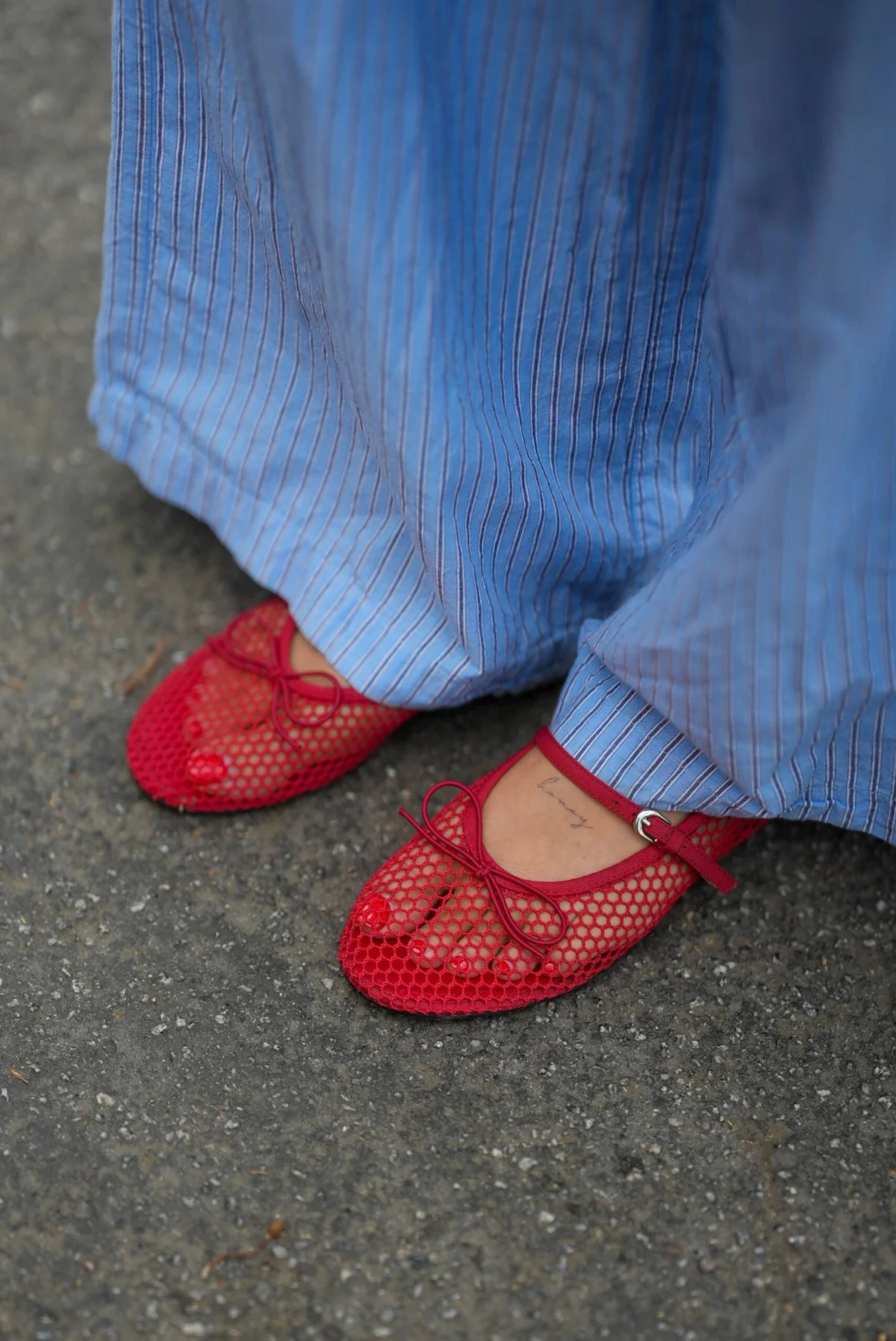
The 1990s-inspired slip dress remains a perennial favorite, but its 2026 iteration is paired with Mary Jane ballerinas rather than the traditional stiletto. The Mary Jane, often featuring a slight patent finish or a buckled strap, introduces a sense of structure and "girlish" refinement to the fluid, often provocative nature of the silk or satin slip dress. This creates a balanced look that transitions seamlessly from day to night.
4. The White Summer Dress and Kitten Heels
While technically featuring a minimal lift, the kitten heel was categorized alongside flats for its comparable comfort and practicality. The classic white dress—whether in poplin, eyelet, or linen—was elevated by these diminutive heels. This combination was frequently seen in professional settings during the fashion week, offering a polished alternative to the flat sandal while maintaining the airy, light-hearted essence of summer attire.

5. Plaid Patterns and Retro Sneakers
One of the most "Copenhagen" looks identified was the pairing of traditional plaid or gingham dresses with slim, retro-inspired sneakers, specifically the Onitsuka Tiger and similar low-profile silhouettes. This combination highlights the Danish penchant for "high-low" styling—mixing feminine, structured patterns with athletic, utilitarian footwear. The use of vibrant sneaker colors against classic prints was a recurring theme, providing a modern, energetic edge.
6. Delicate Lace and Strappy Flats
Lace dresses, often perceived as overly formal or romantic, were modernized through the use of flat, multi-strap sandals. This pairing strips away the bridal or evening-wear connotations of lace, making it accessible for daytime wear. Several attendees were also observed layering these looks over denim jeans, a styling trick used to adapt to fluctuating temperatures while maintaining a high-fashion profile.
7. The Basic Black Dress and Classic Ballerinas
The "Little Black Dress" (LBD) of 2026 is defined by its versatility. When paired with classic ballerinas—such as the iconic mesh or studded models from brands like Repetto or Alaïa—the look becomes a study in timelessness. This combination was the most frequent choice for those seeking an understated, "uniform" approach to fashion week, proving that simplicity remains a powerful tool in a saturated visual landscape.

A Chronology of Comfort: The Evolution of the Footwear Aesthetic
The shift toward flat shoes has not occurred in a vacuum. A timeline of the last five years of street style reveals a steady decline in the height of heels.
- 2021-2022: The "Ugly Sneaker" and chunky platform phase dominated, driven by a desire for irony and maximalist comfort.
- 2023-2024: The rise of "Balletcore" reintroduced the flat ballerina, influenced by a return to hyper-feminine aesthetics.
- 2025-2026: The current "Pragmatic Sophistication" era, where the flat shoe is no longer a subculture or a trend but a foundational element of the modern wardrobe.
Industry data supports this transition. Market research reports indicate a 15% year-over-year increase in the luxury flat footwear category, with "designer ballerinas" and "minimalist sandals" outperforming traditional pumps in the Spring/Summer 2026 retail projections.
Official Responses and Industry Sentiment
While major fashion houses have traditionally relied on the silhouette-lengthening properties of heels, designers at Copenhagen Fashion Week have been vocal about the shift. In post-show interviews, several creative directors emphasized that "modern power" is no longer synonymous with height.

"The woman we are designing for is moving. She is working, she is traveling, and she is present in her life," stated one prominent Danish designer. "A dress that requires a specific, uncomfortable shoe to ‘work’ is a dress that has failed the wearer. Our collections for 2026 are built on the premise that elegance and ease are not mutually exclusive."
Fashion stylists attending the event echoed this sentiment, noting that the disappearance of "rules" regarding footwear has allowed for greater personal expression. The consensus among the "front row" is that the most stylish women are those who appear comfortable in their environment, a feat most easily achieved through the dress-and-flat-shoe pairing.
Broader Impact and Implications for Global Retail
The implications of the Copenhagen street style trends extend far beyond the borders of Denmark. As these images circulate globally via social media and fashion journalism, they set the tone for mass-market retailers and high-street brands.

One of the most significant impacts is the democratization of high fashion. The "dress and flats" look is inherently more accessible than many previous trends, as it utilizes items that many consumers already own. This promotes a more sustainable approach to consumption, encouraging the "remixing" of existing wardrobe staples—a core tenet of the Copenhagen fashion philosophy.
Furthermore, the emphasis on mesh ballerinas, studded flats, and retro sneakers provides a clear roadmap for footwear manufacturers. We can expect to see a surge in the production of low-profile, highly textured shoes that prioritize foot health without compromising on aesthetic appeal.
In conclusion, the Spring/Summer 2026 season in Copenhagen has redefined the parameters of summer elegance. By embracing the simplicity of dresses paired with flat shoes, the fashion industry is acknowledging a fundamental truth: true sophistication is found in the balance of form and function. As the summer progresses, this trend is expected to dominate global fashion capitals, proving that the most enduring ideas are often the most straightforward.

0 Comments