
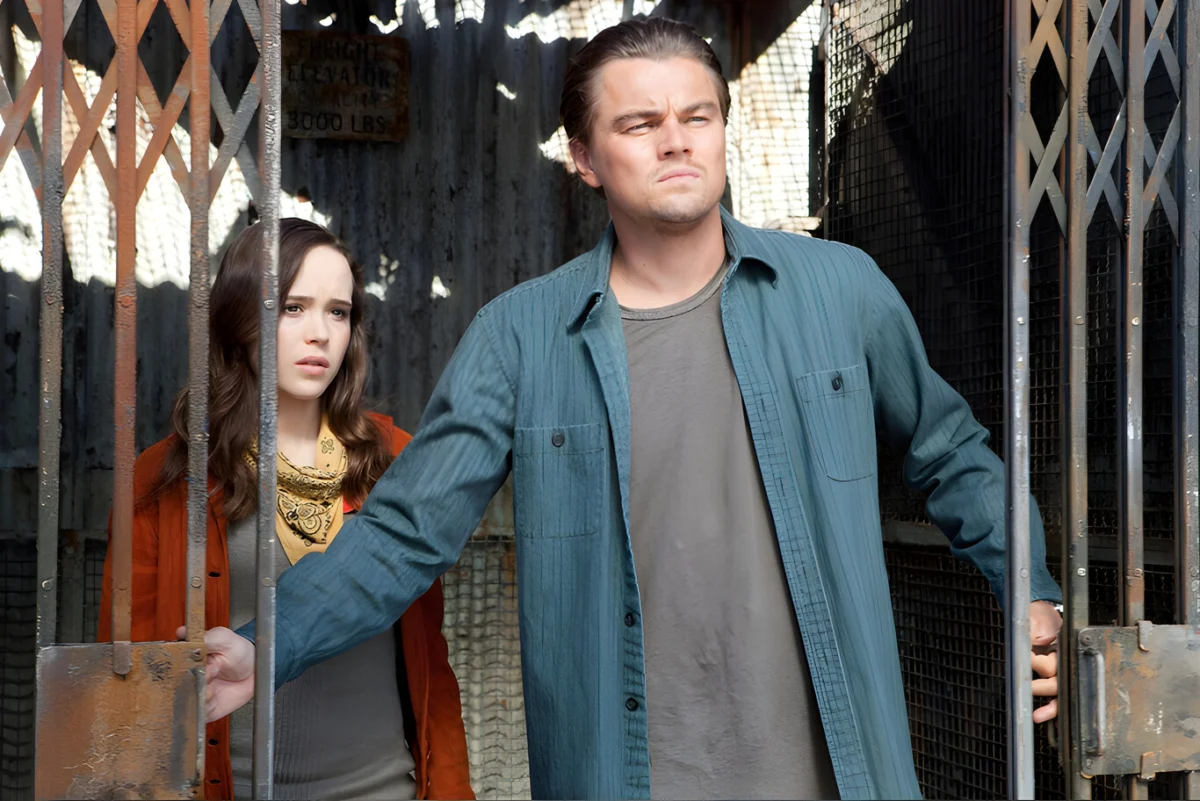
The cinematic landscape of the 21st century has been significantly shaped by the cerebral and technically ambitious works of Christopher Nolan, yet few of his films have commanded the same level of enduring cultural fascination as his 2010 psychological heist thriller, Inception. For over a decade, the film’s ambiguous closing shot—a spinning silver top that may or may not topple—served as one of the most debated cliffhangers in movie history, sparking thousands of fan theories and academic analyses regarding the nature of its protagonist’s reality. While the director famously maintained a cryptic stance on the matter for years, recent statements and retrospective insights from the cast and crew have finally shed light on the intended meaning of Dom Cobb’s journey. As the film continues to find new audiences on streaming platforms like Max, its status as a benchmark for high-concept science fiction remains unchallenged, blending intricate narrative architecture with profound emotional stakes.
The Genesis of a Dream: Ten Years in the Making
Before Inception became a global box-office phenomenon, it existed as a 80-page treatment about "dream thieves" that Nolan pitched to Warner Bros. following the completion of Insomnia (2002). At the time, Nolan felt he lacked the experience required to manage a production of such immense scale and complexity. He spent the following decade refining the script, transitioning the story from a standard horror-heist genre piece into a character-driven epic centered on the concept of "inception"—the act of planting an idea in a person’s subconscious so deeply that they believe they originated it themselves.
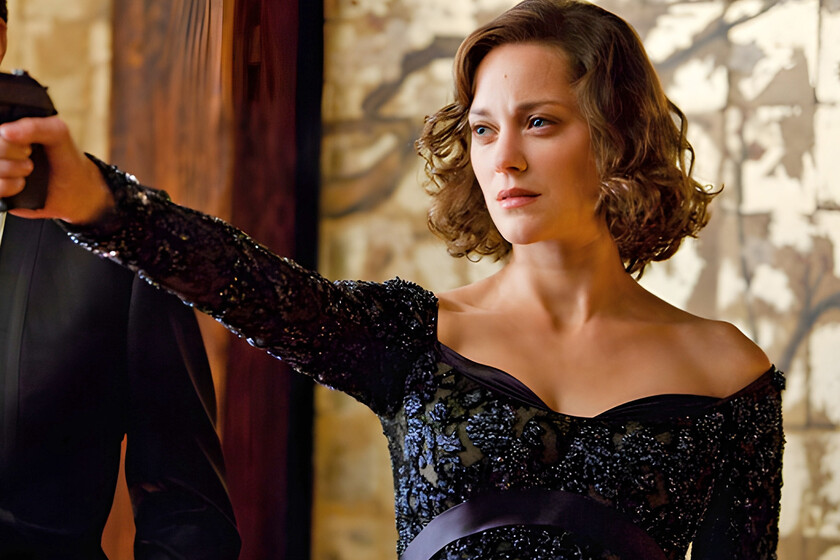
The narrative follows Dom Cobb (Leonardo DiCaprio), a professional "extractor" who steals corporate secrets through shared dreaming. Haunted by the death of his wife, Mal (Marion Cotillard), Cobb is offered a chance at redemption: if he can successfully perform inception on Robert Fischer (Cillian Murphy), the heir to a global energy empire, his criminal record will be cleared, allowing him to return to his children in the United States. To achieve this, Cobb assembles an elite team, including his "point man" Arthur (Joseph Gordon-Levitt), the "architect" Ariadne (Elliot Page), the "forger" Eames (Tom Hardy), and the "chemist" Yusuf (Dileep Rao).
Technical Innovation and Practical Spectacle
One of the defining characteristics of Inception, and a hallmark of Nolan’s filmography, is the heavy reliance on practical effects over computer-generated imagery (CGI). Despite its surreal subject matter, the film contains only approximately 500 visual effects shots—a remarkably low number for a modern blockbuster. This commitment to physical reality was best exemplified by the "rotating hallway" sequence, where the production team built a massive, 100-foot revolving centrifuge to simulate shifting gravity during a dream-state fight scene.
The production spanned six countries, including the skyscrapers of Tokyo, the mountains of Calgary, and the streets of Paris and Tangier. This global scale provided the film with a grounded, "tactile" quality that contrasted sharply with the ethereal nature of the dream world. By filming in real locations and using physical rigs for explosions and weather effects, Nolan ensured that the audience remained anchored in the story’s logic, even as the narrative layers became increasingly abstract.

A Chronology of the 13-Year Ending Debate
From its release in July 2010 until 2023, the central point of contention for viewers was the film’s final scene. After seemingly completing his mission and passing through U.S. customs, Cobb returns home to find his children. He spins his "totem"—a spinning top that belonged to his late wife—to verify if he is in reality (where it should fall) or a dream (where it spins indefinitely). Before the audience can see the result, the screen cuts to black.
The ensuing years saw the emergence of several prominent theories:
- The Totem Theory: Proponents argued that because the top wobbles slightly before the cut to black, it was destined to fall, confirming Cobb was in the real world.
- The Wedding Ring Theory: Observant fans noted that Cobb wears his wedding ring only in dream sequences. In the final scene, he is not wearing the ring, suggesting he has truly returned to reality.
- The Children Theory: Some argued the children had not aged and were wearing the same clothes as in Cobb’s memories, implying he was still trapped in a dream. However, the costume designer later clarified that different, albeit similar, outfits were used for the final scene.
- The Subjective Reality Theory: This perspective suggests that the top’s status is irrelevant because Cobb stops looking at it, choosing his happiness over the objective truth.
Official Clarifications and the Michael Caine Revelation
The ambiguity was partially resolved through two major interventions. The first came from veteran actor Michael Caine, who played Professor Stephen Miles, Cobb’s father-in-law. During a 2018 screening, Caine revealed that he had been confused by the script and asked Nolan for clarification on which scenes were real. According to Caine, Nolan replied, "When you’re in the scene, it’s reality." Since Caine appears in the final sequence to welcome Cobb home, his presence serves as a narrative anchor confirming the reality of the homecoming.
In 2023, during the press cycle for Oppenheimer, Christopher Nolan finally addressed the ending with more philosophical depth in an interview with Deadline and on the Happy Sad Confused podcast. Nolan explained that the ending was intended to be "ambiguous" but not "meaningless." He stated that the point of the scene is that Cobb no longer cares if he is dreaming; he has let go of his guilt and his obsession with "the truth" to be with his family. Nolan emphasized that the "emotional flight of the film" is what matters most, rather than the mechanical result of the spinning top.
Financial and Critical Impact: By the Numbers
Inception was a rare specimen in Hollywood: an original, non-franchise property that achieved massive commercial success.
- Box Office: The film grossed $839 million worldwide against a production budget of $160 million. It remains one of the highest-grossing original sci-fi films of all time.
- Critical Reception: It holds an 87% approval rating on Rotten Tomatoes. Critics praised it for its intellectual depth, with many comparing it to the works of Jorge Luis Borges and the architectural paradoxes of M.C. Escher.
- Awards: The film was nominated for eight Academy Awards, including Best Picture and Best Original Screenplay. It won four: Best Cinematography, Best Sound Editing, Best Sound Mixing, and Best Visual Effects.
- The "BWAHM" Effect: The film’s score, composed by Hans Zimmer, introduced a brassy, low-frequency sound that became a staple of action movie trailers for the next decade. The "Inception Horn" was actually a slowed-down version of Edith Piaf’s "Non, je ne regrette rien," the song used by the characters as a "kick" to wake up from dreams.
Broader Implications for the Genre
The success of Inception proved to major studios that audiences were hungry for "intelligent blockbusters." It paved the way for other high-concept science fiction films like Arrival, Interstellar, and Nolan’s own Tenet. The film also sparked a resurgence in the "puzzle film" subgenre, where viewers are encouraged to re-watch and analyze frames for hidden clues.

Furthermore, Inception’s exploration of the subconscious has been cited in psychological and philosophical circles. The film touches on the "Simulation Hypothesis" and the subjective nature of time—themes that Nolan would continue to explore throughout his career. By framing complex metaphysical questions within the structure of a heist movie, Nolan made high-level philosophy accessible to a global audience.
Current Availability and Cultural Persistence
Sixteen years after its debut, Inception continues to circulate through cultural discourse. Its terminology—"totems," "kicks," "limbo," and the very word "inception"—has entered the common lexicon. The film’s availability on streaming services like Max (formerly HBO Max) has allowed a new generation of viewers to experience the "mind-bending" narrative that defined the early 2010s.
For many, revisiting the film in the current era of AI-generated imagery and deepfakes adds a new layer of relevance. The film’s central anxiety—the inability to distinguish between what is real and what is constructed—resonates more strongly today than it did upon its release. Whether one views the ending as a literal return to reality or a permanent descent into a peaceful dream, Inception remains a towering achievement in modern cinema, proving that the most powerful special effect is a well-told, deeply felt story.

0 Comments