
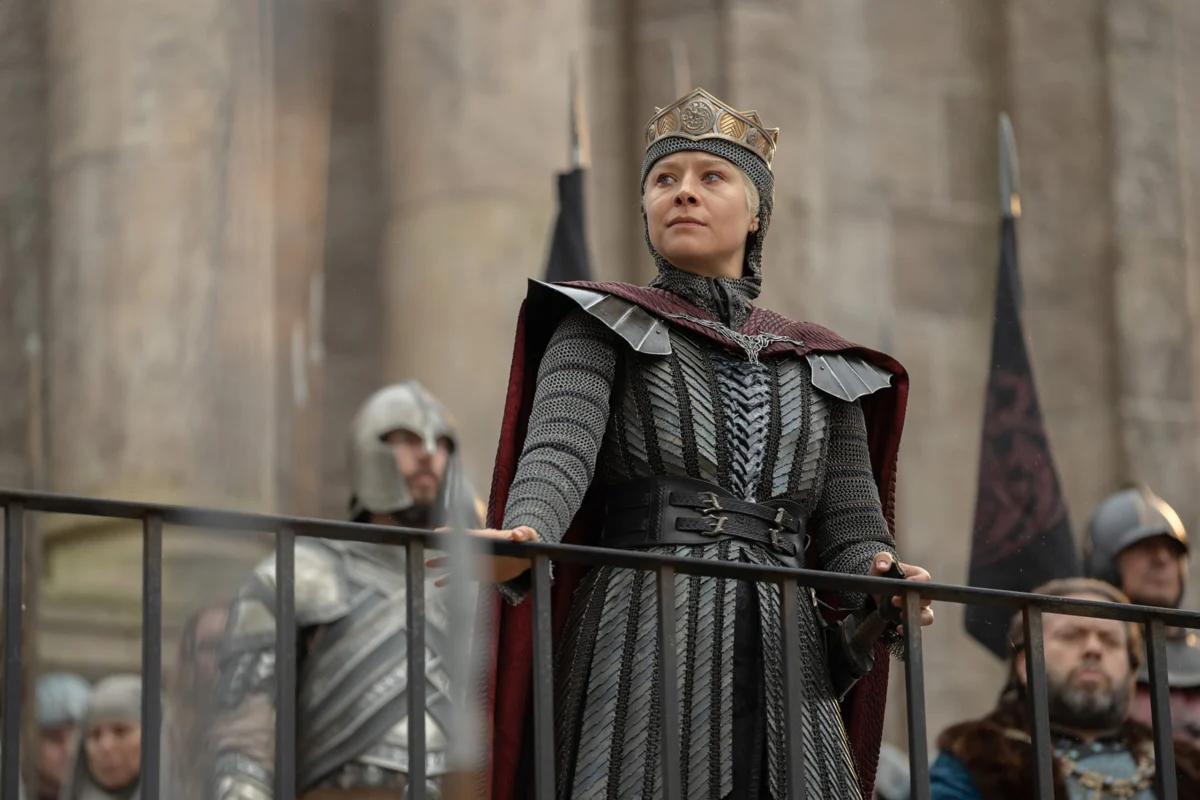
The season 3 finale of House of the Dragon serves as a violent and transformative culmination of the Targaryen civil war, weaving together high-stakes military engagements and profound internal betrayals that fundamentally alter the landscape of Westeros. As the penultimate chapter of the series, this episode functions as a grim prelude to the fourth and final season, transitioning from the calculated maneuvers of diplomacy to an era of total, unrestrained dragon warfare. The narrative shifts focus toward the psychological disintegration of the claimants to the Iron Throne, particularly Rhaenyra Targaryen, whose transition from a reluctant diplomat to a ruthless commander marks a definitive end to any hope for a peaceful resolution.
Rhaenyra Targaryen and the Shift Toward Total War
The catalyst for the episode’s escalating tension is the revelation that King Aegon II Targaryen remains a potent threat. The episode opens with Queen Rhaenyra receiving intelligence that Sunfyre, Aegon’s dragon, survived the harrowing encounter at Rook’s Rest and that Aegon himself has been spotted. This news shatters the fragile stability Rhaenyra had attempted to maintain. Reports indicate that Aegon, despite his grievous injuries, managed to incinerate the Mooton army at Rook’s Rest before disappearing from the skies. The uncertainty regarding his location creates a vacuum of fear within the Black Council.
This development triggers what can only be described as a psychological pivot for Rhaenyra. After a period of perceived indecision that led to murmurs of dissent among her advisors, the Queen adopts a doctrine of fear. In a pivotal directive to Daemon Targaryen, she commands an uncompromising assault on Tumbleton. Her instructions are explicit: the Hightower forces must be eradicated entirely. This shift is not merely tactical but symbolic; Rhaenyra expresses a willingness to be viewed as a "monstrous" figure if it ensures the security of her reign and the eventual execution of her half-brother, Aegon.
This hardening of character is further evidenced in her domestic interactions. Her treatment of Baela Targaryen turns noticeably cold and authoritative, shedding the maternal or mentorship role she previously occupied. Furthermore, Rhaenyra’s decision to force a blessing from the Great Sept represents a significant escalation in her use of soft power and religious imagery to legitimize a reign that is increasingly defined by military force.
The Siege of Tumbleton and the Fall of House Hightower
The military focus of the finale centers on Tumbleton, a strategic location that becomes the site of one of the war’s most chaotic engagements. The conflict is characterized by shifting loyalties and the unpredictable nature of the "Dragonseeds." Alyn of Hull, having assumed command of the Driftmark fleet, reinforces the defense of King’s Landing, asserting his position as the legitimate successor to House Velaryon. His leadership comes at a critical time as the naval blockade remains the Blacks’ primary leverage over the capital.
However, the land battle at Tumbleton descends into carnage due to the volatility of the dragon riders. Ulf the White, whose motivations have remained largely mercenary and hedonistic, is thrust into the conflict by Ormund Hightower. In a sequence that highlights the danger of granting commoners the power of dragons, a drunken and humiliated Ulf turns his dragon, Silverwing, against his own commanders. The death of Ormund Hightower, incinerated by the very asset he sought to weaponize, signals the total breakdown of discipline within the Green ranks.
Simultaneously, the arrival of Daeron Targaryen and his dragon, Tessarion, adds a new layer of complexity to the battlefield. Despite Gwayne Hightower’s attempts to negotiate a partition of the realm—offering Corlys Velaryon’s freedom in exchange for a divided kingdom—Daemon Targaryen remains steadfast in his refusal. The rejection of these peace terms ensures that Tumbleton becomes a graveyard for both armies, leaving the ultimate fate of Daeron Targaryen and the Hightower host in a state of ambiguity.
The Tragedy of Helaena Targaryen and the Harrenhal Revelation
While the fires of Tumbleton burn in the Reach, a more intimate tragedy unfolds in King’s Landing. Helaena Targaryen, long portrayed as a dreamer disconnected from the political machinations of her family, meets a horrific end. Her death is preceded by a series of prophetic visions and a tense encounter with Mysaria, who is being exiled by Rhaenyra’s orders. Mysaria’s warning to Helaena—that Aegon lives and Rhaenyra is not to be trusted—compounds the Queen’s paranoia.
The final moments of Helaena’s life are marked by the cruelty of Rhaenyra’s administration. When Helaena refuses to eat or cooperate with the Queen’s demands, she is subjected to physical force by Rhaenyra’s guards. In an act of desperation or perhaps a fulfillment of her own dark visions, Helaena leaps from a high window of the Red Keep, perishing on the iron spikes below. This event serves as a massive blow to the morale of the city and a personal tragedy for Alicent Hightower, who is depicted sensing her daughter’s demise through a symbolic encounter with butterflies, a recurring motif associated with Helaena.
Parallel to these events, the supernatural elements of the series coalesce at Harrenhal. Alys Rivers provides Aemond Targaryen with a cryptic history of the castle’s curse, hinting at her own longevity and possible immortality. The revelation that Alys may be a centuries-old figure tied to the very foundations of Harrenhal adds a Gothic horror element to the narrative. In a surprising turn, Aemond discovers Aegon and Sunfyre at the fortress. The reconciliation between the brothers, though strained by Aemond’s previous attempt on Aegon’s life, creates a formidable alliance of the two most powerful dragons remaining in the Green arsenal.
Chronology of Key Events in the Season 3 Finale
To understand the rapid escalation of the conflict, the following timeline outlines the sequence of the episode’s major developments:
- The Intelligence Report: Rhaenyra is informed of Sunfyre’s survival and Aegon’s recent military activity at Rook’s Rest.
- The Command at Harrenhal: Rhaenyra orders Daemon to initiate a scorched-earth policy at Tumbleton.
- The Velaryon Succession: Alyn of Hull officially takes command of the Driftmark forces, rebuffing challenges to his authority.
- The Betrayal at Tumbleton: Ulf the White, provoked by Ormund Hightower, uses Silverwing to destroy the Hightower leadership.
- The Failed Negotiation: Gwayne Hightower offers a peace treaty to Daemon; the offer is rejected, leading to full-scale combat.
- The Death of Helaena: Following mistreatment by the Black occupation, Helaena Targaryen commits suicide, fulfilling her own prophecies.
- The Prophetic Tapestry: Rhaenyra discovers Helaena’s needlework, which predicts Rhaenyra’s own bloody end on the Iron Throne.
- The Song of Ice and Fire: Rhaenyra passes the secret of Aegon the Conqueror’s dream to her heir, Joffrey Velaryon, framing the war as a divine necessity.
Broader Implications and Tactical Analysis
The fallout of the Season 3 finale suggests a catastrophic final act for the Targaryen dynasty. Tactically, the Black faction has secured a psychological victory but at a massive moral and political cost. The death of Helaena Targaryen will likely turn the smallfolk of King’s Landing against Rhaenyra, transforming her from a liberator into a tyrant in the eyes of the public. Furthermore, the loss of Kat, the wife of Hugh Hammer, during the chaos of Tumbleton, introduces a volatile element to Rhaenyra’s "dragonseed" pilots. Without personal ties to the cause, riders like Hugh and Ulf represent a liability that could collapse the Black faction from within.
The revelation of the "Song of Ice and Fire" to Joffrey Velaryon indicates that Rhaenyra now views the war through a messianic lens. By tethering her quest for the throne to the survival of humanity against the White Walkers, she justifies any level of brutality. This ideological shift mirrors the path of future Targaryen rulers and highlights the tragic irony of the Dance: in their attempt to save the realm for the "Prince That Was Promised," the Targaryens are systematically destroying the very empire they seek to preserve.
As the series moves toward its final season, the board is set for a confrontation at King’s Landing. With Aemond and Aegon reunited and Rhaenyra fully committed to a war of extermination, the structural integrity of Westeros hangs in the balance. The finale makes it clear that while dragons may win battles, the cost of their fire is the total dissolution of the family that once commanded them. The war for the Iron Throne has moved beyond the realm of politics and into the realm of a scorched-earth tragedy where no participant is likely to emerge unscathed.

0 Comments