
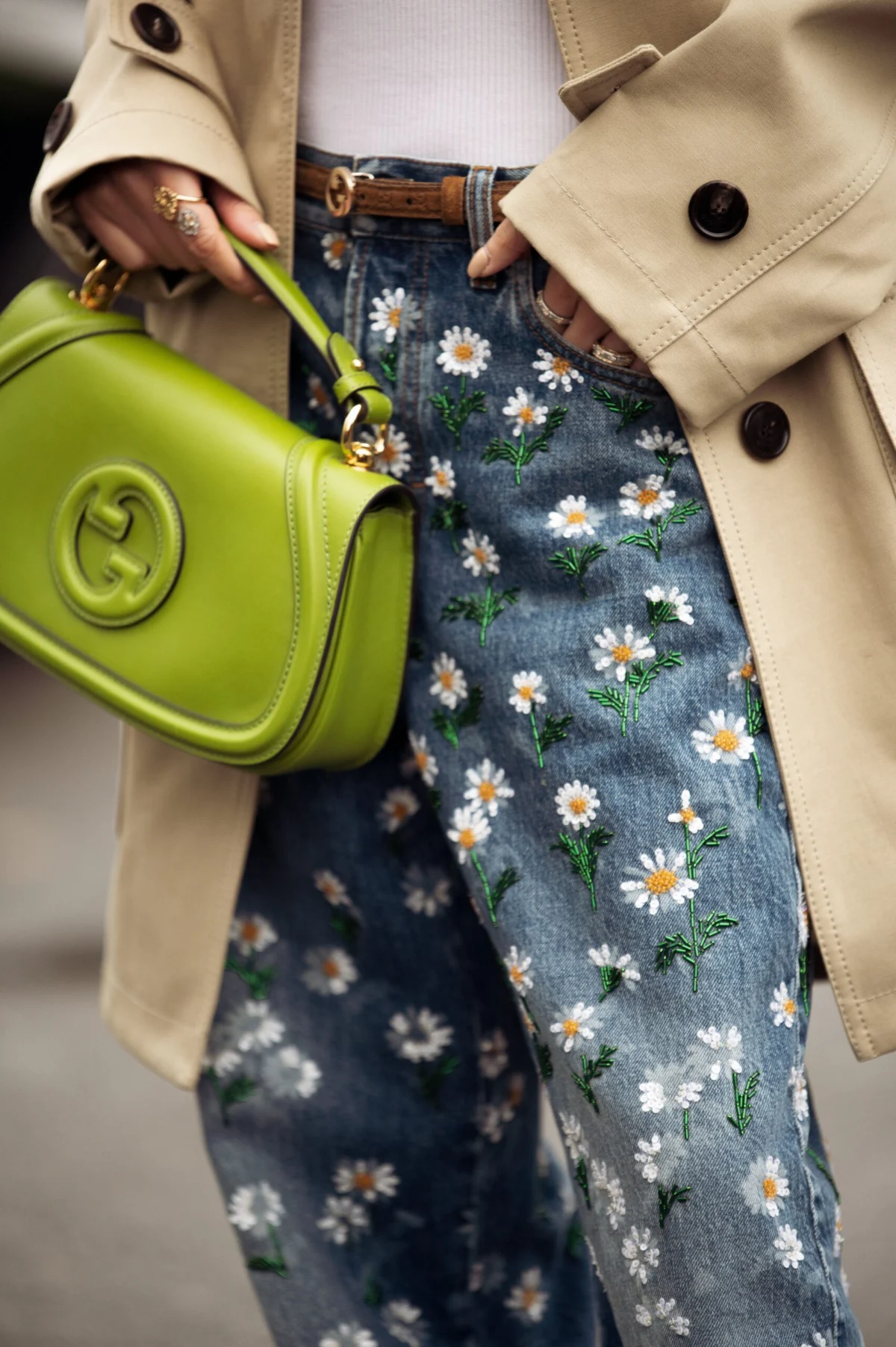
The global fashion landscape for Autumn 2026 has signaled a definitive departure from the austere minimalism of previous years, pivoting instead toward a celebration of artisanal craftsmanship and intricate detailing. At the center of this stylistic shift is the resurgence of embroidered jeans, a garment that has transitioned from a bohemian staple to a cornerstone of contemporary high-fashion luxury. Whether manifesting as delicate openwork, vibrant floral motifs, or folkloric patterns, embroidery is currently being utilized by major design houses to elevate the most fundamental of silhouettes. This trend represents a broader movement within the industry to reconcile the utilitarian nature of denim with the meticulous precision of haute couture, creating a versatile aesthetic that resonates across both runway and street-style domains.

The Reimagining of Denim Silhouettes on the Autumn-Winter 2026 Runways
The Autumn-Winter 2026 collections have demonstrated that the "embroidery effect" is not limited to a single cut or style. Designers have applied these embellishments to a diverse array of denim architectures, ranging from the relaxed "baggy" fits that prioritize comfort to the structured "barrel" and "bootcut" silhouettes designed to elongate the frame. The versatility of the medium allows for a broad spectrum of stylistic expressions, from the understated to the avant-garde.
Ermanno Scervino, a house long associated with a light, romantic aesthetic, has positioned itself at the forefront of this movement. For the Autumn 2026 season, Scervino presented wide-leg, light-wash jeans featuring cream-colored lateral embroidery. This design choice bridge the gap between bohemian spirit and modern elegance. The styling on the runway—pairing the denim with oversized knits and pussy-bow blouses—emphasizes a "boho-chic" revival that feels grounded in 2026 rather than purely nostalgic.

In contrast, Christian Dior has taken a more "couture-forward" approach. Under the creative direction of Maria Grazia Chiuri, the house showcased straight-leg jeans entirely adorned with subtle sequins and crystalline embroidery. This application transforms denim from a casual textile into an evening-wear contender. By pairing these shimmering trousers with sculptural, asymmetrical blazers and flat suede boots, Dior has redefined the parameters of formal dressing, suggesting that the modern evening ensemble relies on a balance of texture and architectural form.
Chronology of the Trend: From Counter-Culture to Global Luxury
The trajectory of embroidered denim is rooted in the counter-culture movements of the 1960s and 1970s, where hand-stitched patches and floral designs served as symbols of individuality and anti-establishment sentiment. However, the 2026 iteration of the trend is characterized by a high degree of technical sophistication and industrial precision.

The timeline leading to the current Autumn 2026 peak began in early 2024, following a period of "quiet luxury" where logos and embellishments were largely eschewed. By mid-2025, consumer fatigue regarding minimalist aesthetics led to a renewed interest in tactile fabrics and visible craftsmanship. This "artisanal renaissance" was first observed in luxury knitwear before migrating to the denim sector. By the time the Spring-Summer 2026 collections debuted, it was clear that embroidery was no longer a niche decorative element but a primary design driver. The current Autumn season represents the maturation of this trend, where the focus has shifted from mere decoration to the integration of embroidery into the structural identity of the garment.
Market Analysis and Supporting Data for the Denim Sector
Economic indicators within the apparel industry support the dominance of embellished denim. According to recent retail data and market forecasts for the 2026 fiscal year, the "premium denim" segment—defined as jeans retailing above $250—has seen a 14% year-over-year increase in consumer demand. Within this segment, garments featuring "visible craftsmanship," such as embroidery, beadwork, or laser-etched patterns, have outpaced traditional plain washes by nearly 20% in sell-through rates.

The rise of the "Slow Fashion" movement has also contributed to this growth. Consumers in 2026 are increasingly prioritizing "investment pieces"—garments that offer a sense of uniqueness and longevity. Embroidery, which is perceived as more labor-intensive and artistic than standard garment dyeing, aligns with the values of a more conscious consumer base. Furthermore, data from major e-commerce platforms indicates that search terms such as "floral denim," "embroidered bootcut," and "artisanal jeans" have reached record volumes in the lead-up to the Autumn season, suggesting a robust appetite for these styles at both the luxury and mass-market levels.
Technical Innovations in Modern Embroidery
The embroidery seen in the 2026 collections is the result of a blend of traditional hand-stitching techniques and advanced garment technology. High-end labels like Cinq à Sept and Alice + Olivia have utilized multi-head embroidery machines that can replicate the irregularity of hand-work while maintaining the durability required for denim, which is a heavy-duty textile.

Common techniques observed this season include:
- Openwork (Broderie Anglaise): Often seen at the hems of straight-leg jeans, providing a feminine contrast to the ruggedness of the fabric.
- Folkloric Threadwork: Multi-colored, dense stitching that draws inspiration from traditional Eastern European and Central American textiles.
- Sequin and Bead Integration: As seen in the Dior collections, where embellishments are woven into the denim’s warp and weft to ensure they do not detach during wear.
- Lateral Fringing: A more experimental approach where embroidery extends beyond the seam to create movement, as seen in recent contemporary releases.
Institutional and Designer Responses to the Trend
The fashion industry’s "Big Six" retail groups have largely embraced the trend, adjusting their production cycles to accommodate the longer lead times required for embroidered goods. Creative directors have noted that the challenge lies in maintaining the "cool factor" of denim while adding intricate detail.
.jpeg)
In a statement regarding the season’s direction, industry analysts suggest that the success of embroidered denim lies in its emotional resonance. The trend taps into a collective desire for "human-centric" design in an era increasingly dominated by digital experiences and artificial intelligence. The presence of embroidery suggests a human hand at work, offering a sense of "protected" or "homely" luxury. This psychological aspect is particularly relevant in the post-2024 landscape, where fashion has become a tool for self-expression and comfort.
Retailers like Mango and H&M have also responded by launching "Premium Selection" lines that feature embroidery, making the trend accessible to a wider demographic. These high-street interpretations often focus on floral motifs and contrast stitching, allowing the mass market to participate in the artisanal aesthetic without the luxury price tag.
.png)
Strategic Styling for the Professional and Social Sphere
The Autumn 2026 season emphasizes a "high-low" styling philosophy. The goal is to allow the embroidered denim to serve as the focal point of the outfit while maintaining a sense of sophisticated restraint.
For professional environments, the industry consensus recommends pairing embroidered "barrel" or straight-leg jeans with classic staples. A crisp white poplin shirt and leather ballet flats provide a neutral backdrop that allows the denim’s detail to shine without overwhelming the wearer. This approach aligns with the "cool office" aesthetic that has become prevalent in creative and corporate sectors alike.
.png)
For evening or social engagements, the trend leans toward a more maximalist approach. Stylists suggest pairing sequined or heavily floral denim with asymmetric tops and high-heeled pumps. The inclusion of a tailored blazer—particularly one with a structured silhouette—adds a layer of formality that balances the inherent casualness of the denim.
Broader Cultural Impact and Future Implications
The resurgence of embroidered jeans is more than a fleeting fashion cycle; it is an indicator of a cultural shift toward the "re-humanization" of clothing. As the industry moves further into the late 2020s, the emphasis on craft is expected to expand into other categories, including outerwear and accessories.
.png)
The environmental impact of this trend is also significant. Because embroidered garments are often viewed as "special" or "artistic," they tend to have a longer lifecycle in a consumer’s wardrobe, reducing the frequency of disposal associated with fast-fashion basics. Furthermore, many brands are now using recycled threads and organic denim bases for their embroidered lines, merging artisanal beauty with sustainability.
In conclusion, the Autumn 2026 season has established embroidered jeans as a vital component of the modern wardrobe. By successfully navigating the space between the bohemian past and a couture-focused future, this trend offers a versatile, expressive, and economically significant alternative to traditional denim. As designers continue to push the boundaries of what is possible with a needle and thread, the humble pair of blue jeans is being elevated to a genuine work of art, proving that in the world of fashion, the most impactful statements are often found in the finest details.

0 Comments