
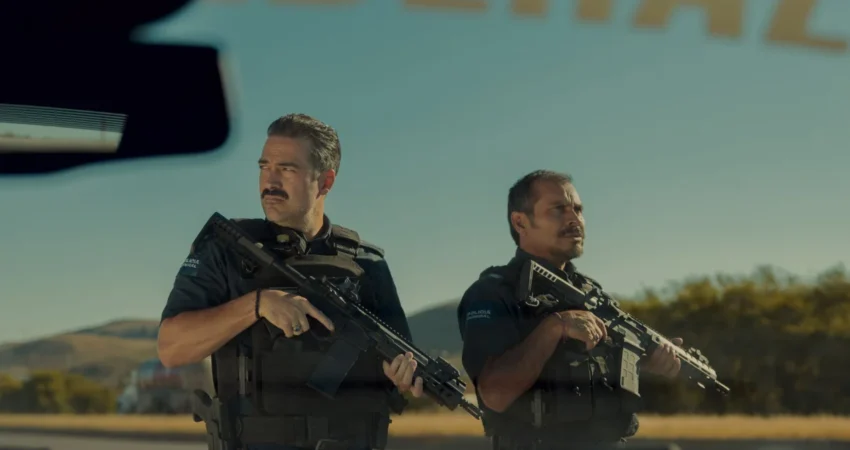
Netflix premiered La captura on August 21, 2026, marking a significant shift in the cinematic portrayal of Mexico’s complex relationship with organized crime and law enforcement. Starring Alfonso Herrera and Noé Hernández, the film reconstructs the final apprehension of Joaquín "El Chapo" Guzmán Loera, the former leader of the Sinaloa Cartel. While the entertainment industry has spent decades focusing on the rise and excess of drug kingpins—a trend solidified by the 2015 release of Narcos—La captura deliberately pivots the lens toward the police officers responsible for the operation. Directed by Chava Cartas, the production seeks to de-center the figure of the "capo" and instead highlight the institutional and personal challenges faced by those on the front lines of the Mexican drug war.
A Shift in Perspective: From Anti-Hero to Civil Servant
The release of La captura comes at a time when Latin American audiences and critics have grown increasingly weary of "narco-culture" being glamorized in popular media. For years, productions centered on figures like Pablo Escobar or Guzmán Loera were criticized for providing a platform that humanized criminals while relegating their victims and the state’s efforts to the background. Chava Cartas, returning to the director’s chair following the success of his 2025 action thriller Contraataque, aimed to rectify this imbalance.
In promotional interviews conducted shortly before the film’s release, Cartas emphasized a deliberate "crusade" alongside producer Francisco González Compeán. The goal was to portray "heroes" in a country that, in the director’s view, desperately needs them. The narrative is heavily influenced by the investigative journalism of Héctor de Mauleón, whose chronicles of the 2016 capture provided the foundational grit and factual framework for the screenplay. By utilizing these journalistic roots, the film attempts to balance creative dramatization with a rigorous respect for the logistical realities of the operation.
The Real-Life Chronology of January 8, 2016
To understand the weight of the film’s narrative, one must look at the historical events of early 2016. Joaquín Guzmán Loera had become a global symbol of the failure of the Mexican penal system following his high-profile escape from the Altiplano maximum-security prison in July 2015 via a mile-long tunnel. The manhunt that followed, dubbed "Operation Black Swan," culminated in the coastal city of Los Mochis, Sinaloa.
The operation began in the early morning hours of January 8, when Mexican Naval Special Forces (SEMAR) raided a safe house in the Scally neighborhood. While a fierce gunfight ensued, resulting in the deaths of five suspects and the injury of one marine, Guzmán and his chief of security, Jorge Iván Gastélum Ávila (known as "El Cholo Iván"), managed to escape through a sophisticated tunnel hidden behind a mirror in a dressing room. This tunnel connected to the city’s drainage system.
For several hours, the two fugitives navigated the sewers of Los Mochis before emerging and hijacking a white Volkswagen Jetta, and later a red Ford Focus. Their escape was finally halted on Federal Highway 15 by officers of the now-defunct Federal Police. Fearing a rescue attempt by cartel gunmen, the officers did not immediately transport the prisoners to a police station. Instead, they took them to the Motel Doux, located on the outskirts of the city, and held them in Room 51 until reinforcements arrived.

The Integrity of Room 51: Fact vs. Fiction
The emotional core of La captura focuses on the twenty minutes spent inside that motel room. The film introduces Arturo Carmona (Alfonso Herrera) and Héctor Rosales (Noé Hernández) as the primary officers. In reality, these characters are composite representations of the Federal Police officers involved. The names were changed to protect the identities of the real-life participants, many of whom remain in hiding or under protected status due to the persistent threat of retaliation from the Sinaloa Cartel.
The film meticulously recreates the alleged bribe attempt that occurred during those tense minutes. According to official accounts published by the Mexican government under the title "El Tiburón" (The Shark) during the 90th anniversary of the Federal Highway Police, Guzmán Loera offered the arresting officer a life-changing sum of money. The bribe reportedly included 50 million dollars, properties in the United States, and businesses in Sinaloa.
The officer’s testimony, which serves as a thematic pillar for the film, highlighted a refusal based on professional dignity. "Even with all his money, I saw him dirty, wet, coming from the sewer, foul-smelling. And I never wanted to see myself like that," the officer wrote in his official statement. This rejection of corruption is the central "heroic" act that Chava Cartas amplifies in the movie, framing it as a moment of moral clarity in an environment often defined by institutional rot.
The Supporting Players: El Cholo Iván and the Cartel Infrastructure
While the film focuses on the police, the portrayal of Jorge Iván Gastélum Ávila provides essential context for the dangers the officers faced. "El Cholo Iván" was not merely a bodyguard but a high-ranking lieutenant responsible for the cartel’s operations in northern Sinaloa. His history of violence and his 2009 escape from the Aguaruto prison in Culiacán established him as a formidable adversary.
In La captura, the character of Gastélum serves as a reminder of the cartel’s reach. The real-life Gastélum was extradited to the United States in 2023, following his 2016 capture alongside Guzmán. He faced charges of conspiracy to distribute cocaine and marijuana and the use of firearms in furtherance of drug trafficking. As of the film’s 2026 release, Gastélum remains a figure of interest in the ongoing legal battles between the U.S. Department of Justice and the remnants of the Sinaloa Cartel’s "old guard."
Journalistic Integrity and Creative Liberties
The screenplay, written by Bernardo Esquinca, draws heavily from the work of Héctor de Mauleón and Carmen Aristegui. These journalists were instrumental in debunking early, sanitized versions of the capture and revealing the chaotic, almost accidental nature of the highway arrest. However, Esquinca has been transparent about the film’s creative liberties.
"The reality of what happened to these men is very little known because they are essentially erased from public life for their own safety," Esquinca noted in a 2026 interview. "It is not a ‘happy’ story in the traditional sense; it is the story of two men who did their job and then had to disappear."

This "disappearance" refers to the broader political fallout. While the officers were initially celebrated, the landscape changed significantly in 2019 when the Mexican government, under a new administration, dissolved the Federal Police to make way for the National Guard. Journalist Héctor de Mauleón has argued in various forums, including El Universal, that the men who captured the world’s most wanted man were essentially "abandoned by the state" as the institution they served ceased to exist. This adds a layer of tragic irony to the film’s "hero" narrative, suggesting that the state’s gratitude is often as fleeting as the news cycle.
Where Are They Now? The Aftermath of the Capture
The final act of the film serves as a postscript to the 2016 operation. Joaquín Archivaldo Guzmán Loera is currently serving a life sentence plus 30 years at ADX Florence, the United States’ most secure federal prison, located in Colorado. Following his landmark trial in the Eastern District of New York under Judge Brian Cogan, Guzmán was also ordered to forfeit $12.6 billion in assets—a figure representing the estimated total of his criminal enterprise’s earnings.
The legal proceedings against the Sinaloa Cartel did not end with "El Chapo." The subsequent years saw the rise of his sons, "Los Chapitos," and the eventual arrest and extradition of Ovidio Guzmán López in 2023. The film positions the 2016 capture not as the "end" of the drug war, but as a pivotal moment of transition that redefined the geopolitical relationship between Mexico and the United States regarding security cooperation.
Analysis of Implications: The Future of the Genre
La captura represents a maturing of the "narco-cinema" genre. By moving away from the aesthetic of violence and the glorification of wealth, the film invites the audience to consider the human cost of law enforcement. It raises uncomfortable questions about the longevity of heroism in a system where the "good guys" must remain anonymous to survive, while the "bad guys" become the subjects of endless documentaries and series.
From a production standpoint, the film’s success on Netflix suggests that there is a global appetite for more nuanced, institutionally-focused stories. The technical quality—reconstructing the sewers of Los Mochis and the claustrophobic atmosphere of Room 51—demonstrates the high level of craftsmanship currently available in the Mexican film industry.
In conclusion, La captura is more than a retelling of a historical event; it is a cinematic attempt to reclaim a narrative. By focusing on the officers who rejected a $50 million bribe, Chava Cartas and his team have created a profile of integrity that serves as a counterweight to the decades of "capo" worship. Whether this shift in storytelling will have a lasting impact on public perception of the drug war remains to be seen, but as a piece of media, it stands as a rigorous, somber, and necessary reflection on a moment that changed Mexican history.

0 Comments