
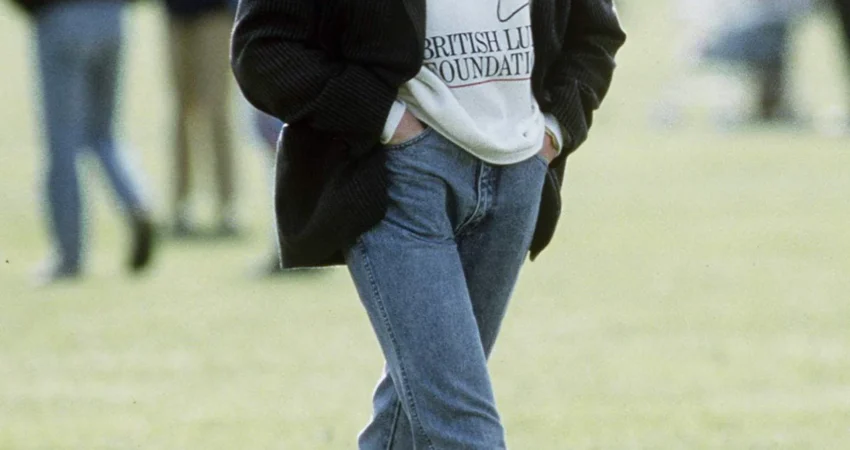
The global fashion landscape is witnessing a significant structural shift as the industry pivots away from the ultra-relaxed silhouettes of the early 2020s toward a more refined, structured aesthetic rooted in the late 20th century. As erratic summer weather patterns introduce increased rainfall across major metropolitan hubs, the functional demand for transitional wardrobes has surged. Central to this movement is the resurgence of the cigarette jean—a silhouette that defined the 1980s and is now being repositioned by retail giants like Zara as the essential garment for the Summer 2026 season. Characterized by a high-waist construction and a hemline that terminates precisely at the ankle, the cigarette jean offers a unique middle ground between the restrictive skinny jean and the voluminous "baggy" trends that have dominated the market recently. This specific cut is not merely a stylistic choice but a strategic response to the footwear requirements of a rainy summer, providing a seamless visual transition when paired with ankle boots.
The Historical Context: From Rebel Pop to Contemporary Staple
To understand the current dominance of the cigarette jean, one must analyze its historical trajectory. While the slim, straight-leg cut found its initial footing in the 1950s with icons like Audrey Hepburn, it was the 1980s that radicalized the silhouette. During this era, the garment became a symbol of the "Material Girl" aesthetic, championed by pop culture figures such as Madonna. The 80s iteration of the cigarette jean was often distressed, bleached, or heavily accessorized, reflecting a departure from the polished looks of previous decades.

By the mid-2010s, the fashion industry had reached "skinny jean saturation," where Lycra-heavy, skin-tight denim became the global uniform. However, as consumer preferences shifted toward comfort and "athleisure" during the early 2020s, denim sales saw a marked decline in tight-fitting styles. Market data from 2023 and 2024 indicated a 15% increase in the consumption of wide-leg and "mom" jeans. The return of the cigarette jean in 2026 represents a synthesis of these two extremes: it retains the tailored sophistication of a slim leg without the physical restriction of the skinny jean, making it an ideal candidate for the "quiet luxury" and "vintage revival" movements currently driving retail sales.
Chronology of the Denim Silhouette Shift (1980–2026)
The evolution of denim silhouettes serves as a barometer for broader cultural shifts. In the 1980s, the high-waisted cigarette jean was a tool of empowerment and gender-fluid styling. Moving into the 1990s and early 2000s, the "low-rise" era took over, pushing the cigarette cut into the background in favor of flared and bootcut styles. The 2010s were defined by the "Skinny Revolution," driven by advancements in stretch-denim technology.
The current decade began with a total rejection of the slim leg, as Gen Z consumers championed the "Baggy" and "Cargo" trends. However, by 2025, industry analysts noted a "fatigue" regarding oversized clothing. Retailers like Zara began testing the waters with "slim-straight" hybrids. The Summer 2026 collections, currently hitting flagship stores, solidify the cigarette jean as the dominant trend for the latter half of the decade. This timeline highlights a 40-year cycle where the 1980s aesthetic has been modernized through sustainable fabric blends and more inclusive sizing.

Zara’s Strategic Selection: A Deep Dive into the Summer 2026 Collection
Inditex, the parent company of Zara, has long been recognized for its ability to translate high-fashion runway trends into accessible consumer goods with a rapid turnaround. For the Summer 2026 season, Zara’s design team has focused on three distinct iterations of the cigarette jean, each designed to complement specific footwear trends, particularly the ankle boot.
The Classic Blue Wash and the Animal Print Synergy
The foundational piece of the collection is the classic indigo-wash cigarette jean. This model prioritizes a "rigid" denim look while incorporating a small percentage of recycled elastane for mobility. Stylists suggest that the simplicity of the blue wash acts as a canvas for more aggressive footwear choices. In particular, the pairing of these jeans with snake-print ankle boots has emerged as a key editorial look. By combining a conservative denim cut with a bold, textured boot, the outfit achieves a balanced professional-meets-edgy aesthetic. This combination is being marketed as the "daily uniform" for the modern urbanite navigating a rainy summer commute.
The Ethereal Floral Print and the Cowboy Contrast
In a departure from traditional denim, Zara has introduced a cigarette jean featuring a light wash and ethereal floral prints in lilac and pastel tones. This design targets the "romantic" consumer demographic. However, the styling of this piece is intentionally subversive. Rather than pairing the floral print with delicate flats, the brand advocates for black cowboy-style ankle boots. This contrast between "soft" femininity and "hard" western-inspired footwear creates a visual tension that is central to the 2026 aesthetic.

The Boho-Chic Revival and Earth Tones
The third pillar of the collection is the bohemian-inspired print. Utilizing intricate patterns reminiscent of the 1970s but applied to the 1980s cigarette silhouette, these jeans cater to the "Boho-Chic" resurgence. To ground this look, Zara’s lookbook features chocolate-brown ankle boots. Industry experts note that the "chocolate" or "deep espresso" leather trend is currently outpacing traditional black leather in the luxury footwear sector, as consumers seek warmer, more organic color palettes.
Supporting Data: The Economics of the Denim Market
According to recent retail reports, the global denim market is projected to reach a valuation of $95 billion by 2030. Within this growth, the "straight and slim-straight" category—which encompasses the cigarette jean—is expected to grow at a Compound Annual Growth Rate (CAGR) of 5.8% between 2024 and 2027.
Several factors contribute to this growth:

- Versatility: Unlike wide-leg jeans, which can be difficult to style with heavy outerwear or formal footwear, the cigarette jean is compatible with blazers, trench coats, and various boot heights.
- Sustainability: Newer cigarette jean models, including those at Zara, are increasingly made from organic cotton or "circular" denim, which appeals to the environmentally conscious consumer.
- Footwear Integration: Data from the footwear sector shows a 12% year-over-year increase in ankle boot sales during the summer months, attributed to unpredictable weather. The cigarette jean is the only silhouette that allows the boot’s design to be fully visible without the "bunching" associated with skinnier cuts or the "concealing" effect of wider legs.
Industry Reactions and Stylist Analysis
Professional stylists and fashion editors have responded positively to the return of the cigarette cut. "The cigarette jean is a gift to footwear enthusiasts," says Marcus Thorne, a senior fashion analyst. "It provides the perfect frame for a statement boot. In a season where we are seeing a lot of investment in high-quality leather goods, people want a pant that highlights their shoes rather than hiding them."
Furthermore, the "Zara selection" has been praised for its accessibility. While high-end designers like Saint Laurent and Celine have featured cigarette silhouettes on their runways for years, Zara’s implementation allows the trend to reach a mass-market audience. This democratization of the 80s silhouette is expected to influence street style globally, moving the needle away from the "disheveled" look of the early 2020s toward a more "tailored" reality.
Broader Implications for the Fashion Cycle
The resurgence of the cigarette jean carries implications beyond mere aesthetics. It signals a stabilization of the fashion cycle. For the past five years, trends have moved at a "hyper-speed" pace due to social media platforms like TikTok. However, the cigarette jean is a "slow fashion" staple. Its return suggests that consumers are looking for longevity and "investment pieces" that can withstand the test of time.

Additionally, the focus on "Summer Ankle Boots" reflects a broader trend in "climate-adaptive fashion." As seasons become less distinct, clothing must perform multiple roles. A cigarette jean that works with a sandal in the morning sun and an ankle boot in the afternoon rain is a functional necessity in the 2026 climate.
In conclusion, the cigarette jean’s return to the forefront of the fashion industry is a calculated move that blends nostalgia with modern functionality. By looking back to the icons of the 1980s like Madonna, and looking forward to the needs of a changing global climate, Zara has identified the cigarette jean as the definitive garment of the season. Whether through classic washes, romantic florals, or bohemian prints, this silhouette offers a versatile, sophisticated solution for the modern wardrobe, ensuring that the ankle boot remains the undisputed footwear of choice for the rainy summer ahead.

0 Comments