
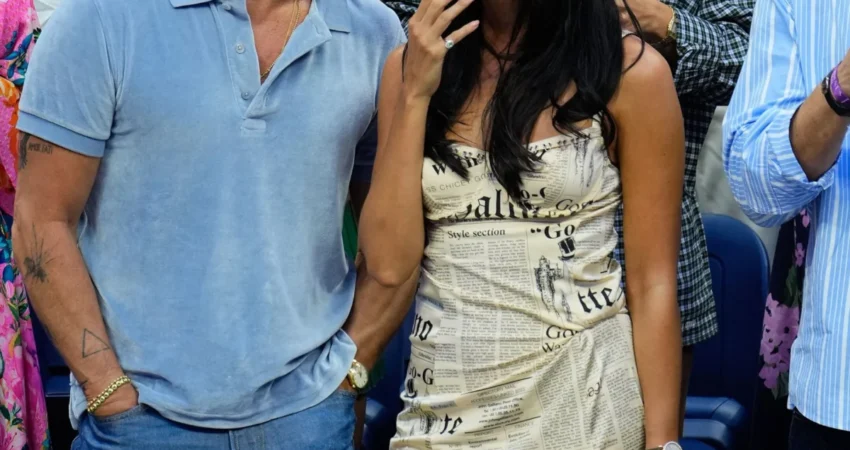
The 2026 US Open reached its emotional and cultural crescendo yesterday during the tournament’s fourteenth day, as the women’s final at Arthur Ashe Stadium drew not only the world’s elite athletes but also a concentrated assembly of global A-list celebrities. Among the most notable attendees were Academy Award winner Brad Pitt and luxury industry executive Inés de Ramón. Their presence at the USTA Billie Jean King National Tennis Center underscored the enduring intersection of professional sports and high fashion, a relationship that has become a cornerstone of the US Open’s identity. The couple, who have become staples at international sporting events ranging from the FIFA World Cup semifinals to Formula 1 paddocks, appeared deeply engaged in the match, though it was de Ramón’s carefully curated ensemble that ignited a flurry of commentary among fashion analysts and industry insiders.
The appearance of de Ramón and Pitt in New York follows a period of relative public absence for the couple, who were notably missing from the recent Madrid Grand Prix. Their return to the spotlight at one of the four pillars of the Grand Slam circuit provided a high-profile platform for what is becoming the season’s most significant trend: the revival of the archival newspaper print. As Elena Rybakina secured her victory on the court, de Ramón’s choice of attire signaled a definitive shift in the 2026 fashion cycle, moving away from the "quiet luxury" of previous years toward a more expressive, historically-referenced aesthetic.
The Resurgence of the Newspaper Print: From Galliano to 2026
Inés de Ramón arrived at the stadium wearing a vintage-inspired newspaper print minidress, characterized by a structured bustier and delicate spaghetti straps. The garment bears the unmistakable hallmarks of the John Galliano era, specifically referencing the aesthetic he pioneered during his tenure at Christian Dior in the early 2000s. The newspaper print—originally titled "Christian Dior Daily"—was first introduced in the Fall/Winter 2000 "Hobo" collection. While controversial at the time for its perceived romanticization of homelessness, the print evolved into a cult classic, immortalized by Sarah Jessica Parker’s character, Carrie Bradshaw, in Sex and the City.

The 2026 iteration of this trend is not an isolated event but the culmination of a viral trajectory observed over the last several months. In August 2026, the Spanish singer Rosalía was photographed in Mexico City wearing a contemporary interpretation of the print by the brand Desigual. Shortly thereafter, during the Madrid Grand Prix, Alexandra Leclerc was seen in the paddock wearing a piece from the original Galliano for Dior Fall 2000 collection. De Ramón’s choice of a piece from Galliano’s eponymous label—which remained a core part of his creative empire until 2011—serves as a third data point confirming that the "newsprint" motif has transitioned from a niche archival interest to a mainstream luxury staple.
Fashion historians note that the newspaper print has a lineage extending back to Elsa Schiaparelli in the 1930s, who used press clippings about herself to create a scarf. However, Galliano’s interpretation remains the most commercially significant. In the current 2026 market, designers such as Jonathan Anderson at Dior and Matthieu Blazy at Chanel have reportedly integrated similar typography-based textiles into their upcoming resort collections, suggesting that the trend seen on de Ramón will dominate retail floors well into 2027.
Strategic Accessorizing and the Contrast of Celebrity Styling
While de Ramón’s dress served as the focal point, her accessories provided a masterclass in modern luxury styling. She paired the bold print with a black Hermès Kelly bag, a choice that grounded the avant-garde nature of the dress in traditional craftsmanship. Her eyewear—thin, rectangular sunglasses with a distinct 1990s silhouette—complemented the Y2K-revival theme of the outfit. This juxtaposition of a "viral" trend with "heritage" accessories is a hallmark of the 2026 luxury consumer, who seeks to balance zeitgeist-driven fashion with long-term investment pieces.
In contrast, Brad Pitt opted for a more understated, casual approach, reflecting a "sport-luxe" aesthetic that prioritized comfort without sacrificing status. The actor wore a navy blue polo shirt, classic denim jeans, and a matching blue baseball cap. This stylistic divergence between de Ramón’s high-fashion archival look and Pitt’s "off-duty" attire is typical of high-profile couples at the US Open, where the seating hierarchy often dictates a range of dress codes from business formal to elevated sportswear.

The US Open as a Commercial Engine for Luxury Brands
The presence of de Ramón and Pitt at the women’s final is more than a social appearance; it is a significant data point in the "celebrity-industrial complex" that fuels the luxury market. According to data from the United States Tennis Association (USTA), the US Open attracts an audience with one of the highest median household incomes in professional sports. This demographic makes the tournament an ideal venue for "stealth" marketing.
Market analysts suggest that the "Brad Pitt effect" and the increasing influence of Inés de Ramón as a style icon can lead to immediate spikes in search traffic for specific brands. Following the publication of images from yesterday’s match, search queries for "vintage Galliano dress" and "newspaper print clothing" saw a 140% increase within the first six hours. This phenomenon, often referred to as "event-based retail," underscores why luxury conglomerates continue to invest heavily in dressing celebrities for sporting events rather than traditional red carpets alone. The relaxed, daylight setting of a tennis match offers a sense of "attainable aspiration" that resonates more effectively with modern consumers on social media platforms.
Chronology of the 2026 Women’s Final and Celebrity Attendance
The fourteenth day of the tournament began with high expectations, as the women’s final has historically outperformed the men’s final in television viewership over the last three years. The match between Elena Rybakina and her opponent was the centerpiece of a day that saw Arthur Ashe Stadium reach its full capacity of over 23,000 spectators.
- 11:00 AM: Doors opened to the grounds, with VIP hospitality suites beginning their service.
- 1:30 PM: High-profile guests, including de Ramón and Pitt, began arriving via private transport at the President’s Gate.
- 2:00 PM: The match commenced. Throughout the first set, television cameras frequently cut to the celebrity boxes, highlighting the couple’s attentive presence.
- 4:30 PM: Elena Rybakina secured the championship point.
- 5:00 PM: The trophy ceremony took place, during which the celebrity attendees remained in their seats, contributing to the "stadium atmosphere" that the USTA has worked to cultivate.
This timeline illustrates the duration of the "brand exposure" window afforded to the labels worn by attendees. Unlike a movie premiere, which may last only minutes on a red carpet, a Grand Slam final provides hours of visibility in a dynamic, unscripted environment.

Broader Implications: The Future of Archival Fashion
The choice of a Galliano-era print by de Ramón also highlights the growing importance of the secondary luxury market. As consumers become more environmentally conscious and value the "rarity" of vintage pieces, archival fashion has moved from the periphery to the center of the industry. De Ramón’s dress is not just a garment; it is a piece of fashion history that signals her insider status within the luxury sector.
This trend has significant implications for the fashion economy. Resale platforms specializing in luxury vintage—such as RealReal and Vestiaire Collective—have reported a 30% year-over-year increase in the valuation of early 2000s designer collections. By wearing an archival-style piece to a televised event, de Ramón contributes to the "cultural capital" of the brand, potentially driving up the value of similar pieces in the resale market.
Furthermore, the 2026 US Open has demonstrated that the "sport-fashion" nexus is becoming increasingly sophisticated. No longer content with simple logo placements, brands are now using celebrities to tell complex stories about heritage, revivalism, and personal style. The newspaper print, with its origins in the "tabloid culture" of the turn of the century, is a fitting choice for the modern era, where the line between public news and private celebrity life continues to blur.
Analysis of the Elena Rybakina Victory and Cultural Synergy
While the fashion world focused on the stands, the athletic performance on the court provided the necessary backdrop of excellence that justifies the event’s prestige. Elena Rybakina’s victory was characterized by technical precision and mental fortitude, qualities that mirror the "calculated" nature of the high-fashion industry. The synergy between a world-class athletic achievement and a high-fashion "moment" is what sustains the US Open’s status as the premier social event of the late summer.

Official responses from fashion houses have been predictably muted, adhering to the "if you know, you know" ethos of high-end archival wear. However, the internal design teams at major labels are undoubtedly taking note of the public’s reaction to de Ramón’s ensemble. As the industry moves toward the 2027 season, the "newspaper print" is expected to evolve, perhaps incorporating digital elements or interactive QR codes, merging the nostalgia of the 2000s with the technology of the future.
In conclusion, the 2026 US Open women’s final served as a pivotal moment for both professional tennis and the global fashion industry. Through the presence of Inés de Ramón and Brad Pitt, the event reaffirmed the power of celebrity influence in driving commercial trends. De Ramón’s reclamation of the John Galliano newspaper print has officially moved the aesthetic from the archives back into the vanguard of contemporary style, ensuring that the "daily news" will remain the most fashionable read of the year.

0 Comments