
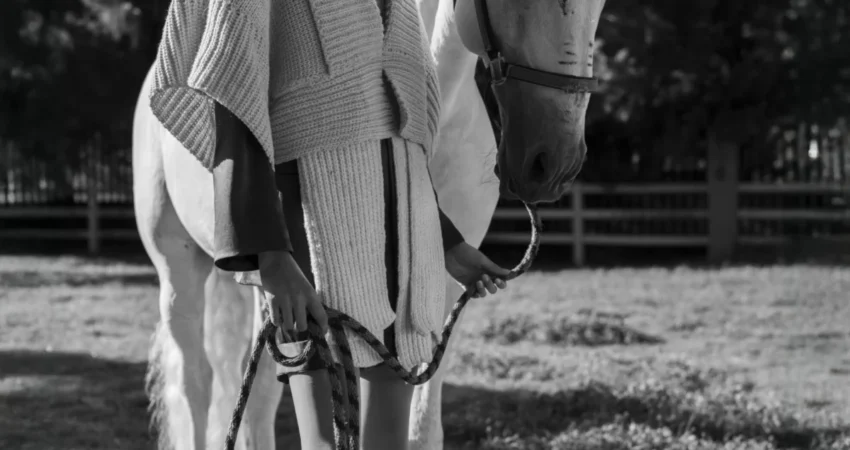
In a historic milestone for Mexican design, Lorena Saravia showcased her Spring-Summer 2027 collection within the hallowed halls of New York City’s Grand Central Terminal, signaling a definitive shift in the global perception of contemporary Latin American fashion. The presentation comes exactly one decade after the designer founded her eponymous label, marking a transition from an emerging regional talent to a formidable international presence. By securing one of the world’s most iconic architectural landmarks for her runway, Saravia has not only elevated her brand’s prestige but has also established a new benchmark for the "Made in Mexico" seal of quality on the global stage.
The Spring-Summer 2027 collection represents the culmination of a strategic expansion plan that began several years ago. While many designers measure success through the ephemeral lens of social media engagement or celebrity endorsements, Saravia has focused on the meticulous construction of a sustainable business infrastructure. This foundation is rooted in her workshop in the Colonia Roma neighborhood of Mexico City, where a dedicated team of artisans and local suppliers form the backbone of her operations. This commitment to local craftsmanship, paired with a sophisticated global vision, has allowed the brand to navigate the volatile fashion landscape with a resilience that is rare for independent houses.
A Chronology of Strategic Growth and Market Consolidation
The path to Grand Central Terminal was paved by a series of calculated moves that balanced creative integrity with commercial viability. Founded in 2014, the Lorena Saravia brand initially gained traction for its minimalist aesthetic and its ability to cater to the "Saravia Girl"—a demographic defined by independent, career-driven women who require a wardrobe that offers both protection and empowerment.

A pivotal moment in this timeline occurred in 2023, when Saravia partnered with the Swedish retail giant H&M for a highly publicized capsule collection. At the time of the launch, Saravia expressed an ambitious goal: for the collection to sell out within 48 hours. The market response exceeded even the most optimistic projections, with the entire line being depleted in less than 24 hours. This commercial triumph served as a proof of concept for the brand’s scalability and its appeal beyond the niche luxury market.
Following the H&M success, the brand shifted its focus toward internationalizing its footprint. The decision to present in New York City was not merely a stylistic choice but a strategic entry into the North American market. By choosing Grand Central Terminal, a hub of constant movement and transition, Saravia mirrored the life of her target consumer—the woman on the go who demands functionality without sacrificing elegance.
The Spring-Summer 2027 Collection: Technical Innovation and Materiality
The Spring-Summer 2027 collection is described by industry analysts as Saravia’s most mature work to date. It moves away from the literal interpretations of Mexican culture that often dominate the international fashion narrative, opting instead for a subtle, sophisticated dialogue between tradition and modernity.
The collection’s palette and texture were heavily influenced by a research expedition to Oaxaca, a region synonymous with Mexico’s artisanal heritage. However, rather than utilizing traditional indigenous patterns, Saravia deconstructed these influences into technical elements. Key features of the collection include:

- Raw Wool and Woven Textures: The designer reintroduced raw wool, processing it into lightweight fabrics suitable for the spring and summer seasons. These were paired with intricate woven textures that added a tactile dimension to the silhouettes.
- Sartorial Evolution: The brand’s signature leather jacket—a staple of the Saravia identity—was reimagined as a long-form coat, demonstrating a mastery of leather tailoring.
- Silk and Organic Geometry: High-complexity patterns were executed in silk, with trousers featuring architectural drapes that transition seamlessly from day to evening wear. One standout piece included a silk blouse with a texture mimicking the organic surfaces of maize, accented by a subtle ring of knitted wool at the collar.
- The "Cuajimalpa" Influence: The aesthetic was also informed by the designer’s childhood memories of the forested landscapes of Cuajimalpa. This translated into a rugged yet refined sensibility, where the "outdoor" meets the "urban."
Cultural Foundations and the Power of the Matriarchy
Central to the Lorena Saravia narrative is the concept of the Mexican matriarchy. In various statements regarding her creative process, Saravia has highlighted the influence of strong female figures in her life and in Mexican history. She specifically cited María Félix—the legendary actress of the Golden Age of Mexican cinema—as a reference point for the "personality" of her garments.
According to Saravia, the Mexican woman possesses a specific, forceful personality: she is a vocal leader within her environment, deeply connected to family and tradition, yet fiercely independent. This duality is reflected in the SS27 collection’s construction. The garments are designed to act as a form of "armor" for the modern woman, providing a sense of security and presence in the public sphere.
This focus on the matriarchy also extends to the preservation of artisanal knowledge. Saravia views the transmission of craft from one generation of women to the next as the "true family legacy." By integrating these manual processes into a contemporary luxury framework, the brand ensures that these traditions remain relevant and economically viable in a globalized economy.
Business Infrastructure and Local Impact
While the New York presentation captured the headlines, the underlying strength of the Saravia brand lies in its domestic operations. The company has built a solid and sustainable business structure that actively supports local suppliers in Mexico. This vertical integration allows for greater quality control and ensures that the economic benefits of the brand’s global success are felt within the local community.

The workshop in Colonia Roma serves as a hub for innovation, where traditional techniques are tested against modern silhouettes. Industry experts note that this "slow fashion" approach, which prioritizes durability and timeless design over trend-driven cycles, positions Saravia well within the growing global demand for ethical and sustainable luxury.
The brand’s ambition is clear: to become the most significant Mexican fashion house on the global stage. However, Saravia has emphasized that this goal is not driven by a desire for fame or wealth, but by a mission to build a corporate and creative legacy that has not yet been achieved in the Mexican fashion sector. The objective is to create a brand that can stand alongside historic European houses while maintaining a distinctly Mexican soul.
Broader Implications for the Mexican Fashion Industry
The success of Lorena Saravia’s Spring-Summer 2027 show has significant implications for the broader Mexican creative economy. For decades, Mexican fashion was often relegated to the categories of "ethnic" or "folkloric" in the eyes of international buyers. Saravia’s work challenges this pigeonholing by presenting a vision of Mexico that is urban, sophisticated, and technically advanced.
Data from recent textile and apparel industry reports suggest that Mexico is increasingly being viewed as a source of high-end design rather than just a manufacturing center. Saravia’s ability to sell out a collaboration with a global retailer like H&M and subsequently hold a high-profile show in New York provides a roadmap for other Mexican designers seeking international expansion.

Furthermore, the emphasis on "eternal inheritance"—the idea that clothing should be passed down through generations—aligns with the luxury market’s shift toward "quiet luxury" and investment pieces. By focusing on garments that protect and endure, Saravia is tapping into a consumer sentiment that favors substance over spectacle.
Conclusion: A Vision of Contemporary Mexico
As the fashion industry continues to grapple with issues of identity and sustainability, Lorena Saravia offers a compelling model for the future. Her Spring-Summer 2027 collection is more than a seasonal offering; it is a manifesto for a new Mexican aesthetic—one that is free from clichés and deeply rooted in the realities of contemporary life.
Through the intersection of childhood memories, artisanal heritage, and a clear-eyed business strategy, Saravia has constructed a universe where the past and the future coexist. The presentation at Grand Central Terminal serves as a reminder that Mexican fashion is no longer a peripheral player in the global conversation. It is a central, vibrant force, defined by a femininity that is both free and independent, and a commitment to excellence that knows no borders. As the brand looks toward the remainder of the decade, the focus remains on expansion, but the heart of the operation remains firmly planted in the soil and the stories of Mexico.

0 Comments