
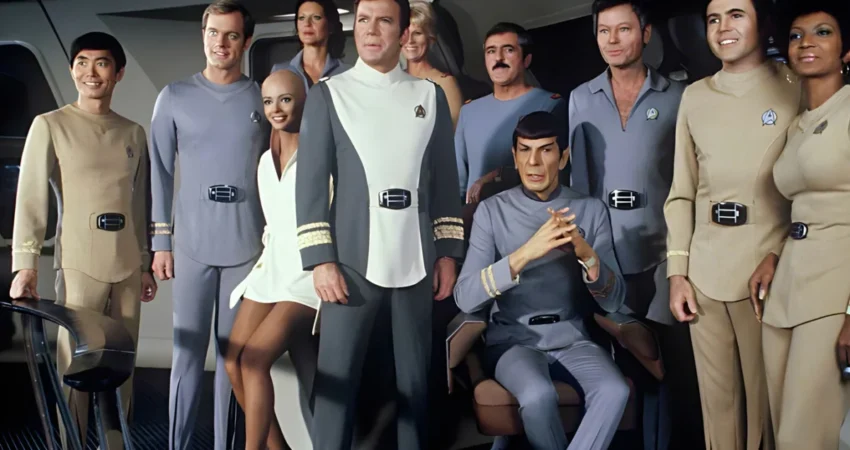
The digital streaming landscape continues to serve as a vital repository for cinematic history, a fact underscored by the recent addition of the first six Star Trek feature films to the Netflix library. This acquisition brings the complete "Original Series" filmography—spanning from 1979 to 1991—to a global audience, offering a comprehensive look at the franchise’s transition from a cult television program to a pillar of big-budget science fiction cinema. These films, featuring the iconic crew of the USS Enterprise led by Captain James T. Kirk and Commander Spock, represent a pivotal era in Hollywood where intellectual science fiction began to merge with the spectacle of the summer blockbuster.
The arrival of these titles comes at a time when streaming platforms are increasingly leveraging "legacy content" to retain subscribers. For Netflix, securing the rights to the classic Star Trek era provides a substantive counterweight to contemporary sci-fi offerings, appealing to both nostalgic older demographics and a new generation of viewers interested in the roots of the "Space Opera" genre. Unlike many modern franchises that rely heavily on rapid-fire action and computer-generated imagery, the classic Star Trek films are noted for their emphasis on diplomacy, ethical quandaries, and character-driven narratives.
The Historical Transition: From Small Screen to Global Phenomenon
To understand the significance of these six films, one must look at the precarious state of the franchise in the late 1970s. After the original Star Trek television series was canceled by NBC in 1969 due to low Nielsen ratings, it found an unexpected second life in broadcast syndication. By the mid-1970s, the show’s popularity had surged, leading Paramount Pictures to consider a revival. Initially, the studio planned a new television series titled Star Trek: Phase II. However, following the unprecedented massive success of George Lucas’s Star Wars in 1977 and Steven Spielberg’s Close Encounters of the Third Kind, Paramount pivoted, deciding that Star Trek belonged on the big screen.
This decision led to the production of Star Trek: The Motion Picture (1979). Directed by Academy Award winner Robert Wise, the film was a massive undertaking with a budget that ballooned to approximately $46 million—an astronomical sum at the time. While the film received mixed reviews for its slow pacing and philosophical density, it proved that Star Trek could command a significant box office presence, earning $139 million worldwide. This success laid the groundwork for a decade of sequels that would define the franchise’s identity.

A Chronological Breakdown of the Classic Era
The six films now available on the platform represent a continuous narrative arc for the original cast, documenting the aging and evolution of the characters.
-
Star Trek: The Motion Picture (1979): Often compared to 2001: A Space Odyssey, this film focuses on a massive alien entity known as V’Ger heading toward Earth. It serves as a visual spectacle that emphasizes the "sense of wonder" inherent in space exploration.
-
Star Trek II: The Wrath of Khan (1982): Widely regarded by critics and fans as the pinnacle of the series, this film shifted the tone toward a naval-style thriller. Directed by Nicholas Meyer, it reintroduced the villain Khan Noonien Singh (Ricardo Montalbán) and dealt with themes of aging, sacrifice, and the consequences of past actions. It is also famous for the death of Spock, a moment that remains one of the most emotional beats in sci-fi history.
-
Star Trek III: The Search for Spock (1984): Directed by Leonard Nimoy himself, this installment follows Kirk and his crew as they risk their careers and lives to recover Spock’s body and soul. The film is notable for the dramatic destruction of the original USS Enterprise, a move that shocked audiences at the time.
-
Star Trek IV: The Voyage Home (1986): In a stark departure from the previous two entries, this film is a lighthearted time-travel comedy. The crew travels back to 1986 San Francisco to save humpback whales, which are extinct in the future but necessary to communicate with an alien probe. It became a massive commercial success, grossing $133 million and proving the franchise’s versatility.
-
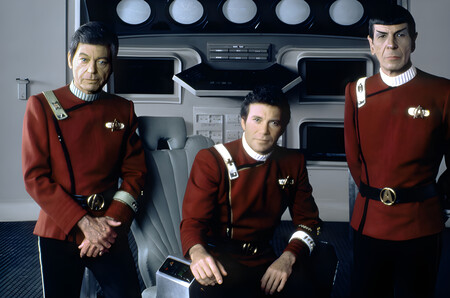
Star Trek V: The Final Frontier (1989): Directed by William Shatner, this film explores the crew’s search for God at the center of the galaxy. While it was the least critically acclaimed of the series and faced production difficulties, it remains a fascinating look at the central trio’s friendship (Kirk, Spock, and McCoy).
-
Star Trek VI: The Undiscovered Country (1991): The final film to feature the entire original cast serves as an allegory for the end of the Cold War. Following an explosion on a Klingon moon, the Federation must negotiate peace with their long-time enemies. It provided a dignified and politically relevant send-off for the characters before the franchise transitioned fully to The Next Generation.
Technical Achievement and the Role of Practical Effects
One of the most compelling reasons for the enduring relevance of these films is their reliance on practical effects. During the 1980s, Industrial Light & Magic (ILM) handled the visual effects for several of the Star Trek sequels. The use of highly detailed physical models, motion-control photography, and matte paintings created a tactile sense of reality that many critics argue is missing from modern CGI-heavy productions.
Furthermore, the musical scores for these films contributed significantly to their cinematic weight. The legendary Jerry Goldsmith composed the theme for the first film—a march so iconic it was later adopted as the theme for the Next Generation TV series. James Horner, who would later win Oscars for Titanic, provided the nautical, swashbuckling scores for The Wrath of Khan and The Search for Spock. These orchestral contributions elevated the films from "television spin-offs" to legitimate cinematic epics.
Sociopolitical Themes and Intellectual Merit
Star Trek has long been praised for using science fiction as a lens to examine contemporary social issues. The six films on Netflix continue this tradition. The Wrath of Khan examines the ethics of terraforming and the "Genesis" technology, which could create life but also be used as a weapon of mass destruction. The Voyage Home was an early and effective piece of environmentalist cinema, highlighting the dangers of species extinction.

Perhaps most significantly, The Undiscovered Country addressed the difficulty of overcoming institutional prejudice. Released just as the Berlin Wall fell and the Soviet Union collapsed, the film depicted the fear and resistance felt by those on both sides of a long-standing conflict when faced with the prospect of peace. This commitment to "hard" sci-fi themes—diplomacy over violence, and logic over impulse—is what distinguishes Star Trek from its contemporaries.
Data and Market Implications for Streaming Platforms
The inclusion of these films on Netflix is a strategic move that reflects broader trends in the streaming industry. Data from market research firms like Parrot Analytics suggests that "evergreen" franchises—shows and movies with long-term brand recognition—drive higher engagement than many new original series. By hosting the original Star Trek films, Netflix secures thousands of hours of potential watch time from a dedicated global fanbase.
Furthermore, the presence of these films serves as a gateway to the broader Star Trek universe. While Paramount+ remains the primary home for the franchise in many regions, licensing deals with Netflix allow for wider discovery. This "halo effect" often leads to increased interest in newer iterations of the brand, such as Star Trek: Discovery, Strange New Worlds, or the comedic homage The Orville, which draws heavily from the narrative structure established in these six classic films.
Conclusion: The Enduring Legacy of the Enterprise
The six Star Trek films now available for streaming offer more than just a trip down memory lane; they represent a masterclass in how to transition a television property to the cinema without losing its intellectual soul. From the high-concept philosophy of Robert Wise to the Shakespearean drama of Nicholas Meyer, these movies showcased a vision of the future where humanity’s greatest tools were not its phasers, but its capacity for reason, empathy, and cooperation.
As the entertainment industry continues to grapple with the balance between spectacle and substance, the "Kirk Era" of films stands as a reminder that science fiction is at its best when it asks difficult questions. For subscribers looking to fill their weekends with a marathon of intergalactic exploration, the journey of the USS Enterprise remains as relevant and engaging today as it was four decades ago. The availability of these films on a platform as accessible as Netflix ensures that the mission to "boldly go where no man has gone before" will continue for a new generation of explorers.

0 Comments