
The return of Formula 1 to the streets of Madrid has signaled a transformative moment for the sport, marking a convergence of elite athleticism and global luxury fashion. As the city prepares for its debut as the host of the Spanish Grand Prix at the IFEMA Madrid exhibition center, the atmosphere is defined not only by the roar of hybrid engines but by the curated aesthetics of the paddock. This shift represents the culmination of a decade-long evolution where the world’s most prestigious racing series has moved beyond the confines of the garage to become a premier platform for lifestyle branding and influencer marketing. The transition from the historic Jarama circuit, which last hosted a race 45 years ago, to a modern, semi-urban layout reflects a broader strategy by Formula 1 management to integrate the sport into the cultural and commercial heart of major metropolitan hubs.

The Cultural Paradigm Shift: From Grease to Glamour
For decades, the Formula 1 paddock was a utilitarian space reserved for engineers, mechanics, and drivers clad in team-issued polyester. However, the "Drive to Survive" era—fueled by the success of the Netflix docuseries—has fundamentally altered the demographic and interests of the viewership. According to industry data, the series has contributed to a 20% increase in female viewership in key markets and has lowered the average age of the fan base significantly. This new audience is as interested in what occurs behind the scenes as they are in the telemetry of the cars.
This shift has elevated the partners and families of the drivers—often referred to by the acronym WAGs (Wives and Girlfriends)—into the role of style ambassadors. Figures like Carmen Montero Mundt, the Spanish influencer and entrepreneur engaged to Mercedes driver George Russell, have become central to this narrative. Montero Mundt, a native of Jerez, exemplifies the modern paddock presence: a professional who balances her own business ventures, such as her skincare line Barriers, with the high-pressure environment of her partner’s career. Her presence at the JW Marriott in Madrid, surrounded by wardrobes curated for the weekend, underscores the logistical precision now required for a Grand Prix weekend.
.jpg)
The Strategic Commercialization of Paddock Style
The integration of fashion into Formula 1 is no longer incidental; it is a calculated commercial strategy. The recent 10-year partnership agreement between the luxury conglomerate LVMH and Formula 1, set to begin in 2025, serves as a definitive marker of this trend. The deal, valued at an estimated $1 billion, will see brands like Louis Vuitton, TAG Heuer, and Moët Hennessy become ubiquitous across the racing calendar.
In Madrid, this commercial synergy was evident through local partnerships. The Spanish brand Scalpers recently launched a campaign featuring both Montero Mundt and the Argentine driver Franco Colapinto, capitalizing on the regional excitement for the race. Such collaborations bridge the gap between the aspirational world of racing and the accessible market of high-street fashion. The presence of stylists like Nat Rosenfeld, who works with several paddock figures including Montero Mundt and Alicia Torriani, indicates that the "paddock walk" is now viewed with the same level of scrutiny as a red-carpet event.

The Chronology of Style: From Stewart to Hamilton
While the current focus on fashion is unprecedented in its scale, the sport has always possessed a degree of sartorial flair. Sir Jackie Stewart’s tartan caps in the 1960s and James Hunt’s "Sex, Breakfast of Champions" patches in the 1970s established a precedent for personal branding. However, as veteran F1 photographer Kym Illman notes, the modern catalyst for change was Lewis Hamilton.
Hamilton’s decision to engage with the fashion industry—attending the Met Gala and collaborating with designers like Tommy Hilfiger—broke the traditional mold of the driver as a corporate billboard. By arriving at circuits in avant-garde outfits from Dior or Rick Owens, Hamilton encouraged a culture where self-expression is permitted. This has paved the way for younger drivers like Gabriel Bortoleto to find their own niche, even if that niche is a preference for minimalist team wear and functional accessories like Acto watches.

The "High-Low" Aesthetic and the Power of Influence
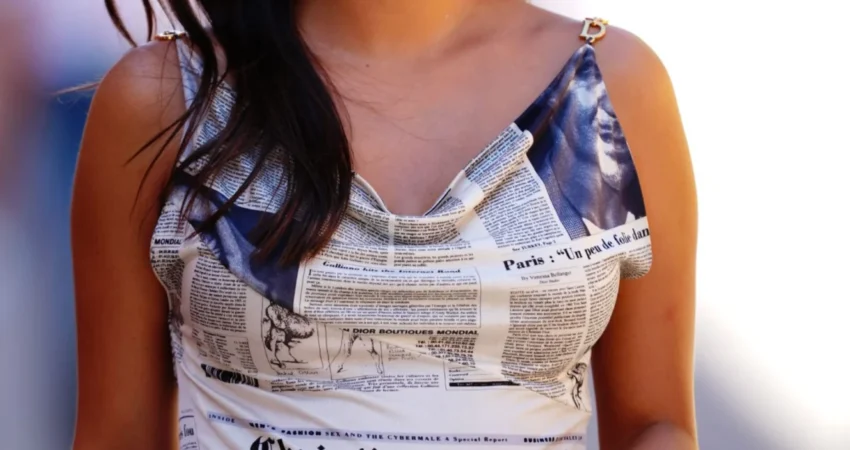
One of the most striking aspects of the modern paddock is the "high-low" mix of attire. Alexandra Saint Mleux, often associated with Ferrari’s Charles Leclerc, demonstrated this during the Madrid weekend by alternating between archival luxury and accessible contemporary brands. Her choice of a vintage John Galliano-era Dior "newspaper dress"—famously associated with the character Carrie Bradshaw—garnered significant social media traction. Conversely, her appearance in a floral knit dress from the Spanish brand Desigual highlighted a conscious effort to pay homage to the host nation’s textile industry.
This duality is echoed by Paulina Montoya, daughter of the legendary Colombian driver Juan Pablo Montoya. Having grown up in the paddock, she notes a distinct shift in expectations. In previous decades, attire was strictly functional—jeans and team t-shirts were the standard. Today, the weekend is a four-day fashion cycle: Thursday’s media day, Friday’s practice, Saturday’s qualifying, and Sunday’s race each demand a distinct look. Brands like Meshki and Christopher Esber have seen their profiles raised through these informal endorsements, creating a secondary economy within the sport.

Regional Influence and the Latin American Connection
The Madrid Grand Prix also serves as a focal point for Latin American and Spanish influence within the sport. The dinner hosted by Colombian designer Silvia Tcherassi at her Serrano Street boutique during the race weekend highlighted this connection. The event brought together a cross-section of the racing community, including Paulina Montoya, Gemma Pinto (partner of MotoGP star Marc Márquez), and Martina Svedin.
Tcherassi’s presence in the paddock, facilitated by stylists like Rosenfeld, has introduced a vibrant, draped aesthetic that contrasts with the traditionally rigid structures of racing gear. This regional pride extends to the drivers as well, with Spanish hero Carlos Sainz and his partner Rebecca Donaldson often seen supporting local craftsmanship. The cultural exchange is not one-way; Montero Mundt noted that her travels through the F1 calendar often influence her own style, from high-quality basics in Australia to cowboy boots in Austin, Texas.

The Practical Reality Behind the Lens
Despite the polished images seen on Instagram and in fashion magazines, the reality of life in the paddock remains grounded in the rigors of a global touring operation. The "rules" of the paddock are dictated more by physics than by fashion. High heels are widely regarded as a "rookie mistake" due to the miles of walking on asphalt and gravel required over a weekend. Furthermore, the constant wind at many circuits makes short, flowing skirts a logistical hazard.
The glamour often ends at the door of the team hospitality units. Montero Mundt describes the "unseen" side of the weekend: hours spent in cramped motorhome rooms, often sitting on massage tables or the floor because space is prioritized for technical equipment and driver preparation. It is a world of contrasts where a million-dollar outfit might be worn while drinking coffee out of a paper cup in a room full of greasy engine components.
.jpg)
Implications for the Future of Formula 1
The integration of Madrid into the Formula 1 calendar, with its emphasis on a "lifestyle" circuit at IFEMA, suggests that the sport is moving toward a future where the race is merely the centerpiece of a larger cultural festival. The 10-year commitment from the city indicates a long-term belief in the profitability of this model.
As the weekend in Madrid concluded, the city seamlessly transitioned from the roar of the engines to the start of Madrid Fashion Week. This overlap is symbolic of the current state of Formula 1: a sport that is no longer content to stay in its lane. By embracing the influence of fashion, the power of digital creators, and the prestige of luxury conglomerates, Formula 1 has secured its position as a global cultural juggernaut. The paddock has evolved into a space where technical excellence meets artistic expression, ensuring that the sport remains relevant to a diverse and expanding global audience. In this new era, the race for style is just as competitive as the race for the checkered flag.

0 Comments