
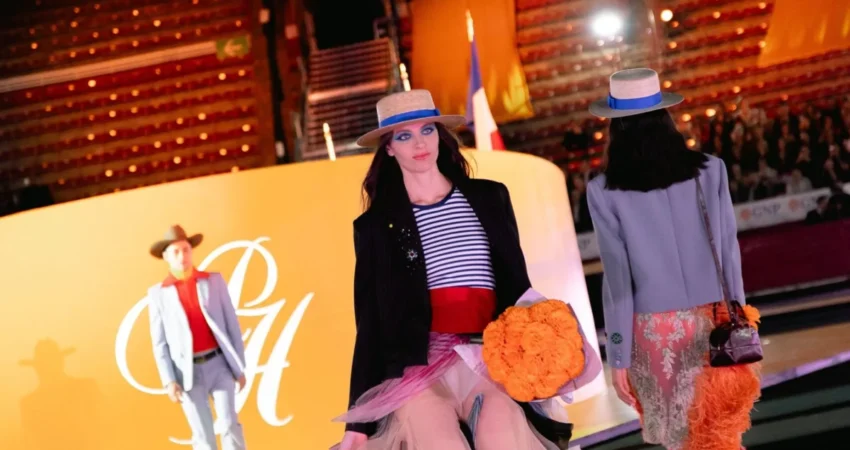
The Mexican luxury retail landscape witnessed a transformative moment as El Palacio de Hierro debuted its first edition of "El Gran Desfile" within the monumental confines of "La México," the world’s largest bullring. This high-profile event, which drew an exclusive audience of 700 guests, served as a curated showcase for the Autumn-Winter 2026 collections, utilizing a cast of 60 professional models to navigate a runway that bridged the cultural and aesthetic legacies of Mexico and France. By selecting a venue of such historical and architectural magnitude, the department store reaffirmed its position as the premier arbiter of sophistication in Latin America, framing fashion not merely as a commodity but as a shared language between two nations with deep-seated historical ties.
A Strategic Fusion of Heritage and Modernity
The choice of "La México" (Plaza de Toros México) as the backdrop for the Gran Desfile was a calculated move to align the brand’s identity with national heritage while simultaneously embracing international luxury standards. The scenography was meticulously designed to leverage the scale of the arena, featuring prominent El Palacio de Hierro monograms and the flags of Mexico and France hoisted high above the ring. This visual alignment paid homage to the store’s origins; founded in 1888 by French immigrants J. Tron and J. Leautaud, El Palacio de Hierro has long been the primary pipeline for Gallic style in the Mexican market.
The event began with an atmosphere of high anticipation. Prior to the commencement of the runway show, the guest list—comprising industry leaders, cultural icons, and fashion enthusiasts—became a preliminary exhibition of the season’s trends. Behind the scenes, the production involved an extensive team of stylists, makeup artists, and hair technicians who worked to synchronize the visual identity of 60 models with the thematic arcs of the three-act performance.
Chronology of El Gran Desfile: From Backstage to the Main Stage
The proceedings followed a strictly choreographed timeline, transitioning from a high-energy reception to a multi-sensory theatrical experience. As the house lights dimmed, the rhythmic sounds of French indie-pop project Christine and the Queens signaled the start of the exhibition, setting a tone that was both contemporary and avant-garde.
Act I: The Cultural Synthesis
The opening of the parade featured two definitive looks that served as a manifesto for the evening, blending traditional Mexican motifs with French silhouettes. This segment introduced a heavy emphasis on "marinière" (sailor) stripes, a staple of French maritime fashion, juxtaposed against vibrant floral prints and grunge-inspired checks. A standout element of this act was the strategic use of hosiery in saturated tones—green, blue, orange, red, and yellow—providing a high-contrast base for the garments. In a symbolic nod to Mexican tradition and the seasonal timing of the show, models carried cempasúchil (Mexican marigold) flowers within their bags, integrating the iconography of the Day of the Dead into a high-fashion context.
Act II: Parisian Elegance Reimagined
The second phase of the show transported the audience to an imagined autumnal Paris. The focus shifted toward sophisticated layering and structural complexity. Long coats, jacquard prints, and silk scarves were paired with high-neck sweaters, reflecting a move toward modest yet opulent dressing. The collection balanced formal tailoring with relaxed, sporty elements, suggesting a versatile wardrobe for the modern urbanite. Key materials included synthetic fur for oversized scarves and fluid fabrics for boho-style maxi skirts, often paired with structured boots and fringe-detailed minidresses. This act emphasized the "Total Palace" concept, where luxury is defined by the tactile quality and the layering of diverse textures.
Act III: Theatrical Urbanism and the Return to Mexico
The final segment took a dramatic turn toward the theatrical and the nocturnal. The runway was populated by corsetry, intricate lace, lingerie-inspired dresses, and ostrich feathers. Monochromatic black-and-white suits offered a sharp, architectural contrast to the fluid movement of fringe and polka-dot prints. Accessories played a pivotal role here, with berets, wide-brimmed hats, and delicate face veils reinforcing the Parisian "femme fatale" aesthetic. However, the narrative arc reached its climax with the sudden entrance of a mariachi ensemble. The shift in auditory and visual rhythm served to ground the international trends back in Mexican soil, celebrating the store’s dual identity.
The finale showcased evening wear in a patriotic and seasonal palette of red, green, blue, and white. This closing set solidified the season’s primary accessory trend: solid-colored opaque tights as a foundational element for Autumn-Winter 2026 formal wear.
Technical Execution and Production Scale
The scale of the Gran Desfile represents a significant investment in experiential marketing. Utilizing 60 models is nearly double the number used in standard seasonal previews, allowing for a more comprehensive representation of the store’s brand portfolio. The technical production required a sophisticated lighting rig capable of illuminating the vast diameter of the bullring while maintaining the intimacy required for a fashion show.
Following the conclusion of the runway, the event transitioned into a celebratory after-party. Fireworks in the national colors of Mexico—green, white, and red—illuminated the night sky over the Colonia Noche Buena district. The evening concluded with a curated DJ set by actor and musician Edu Maruri, providing a social space for guests to dissect the collections and discuss the implications of the trends presented.
Trend Analysis: The Aesthetic Pillars of Autumn-Winter 2026
Based on the curation presented by El Palacio de Hierro, several key trends are projected to dominate the luxury market for the upcoming AW2026 season:
- Chromatic Hosiery: Moving away from neutral tones, the use of vibrant, solid-colored tights (specifically in primary colors and forest greens) is established as a mandatory styling tool for both day and evening wear.
- The New Bohemian: Long, flowing skirts paired with heavy boots and layered knitwear suggest a continuation of the "boho-chic" revival, but with a more structured, urban edge.
- Textural Contrast: The juxtaposition of heavy jacquards with light lace and synthetic fur indicates a season focused on sensory variety.
- Cultural Hybridity: The integration of local floral symbols (cempasúchil) and traditional music into a global fashion narrative suggests that luxury brands are increasingly looking toward "glocalization"—tailoring international luxury to local cultural sentiments.
Historical Context and Market Implications
The relationship between Mexico and France in the realm of commerce and fashion is one of the oldest in the Western Hemisphere. During the Porfiriato era in the late 19th and early 20th centuries, Mexican high society looked almost exclusively to Paris for architectural and sartorial inspiration. El Palacio de Hierro was the cornerstone of this movement. By naming the event "El Gran Desfile" and hosting it in a venue as iconic as La México, the company is not only selling clothes but also reclaiming its historical role as a cultural bridge.
From an economic perspective, this event signals a robust outlook for the Mexican luxury sector. According to market analysts, the luxury goods market in Mexico has shown resilient growth, outperforming several other Latin American markets. By moving toward large-scale, stadium-style events, El Palacio de Hierro is adopting a strategy similar to global powerhouses like Chanel or Dior, which have increasingly used "destination" shows to generate social media virality and brand prestige.
Broader Impact on the Retail Industry
The Gran Desfile marks the beginning of a new era for El Palacio de Hierro. The "first edition" branding implies that this will become an annual or bi-annual fixture on the Mexican fashion calendar, potentially rivaling established fashion weeks in terms of influence and production value.
For the retail industry, this move demonstrates a shift away from traditional "trunk shows" or small-scale in-store presentations toward "fashion spectacles." In an age where digital presence is paramount, the visual impact of fireworks, mariachis, and a 60-model rotation in a historic bullring provides the kind of "omnichannel" content that drives consumer engagement across both physical and digital platforms.
Ultimately, El Palacio de Hierro has utilized the Gran Desfile to articulate a clear vision for Autumn-Winter 2026: a season that is unapologetically bold, deeply layered, and profoundly rooted in the dialogue between Mexican heritage and French elegance. As the fireworks faded over La México, the message remained clear—the future of Mexican luxury lies in the masterful curation of global legacies.

0 Comments