
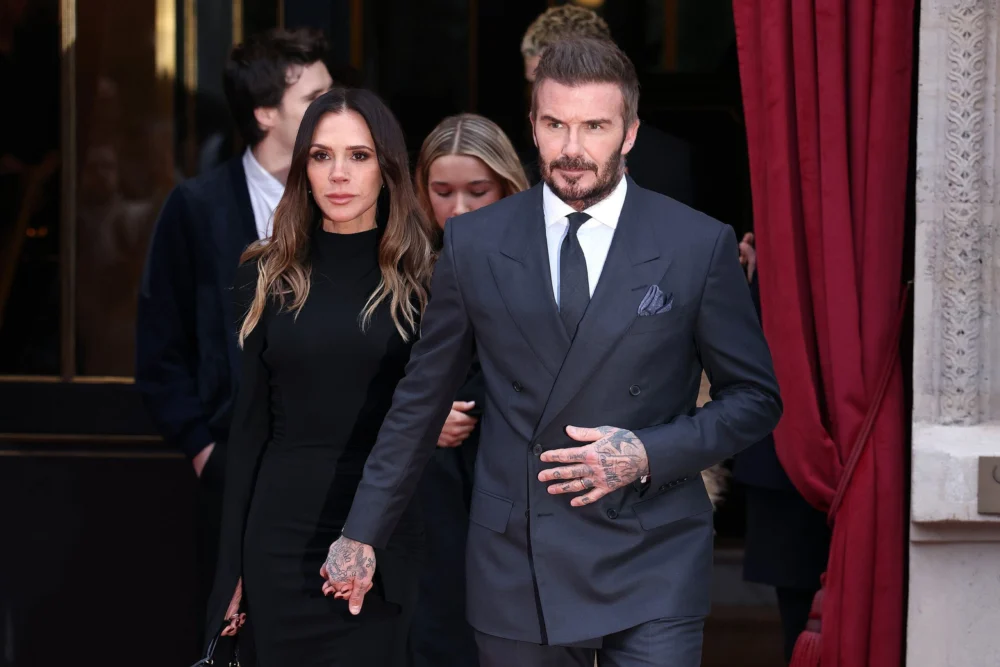
The global fashion industry converged upon the Cité Internationale Universitaire de Paris on the evening of Friday, March 6, 2026, to witness the unveiling of Victoria Beckham’s Autumn-Winter 2026 ready-to-wear collection. Set against the historic backdrop of the university’s grand architecture, the show served as a definitive statement of the brand’s continued evolution within the upper echelons of Parisian high fashion. The presentation, characterized by an atmosphere of hushed reverence and illuminated by a profusion of flickering candles, marked a significant departure from the high-octane energy of traditional runways, opting instead for a somber, intimate elegance that mirrored the artistic themes of the collection.
A Convergence of Art Deco Rigor and Contemporary Fluidity
For the Autumn-Winter 2026 season, Victoria Beckham drew profound inspiration from the life and work of the Polish painter Tamara de Lempicka. Known as the "Baroness with a Brush," Lempicka was a leading figure of the Art Deco movement, celebrated for her highly stylized, architectural portraits that blended neoclassical sensibilities with a modern, cubist edge. This influence was palpable throughout the collection, as Beckham translated Lempicka’s "soft cubism" into wearable manifestos of geometric precision.
The silhouettes presented on the runway oscillated between two distinct poles: the fluid romanticism of evening wear and the structural rigor of modern tailoring. Beckham’s mastery of "the blur"—a technique involving soft, ethereal fabrics that drape around the body—was evident in a series of grand soir dresses. These pieces often featured intricate floral details that seemed to emerge from the fabric, providing a organic counterpoint to the sharp lines seen elsewhere in the collection. Conversely, the "officewear" segments of the show emphasized a disciplined aesthetic. Sharp lapels, defined shoulders, and narrow waists dominated the suiting, echoing the empowered, statuesque women found in Lempicka’s most famous canvases.
The Artistic Legacy of Tamara de Lempicka in Fashion
To understand the depth of the AW26 collection, one must examine the legacy of Tamara de Lempicka. Her work in the 1920s and 30s captured the essence of the "New Woman"—independent, sophisticated, and unapologetically bold. Beckham’s decision to reference this era reflects a broader trend in 2026 fashion toward "investment dressing" and timelessness, moving away from transient, logo-heavy aesthetics.
Lempicka’s influence was specifically noted in the collection’s color palette and construction. The use of deep inks, stark blacks, and metallic sheens mirrored the high-contrast lighting of Art Deco portraiture. The geometric construction of the garments, particularly the way seams were utilized to create sculptural shapes, paid homage to the mechanical and industrial themes prevalent during the interwar period. By grounding her contemporary designs in these historical artistic principles, Beckham has successfully elevated her brand’s narrative, positioning her clothing not just as seasonal attire, but as a form of wearable art.
The Venue: Cité Internationale Universitaire de Paris
The choice of the Cité Internationale Universitaire de Paris as the venue provided a layer of intellectual and historical depth to the event. Established after World War I to provide housing for students and researchers from around the world, the site is a symbol of international cooperation and architectural diversity. The specific hall used for the show, with its high ceilings and stone masonry, provided the perfect acoustic environment for the "silent" atmosphere Beckham desired.
The production design utilized hundreds of candles to create a warm, amber glow, which softened the imposing architecture of the university. This lighting choice was not merely aesthetic; it served to highlight the textures of the fabrics—the sheen of the silks, the matte finish of the wools, and the intricate embroidery of the evening gowns. Industry analysts noted that the choice of venue and lighting signaled a move toward "quiet luxury," focusing on the sensory experience of the garment rather than the spectacle of the event.
The Beckham Family and the Front Row Presence
As has become tradition for the brand, the Beckham family occupied a central position in the front row, serving as both supporters and ambassadors for the label. David Beckham, a global icon of style, was observed in an ultra-chic, double-breasted black suit, a look that complemented the formal tone of the evening. He was joined by his sons, Cruz and Romeo, both of whom opted for more relaxed silhouettes that represented the brand’s versatility across generations.
Significant media attention was directed toward Harper Seven, the youngest of the Beckham clan. Appearing in a floor-length black evening dress, Harper’s presence underscored the brand’s expanding appeal toward a younger, sophisticated demographic. Furthermore, Jackie Apostel, the girlfriend of Cruz Beckham, solidified her role as a brand muse by wearing a long, vaporous slip dress. This particular garment is an emblematic piece of the Victoria Beckham archive, known for its delicate straps and bias-cut silk, representing the "effortless chic" that the designer has championed since the brand’s inception in 2008.

The celebrity attendance extended beyond the family, including figures such as Diane Kruger, Olivia Palermo, and Noémie Lenoir. The presence of these individuals, long considered "tastemakers" in the fashion industry, reinforces the brand’s standing among the elite. Their attendance at the AW26 show is a testament to Beckham’s successful transition from a celebrity-backed label to a critically acclaimed fashion house.
Victoria Beckham’s Personal Aesthetic and Final Bow
At the conclusion of the show, Victoria Beckham emerged to take her customary bow, dressed in a manner that mirrored the collection’s core philosophy. She wore an oversized navy-blue (ink) suit, paired with a simple white T-shirt and a thin black belt. This look—a blend of masculine tailoring and feminine minimalism—has become her signature.
Shortly after the event, the designer took to Instagram to express her gratitude to her supporters and the team behind the production. "Thank you for always being there to support me. I love you all very much," she shared with her followers. This direct engagement with her audience has been a cornerstone of her business strategy, allowing her to maintain a personal connection with consumers while operating within the exclusive world of Paris Fashion Week.
Financial Performance and Brand Trajectory
The Autumn-Winter 2026 show comes at a pivotal moment for the Victoria Beckham brand. Following years of restructuring and strategic investment, the company reported significant growth in the 2024-2025 fiscal years. By focusing on leather goods, eyewear, and the highly successful "Victoria Beckham Beauty" line, the house has achieved a level of financial stability that allows for greater creative experimentation on the runway.
Market analysts suggest that the AW26 collection’s focus on "rigorous officewear" is a strategic move to capture a larger share of the luxury professional market. As global workplace norms continue to evolve, there is an increasing demand for clothing that balances formal authority with modern comfort. Beckham’s collection, with its emphasis on "perfectly mastered cuts," positions the brand to meet this demand.
Chronology of the AW26 Presentation
The timeline of the March 6 event was meticulously managed to ensure maximum impact:
- 18:00 CET: Arrivals began at the Cité Internationale Universitaire. The "front row" celebrities and the Beckham family arrived under heavy security and intense media interest.
- 18:45 CET: Guests were ushered into the main hall, where the candlelit atmosphere was established. The soundtrack remained minimal, emphasizing the "silent" theme.
- 19:00 CET: The first look—a geometric wool coat with Art Deco-inspired lapels—hit the runway, setting the tone for the collection.
- 19:25 CET: The finale, featuring the "grand soir" floral dresses, concluded the runway walk.
- 19:30 CET: Victoria Beckham took her bow, followed by an immediate surge in social media activity as images of the collection were released globally.
- 21:00 CET: Post-show reactions from critics began to circulate, with many praising the "mature" and "disciplined" direction of the collection.
Implications for the 2026 Fashion Landscape
The success of the Victoria Beckham AW26 show reflects a broader shift in the fashion industry toward "meaningful luxury." In an era where consumers are increasingly concerned with the longevity and cultural relevance of their purchases, Beckham’s decision to root her collection in the work of Tamara de Lempicka provides a narrative that transcends seasonal trends.
The collection also highlights the ongoing importance of Paris as the ultimate destination for designers seeking global prestige. While Beckham initially launched her brand in New York and spent years showing in London, her move to the Paris schedule has coincided with her brand’s most successful period. The Autumn-Winter 2026 collection confirms that Victoria Beckham is no longer a "guest" in the world of high fashion but a central protagonist, capable of setting the agenda for modern elegance.
As the industry looks forward to the remainder of the 2026 season, the themes established in this show—geometric precision, artistic historical references, and the fusion of masculine and feminine silhouettes—are expected to resonate across both the luxury and premium-market sectors. Victoria Beckham has demonstrated that by looking back at the structured beauty of the past, she can clearly define the aesthetic of the future.

0 Comments