
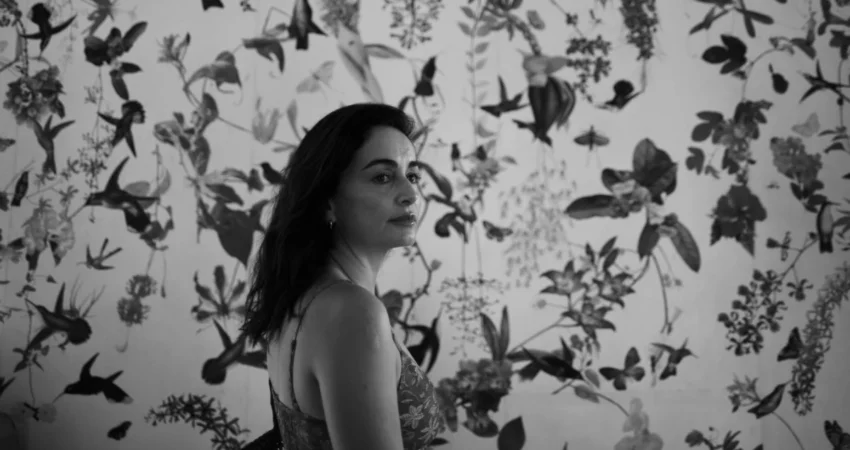
The landscape of contemporary Mexican cinema has long been a vehicle for social commentary, often oscillating between the hyper-realism of urban struggle and the intimate portraits of domestic life. In her directorial debut, Victoria Franco introduces a narrative that bridges these two worlds through Doce Lunas (Twelve Moons), a feature film that serves as both a character study and a searing indictment of social invisibility. Starring the acclaimed Ana de la Reguera, the film delves into the life of Sofía, a 40-year-old woman whose existence is fractured by the compounding weights of substance abuse, the biological and social pressure to achieve motherhood, and the paralyzing grief following the death of her mother.
Captured in stark black and white, the film follows Sofía’s descent from a position of relative socio-economic privilege into the harrowing reality of life on the streets. Victoria Franco, who also penned the screenplay, utilizes the protagonist’s journey to explore the specific vulnerabilities of women within a patriarchal framework—vulnerabilities that persist regardless of one’s initial social standing. By stripping the film of color, Franco and cinematographer Sergio Armstrong focus the audience’s attention on the raw emotional and physical erosion of the protagonist, creating a visual language that mirrors the bleakness of addiction and the "hopelessness" that the director identifies as a central theme of the work.
Narrative Foundations and the Protagonist’s Descent
At the heart of Doce Lunas is Sofía, a character designed to challenge the stereotypes associated with addiction and homelessness. Unlike many cinematic portrayals that present these issues as inherent to certain demographics, Franco’s narrative posits that the safety net of privilege is often thinner than it appears. Sofía is a woman navigating the complexities of middle age, a period frequently marked by societal expectations of professional stability and maternal fulfillment. When these pillars crumble—exacerbated by the loss of a primary maternal bond—Sofía turns to substances as a coping mechanism.
The film meticulously charts the "curva de la vida" (the curve of life), illustrating how a series of personal tragedies can lead to a total systemic collapse. The character’s desire for motherhood becomes a haunting motif, representing a future that is increasingly out of reach as her health and social status decline. This specific focus on the female experience is intentional; Franco has stated that the film was born from a need to voice the struggles of women who are simultaneously fighting for professional success, marital harmony, and reproductive autonomy while battling the silent, stigmatized war of addiction.
Research and Documentary Realism in Fiction
Victoria Franco’s approach to Doce Lunas is deeply rooted in a tradition of investigative filmmaking. Her previous experience co-directing the 2013 fiction-documentary hybrid A los ojos with her brother, the renowned filmmaker Michel Franco, provided a foundation for her interest in the marginalized populations of Mexico City. For Doce Lunas, Franco engaged in extensive fieldwork to ensure the authenticity of Sofía’s experience on the streets.
Central to this research was Franco’s collaboration with Casa Alianza, an international non-governmental organization dedicated to protecting children and youth in social danger. The director spent significant time accompanying street educators to various "puntos" (meeting points) where individuals in situations of homelessness congregate. This firsthand observation allowed Franco to move beyond superficial depictions of poverty, instead focusing on the interpersonal dynamics and the psychological toll of life in the margins.
Furthermore, Franco extended her research to the state of Hidalgo, specifically in Pachuca, to visit "casas de medio camino" (halfway houses) and "anexos." These facilities, often the only recourse for those struggling with addiction in Mexico, vary wildly in quality and regulation. By interviewing residents who had successfully navigated these systems, as well as those who had suffered through their more brutal iterations, Franco gathered the testimonies that would eventually shape the more harrowing scenes in the film. The director noted that the stories she encountered were often as painful, if not more so, than the fictionalized struggles of her protagonist.

Statistical Context of Addiction and Homelessness in Mexico
The narrative of Doce Lunas is supported by a sobering statistical reality in Mexico. According to the National Survey of Drug, Alcohol, and Tobacco Consumption (ENCODAT), as of the last major reporting period in 2017, approximately 1,884,601 individuals between the ages of 12 and 65 reported a dependency on alcohol. This figure represents only one facet of the substance abuse crisis, which is frequently linked to broader mental health issues and a lack of accessible rehabilitation infrastructure.
Homelessness, or "situación de calle," remains a difficult metric to track due to the transient nature of the population and the social stigma that leads to underreporting. Data from the National Institute of Statistics and Geography (INEGI) has estimated that roughly 5,700 people live on the streets in Mexico, though advocacy groups like Casa Alianza suggest that the actual number, particularly when including "hidden homelessness" and those in temporary shelters, is likely significantly higher.
Doce Lunas acts as a cinematic bridge to these statistics, humanizing the data through Sofía’s eyes. The film highlights the fact that addiction is a chronic disease rather than a moral failure—a distinction that Franco is keen for audiences to understand. By portraying the protagonist’s loss of agency, the film underscores the systemic failure to provide adequate mental health support and social safety nets for those in crisis.
The Female Gaze and Social Responsibility
A defining characteristic of the film is its insistence on a feminine perspective. Franco has argued that the story of Doce Lunas is inextricably tied to the gender of its protagonist. Had the character been male, the societal pressures regarding domesticity, the specific biological urgency of motherhood, and the nature of the "violencias" (violences) experienced on the street would have taken a fundamentally different form.
The film explores the "patriarchal environment" that Sofía occupies, where her value is often measured by her ability to "comply" with the roles of wife and mother. When she fails to meet these standards due to her addiction and grief, the societal rejection is swift and absolute. Franco’s direction emphasizes the isolation that comes with being a woman who has "fallen" from a position of respectability, suggesting that the stigma of addiction is often more punitive for women than for men.
In her public statements regarding the film, Franco has emphasized a sense of responsibility toward the subjects she portrays. She advocates for a shift in public perception, urging viewers not to ignore those in situations of homelessness but to acknowledge their humanity. However, she also offers a nuanced view on charity, suggesting that spontaneous monetary donations can sometimes perpetuate a cycle of street dependency rather than addressing the root causes of the individual’s displacement.
Cinematography and the Visual Language of Despair
The decision to film Doce Lunas in black and white, under the guidance of cinematographer Sergio Armstrong, is a deliberate aesthetic choice that serves several narrative functions. Armstrong, known for his work with directors like Pablo Larraín, brings a high-contrast, atmospheric quality to the film that strips away the distractions of the modern urban environment.
This visual style reinforces the sense of timelessness and universality in Sofía’s struggle. It also heightens the emotional resonance of the protagonist’s physical transformation. As Ana de la Reguera’s character loses her grip on her former life, the monochrome palette emphasizes the hollows of her face and the grit of her surroundings, creating a visceral sense of "desesperanza" (hopelessness).

The film’s pacing and visual structure follow the "life curve" mentioned by Franco. The initial scenes, though heavy with grief, maintain a sense of order that gradually dissolves into the chaotic, fragmented reality of the streets. This transition is not merely a plot point but a sensory experience for the audience, designed to evoke the disorientation of the character’s descent.
Broader Implications and Cinematic Legacy
Doce Lunas enters the Mexican cinematic landscape at a time when the industry is increasingly focused on the intersection of gender and social justice. The film joins a growing body of work by female Mexican directors who are reclaiming narratives that were previously told through a male lens. By centering a woman’s struggle with addiction and homelessness, Franco challenges the audience to confront the "realidades cotidianas" (everyday realities) that are often obscured by more sensationalized portrayals of crime or poverty.
The film also marks a significant milestone for Ana de la Reguera. Known for her versatile career in both Mexican and international productions, her performance in Doce Lunas represents a departure into more demanding, transformational territory. Her portrayal of Sofía has been noted for its restraint and its ability to convey profound loss without relying on melodrama.
As the film concludes, Franco offers what she describes as a "ventana de luz" (window of light). Despite the pervasive darkness of the narrative, the ending suggests that the "life curve" can eventually trend upward. This final note of hope is essential to the film’s mission; it posits that while the journey through addiction and marginalization is grueling, the possibility of reclamation exists.
Conclusion: A Call for Visibility
Ultimately, Doce Lunas is more than a directorial debut; it is an exercise in social empathy. By weaving together rigorous research, statistical reality, and a deeply personal narrative, Victoria Franco has created a work that demands the audience look at what they have been conditioned to ignore. The film serves as a reminder that the individuals seen on street corners or in the throes of dependency are people with histories, families, and unfulfilled desires.
In the context of Mexican society, where the gap between the privileged and the marginalized remains vast, Doce Lunas acts as a mirror. It reflects the fragility of social status and the enduring strength required to navigate a world that often lacks compassion for those who have lost their way. As the film continues its run in Mexican theaters, its legacy will likely be defined by its ability to spark conversation about the invisible crises of addiction and the urgent need for a more humane approach to social welfare.

0 Comments