
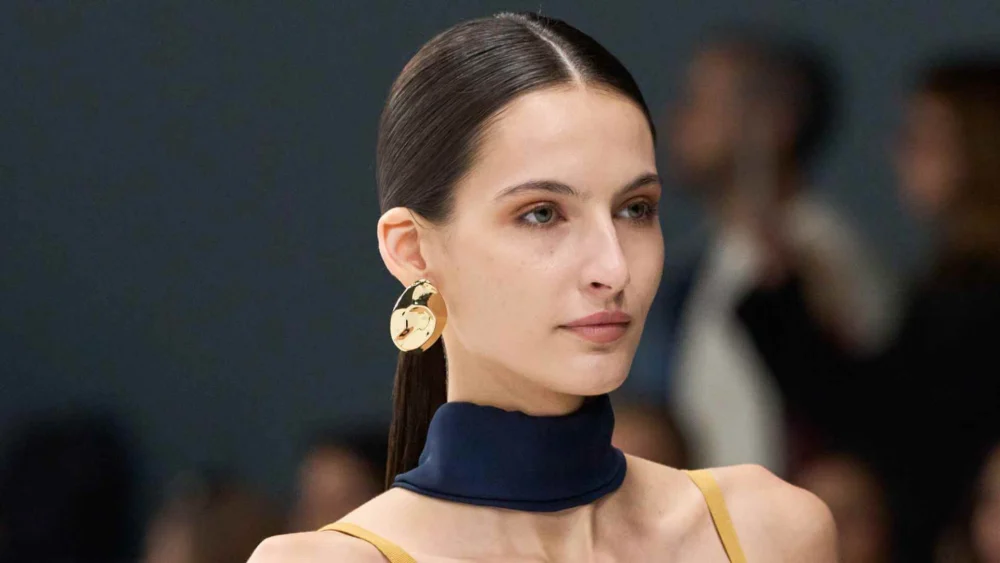
The global fashion capital has once again set the definitive agenda for aesthetic excellence as the Paris Fashion Week Autumn-Winter 2026 collections conclude, revealing a transformative approach to hair styling that balances rigorous precision with bohemian spontaneity. This season, the runways of Paris served as a sophisticated laboratory where legendary fashion houses and emerging designers alike redefined the relationship between haute couture and hair artistry. The trends observed during this cycle suggest a significant departure from the over-styled looks of previous years, pivoting instead toward "wearable art"—styles that are technically complex yet retain a sense of organic movement and individuality. From the architectural updos seen at Dries Van Noten to the sinuous, romantic waves at Stella McCartney, the 2026 season emphasizes versatility, positioning these looks as suitable for both high-ceremony environments and refined daily wear.

The Architecture of the Runway: A New Era of Hair Design
The Autumn-Winter 2026 season was characterized by an unprecedented level of synergy between garment construction and hair styling. Leading the charge in architectural hair design was Dries Van Noten, where stylists treated hair as a textile. The models featured updos that resembled woven fabrics, with strands interlaced in complex, structural patterns that mimicked the intricate embroidery of the collection. This look was further grounded by the use of "graphic baby hairs"—short, precisely styled strands along the hairline that added a modern, almost digital edge to the classical updo. This focus on structure was echoed at Rabanne, where hair was swept upward into sculptural volumes that bridged the gap between 1960s retro-futurism and contemporary minimalism.

In contrast to this structural rigidity, the "Rigorous Minimalist" movement found its strongest expression at Saint Laurent and Hermès. Under the creative direction of Anthony Vaccarello, Saint Laurent presented a vision of severe elegance. The hair was styled with a deep, uncompromising side part and pulled into a low, "vinyl-finish" bun. The high-shine, wet-look texture suggested a sense of power and control, a recurring theme in the house’s seasonal narrative. Hermès followed a similar path, utilizing the "wet look" to create asymmetry, where flat roots transitioned into soft, baby-hair details that softened the overall intensity of the look.

Chronology and Preparation: The Making of a Trend
The development of the hairstyles seen in March 2026 began nearly six months prior, during the initial mood-boarding phases in late 2025. Lead session stylists, including industry titans who collaborate with brands like Dior and Balmain, worked alongside creative directors to ensure that the hair did not merely accompany the clothes but enhanced the silhouette.

- September – November 2025: Conceptualization phase. Stylists and designers debated the "emotional resonance" of the hair. At Dior, the decision was made to pursue a "sophisticated spontaneity," leading to the soft side parts and loose strands that would eventually dominate the March 2026 runway.
- January 2026: Technical trials. Stylists tested products—ranging from high-hold polymers for Saint Laurent’s buns to light-reflecting serums for Stella McCartney’s waves—to ensure the looks could withstand the heat of runway lights and the movement of the models.
- March 2026: Execution. During the ten-day event, teams of up to 50 stylists per show worked in high-pressure environments to replicate these complex designs across diverse hair textures, ensuring the "Parisian look" remained inclusive and adaptable.
Supporting Data: The Economic Impact of Runway Beauty
The influence of Paris Fashion Week extends far beyond the catwalk, acting as a primary driver for the global hair care market, which is projected to exceed $105 billion by the end of 2026. Industry analysis suggests that "runway-to-retail" latency has reached an all-time low; consumers now seek products to replicate these looks within hours of the show’s conclusion.

According to market research data from early 2026, there has been a 22% increase in the sale of high-shine pomades and "wet-look" gels, directly correlated with the Saint Laurent and Balenciaga presentations. Furthermore, the resurgence of bohemian braids at Acne and Chloé has sparked a 15% rise in the demand for hair accessories, particularly gold-toned lateral clips and structural pins used to achieve the "Chloé Boho-Chic" aesthetic. These figures underscore the reality that Paris Fashion Week is not just a cultural event but a critical economic engine for the beauty industry.

Designer Deep-Dives: From Neo-Bohemian to Vanguard Graphic
The 2026 season was notable for its distinct "style camps," each offering a different vision of femininity and strength.

The Neo-Bohemian Revival
Chloé and Acne spearheaded the return of the "romantic wanderer." At Chloé, the look was ethereal and "fairytale-like," featuring long, loose hair accented by a single lateral braid adorned with gold hardware. This style, developed in partnership with Dyson’s professional styling team, emphasized hair health and natural luster. Acne took a more youthful approach, utilizing two fine braids framing the face to create a look that was both nostalgic and fresh.

The Hybrid Aesthetic
Courrèges and Mugler explored the intersection of fashion and function. In a move that was widely praised by fashion critics, Courrèges integrated the garment into the hairstyle by tucking models’ hair into high shirt collars, creating a faux-ponytail effect that felt spontaneous and modern. Mugler, meanwhile, experimented with graphic rolls on the forehead, creating a "soft-graphic" effect that combined 1940s victory rolls with 21st-century precision.

The Practical Sophisticate
Balmain and Elie Saab focused on looks that the modern woman could realistically adopt. Balmain’s tight updos, integrated with dynamic braids, were described by lead stylists as "power styling"—hair that stays in place from a board meeting to a gala. Elie Saab utilized rolled strands at the temples to add a touch of retro glamour to an otherwise clean, brilliant finish.

Official Responses and Industry Analysis
Industry veterans and beauty editors have reacted with overwhelming positivity to the AW2026 hair trends. "What we are seeing is a rejection of the ‘effortless’ lie," noted one senior beauty editor from a major European publication. "Paris is telling us that it is okay to look like you tried. There is a dignity in the precision of a Saint Laurent bun or the architectural weave of a Dries Van Noten updo."

Lead stylists backstage at Dior commented on the "democratization of elegance." By focusing on the side part—a simple yet transformative technique—Dior has provided a style that is accessible to the general public while maintaining its high-fashion credentials. "The goal was natural elegance that is easy to imitate but difficult to forget," stated a representative for the Dior hair team.

From a technical standpoint, the 2026 season also marked a turning point in product usage. There was a visible shift toward "hybrid products"—skincare-infused hair care that provides hold without compromising the integrity of the hair fiber. This aligns with the broader "Skinification of Hair" trend that has dominated the beauty sector over the past 24 months.

Broader Impact and Global Implications
The hairstyles of Paris Fashion Week AW2026 are set to influence global salon menus for the next eighteen months. As the industry moves toward the Spring/Summer 2027 cycle, several key takeaways remain:

- The Return of the Side Part: After years of middle-part dominance driven by social media trends, Paris has officially reinstated the side part as the hallmark of sophistication.
- The "Wet Look" 2.0: No longer reserved for editorial shoots, the wet look has been refined into a "satin finish" that is more wearable for the average consumer.
- Structural Braiding: Braids are being reimagined not as casual accents but as structural components of formal updos.
- Integration of Accessories: Hardware—specifically gold and metallic elements—is becoming an essential part of the hairstylist’s toolkit, as seen at Chloé.
In conclusion, the Autumn-Winter 2026 season in Paris has successfully bridged the gap between the avant-garde and the practical. By offering a diverse palette of styles—from the "boho-chic" waves of Stella McCartney to the "vinyl-finish" rigor of Saint Laurent—the fashion capital has ensured that the future of hair is as multifaceted as the women who wear it. As these trends migrate from the runways of the Place Vendôme to the streets of New York, Tokyo, and London, they carry with them a new definition of Parisian beauty: one that is intentional, structural, and deeply rooted in the craft of transformation.

0 Comments