
 Nila Kartika Wati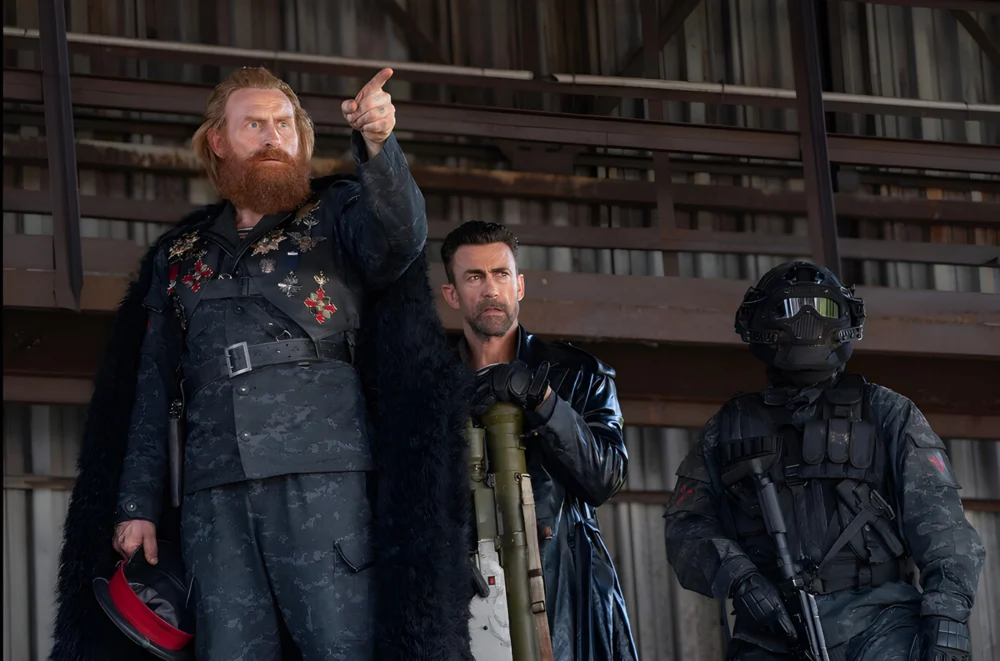
The post-apocalyptic action thriller Afterburn, released in Spanish-speaking markets as Cazadores del fin del mundo, has officially secured the top position on Prime Video’s global viewership charts, marking a significant milestone for the production. Despite a challenging theatrical debut that saw modest returns at the box office, the film has found a massive second life on digital platforms, particularly across Mexico, Latin America, and Europe. Directed by J.J. Perry and based on the acclaimed graphic novel series from Red 5 Comics, the film leverages the star power of Dave Bautista and Samuel L. Jackson to deliver a high-octane survival narrative that has resonated deeply with home audiences. The surge in popularity underscores a growing trend in the entertainment industry where mid-budget genre films achieve "streaming redemption" following divisive critical receptions during their initial cinema runs.
Narrative Architecture and World-Building
The premise of Afterburn is rooted in a catastrophic astronomical event: a massive solar flare that struck Earth a decade prior to the film’s beginning. This "Great Flash" effectively neutralized the planet’s technological infrastructure, sending humanity back into a pre-industrial state characterized by tribalism and lawlessness. The narrative follows Jake (Bautista), a former soldier who has transitioned into a "treasure hunter"—a dangerous profession involving the recovery of high-value artifacts from the "dead zones" where radiation and mutates make survival nearly impossible.
The central conflict is ignited when Jake is approached by Valentine (Jackson), a powerful and enigmatic figure with deep resources. Valentine commissions Jake for a high-stakes mission: to infiltrate the irradiated ruins of Europe to recover the Mona Lisa. The mission is framed not merely as a quest for art, but as a symbolic reclamation of human civilization. This objective forces Jake to navigate a landscape populated by warring factions, radioactive mutants, and scavengers whose aesthetics and tactics draw heavy inspiration from the "diesel-punk" subgenre. The film balances this bleak setting with a tone that leans into its comic book origins, utilizing heightened reality and stylized violence to maintain a fast-paced viewing experience.

Production History and Directorial Vision
The journey of Afterburn to the screen was a lengthy process involving several years of development. Originally conceived as an adaptation of the comic book written by Wayne Nichols and published by Red 5 Comics, the project underwent various iterations before J.J. Perry was attached to direct. Perry, a veteran stunt coordinator and second-unit director known for his work on the John Wick franchise and his directorial debut Day Shift, brought a specific focus on physical performance and practical effects to the production.
Industry analysts note that Perry’s background in stunt work is evident in the film’s combat sequences. Unlike many contemporary action films that rely heavily on computer-generated imagery (CGI), Afterburn emphasizes practical choreography. This "visceral immersion," as described by production insiders, was a deliberate choice to ground the fantastical elements of a post-solar flare world. The use of practical sets for the European "dead zones" provided a tangible environment for the actors, which has been cited as a primary factor in the film’s ability to engage audiences despite its relatively low theatrical marketing budget.
Performance Analysis: Bautista and Jackson
A significant driver of the film’s success is the chemistry and individual draw of its lead actors. Dave Bautista continues his trajectory as a leading man in the action-drama space, moving further away from his origins in professional wrestling. In Afterburn, Bautista portrays Jake with a blend of physical imposition and world-weary stoicism, a character archetype that has become a staple of his post-Marvel Cinematic Universe career.
Samuel L. Jackson’s role as Valentine provides the film with its necessary gravitas and narrative momentum. Jackson, who has a long-standing reputation for elevating genre material, serves as the expositional anchor of the film. His performance has been noted for its "classic Jackson" energy—charismatic, authoritative, and occasionally sardonic. Supporting cast members, including those playing the various faction leaders in the European wasteland, contribute to a world that feels inhabited and dangerous.

Financial Trajectory and Streaming Data
The financial history of Afterburn presents a stark contrast between traditional cinema performance and digital era longevity. Upon its initial theatrical release in 2025, the film struggled to find an audience, grossing approximately $1 million globally. Analysts attributed this to a crowded release window and a marketing strategy that failed to distinguish the film from other post-apocalyptic offerings.
However, the transition to Prime Video in early 2026 fundamentally altered the film’s commercial narrative. According to data from FlixPatrol, a service that tracks streaming statistics, Afterburn ascended to the number one spot in Mexico and several Latin American territories within 72 hours of its platform debut. By March 2026, it had replicated this success in major European markets.
This phenomenon is increasingly common in the current media landscape. Films that are perceived as "popcorn entertainment"—uncomplicated, action-heavy stories—often perform better on subscription video-on-demand (SVOD) services than in theaters. For Prime Video, the acquisition of Afterburn has proven to be a strategic win, providing high-value content that attracts a demographic interested in science fiction and survivalist themes.
Critical Reception and Industry Response
Critical response to the film has been notably divided, reflecting a gap between professional critics and general audiences. On platforms like Rotten Tomatoes, the film holds a "tame" or "divided" rating from technical press outlets. Common criticisms include a perceived lack of narrative depth and a reliance on established genre tropes. Some reviewers argued that the film does not attempt to reinvent the post-apocalyptic wheel, instead opting for a safe, albeit well-executed, formula.
Conversely, audience scores and social media sentiment indicate a high level of satisfaction. Viewers have praised the film for its "honesty"—it presents itself as a straightforward action movie without the pretension of seeking major awards. Industry commentators suggest that this transparency is exactly what streaming audiences look for during "leisure viewing" periods. The film’s success in Mexico, in particular, has been linked to a cultural appetite for high-stakes survival stories and the popularity of the lead actors in the region.
Broader Implications for the Genre
The success of Afterburn signals several key trends for the future of mid-budget science fiction cinema:
- The Viability of Non-Big-Two Comics: While Marvel and DC dominate the box office, the success of a Red 5 Comics adaptation proves that there is a significant market for "indie" graphic novels when paired with established stars and competent direction.
- The Shift in "Success" Metrics: The $1 million theatrical gross is no longer the final word on a film’s profitability. The licensing fees and viewership hours generated on platforms like Prime Video provide a secondary (and often primary) revenue stream that can justify the production of sequels or spin-offs.
- Global Appeal of Post-Apocalyptic Themes: The universal fear of technological collapse and the fascination with "what comes next" continue to be powerful tools for international distribution. Afterburn’s ability to transcend language barriers speaks to the primal nature of its survivalist core.
Chronology of Events
- 2010s: The Afterburn graphic novel series is published by Red 5 Comics, gaining a cult following for its unique take on the post-apocalyptic genre.
- 2023-2024: Production begins with J.J. Perry as director and Dave Bautista attached to lead. Filming takes place across various locations to simulate a devastated Europe.
- Late 2025: Afterburn receives a limited theatrical release. Initial box office numbers are disappointing, leading to premature labels of "commercial failure."
- February 2026: The film is added to the Prime Video library as part of a global licensing agreement.
- March 2026: Afterburn hits the #1 spot on Prime Video in Mexico and Latin America, eventually topping the charts in Europe and North America.
Future Outlook
Given the massive viewership numbers recorded in the first quarter of 2026, rumors regarding a sequel or a prequel series have begun to circulate within the industry. The world established in the film—a globe divided into "dead zones" and tribal territories—offers ample opportunity for expansion. Whether Jake and Valentine return for another mission or the franchise pivots to new characters in different parts of the world remains to be seen.
For now, Afterburn stands as a definitive example of the modern "streaming hit." It is a film that found its audience not through the prestige of the cinema screen, but through the accessibility of the digital living room. As Prime Video continues to bolster its catalog with high-octane genre content, the success of Cazadores del fin del mundo provides a blueprint for how to turn a theatrical underdog into a global digital leader. For subscribers looking for an adrenaline-fueled escape, the film remains available for streaming, continuing its run as one of the most-watched titles of the year.



 Eva Lovia
 Julia Chirkova
 Julia Prastini
 Jia Lissa
 admin
admin