
 Nila Kartika Wati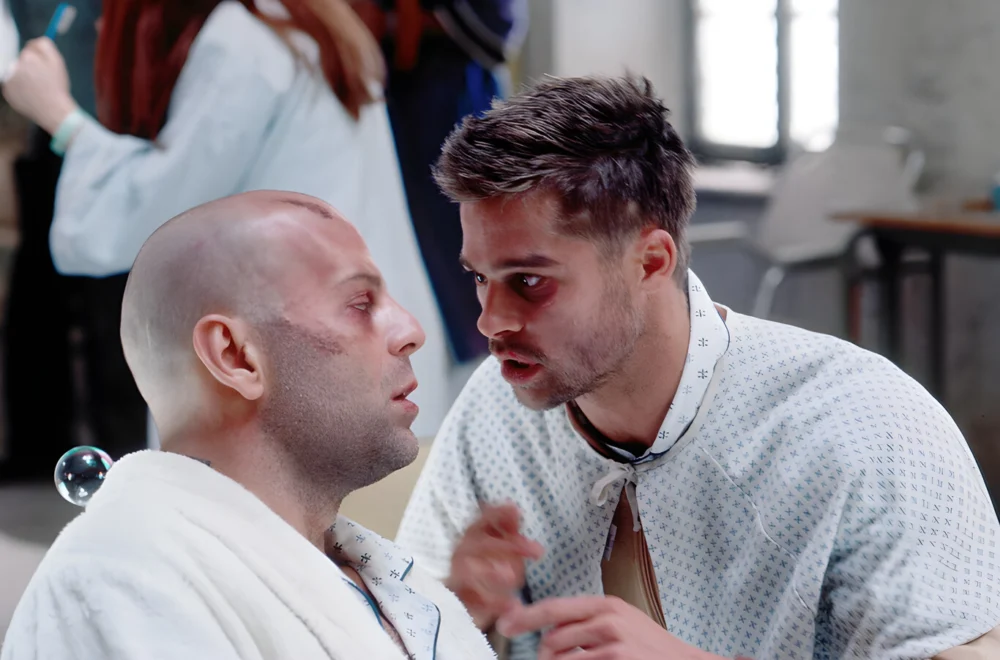
The 1995 science fiction thriller Twelve Monkeys remains a cornerstone of dystopian cinema, distinguished by its non-linear narrative, psychological depth, and a visual aesthetic that has influenced the genre for nearly three decades. Directed by Terry Gilliam and written by David and Janet Peoples, the film is a feature-length expansion of Chris Marker’s 1962 French short film, La Jetée. Set against the backdrop of a world decimated by a lethal virus, the production explores themes of fate, memory, and the fragility of human civilization—themes that have gained renewed cultural and social significance in the post-pandemic era. Starring Bruce Willis and Brad Pitt, the film transitioned from a risky mid-budget project into a critical and commercial triumph, securing its place in the annals of science fiction history.
Narrative Overview and the Temporal Labyrinth
The plot of Twelve Monkeys is anchored in a desolate future, specifically the year 2035. Following the release of a catastrophic virus in 1996 that wiped out 99% of the human population, the few survivors have been forced to live in cramped, subterranean facilities. The surface of the Earth has been reclaimed by wild animals, leaving humanity in a state of technological and social regression. To rectify this history, a group of scientists recruits James Cole (Bruce Willis), a prisoner haunted by recurring dreams of an airport shooting, to serve as a "volunteer" for a dangerous time-travel mission.
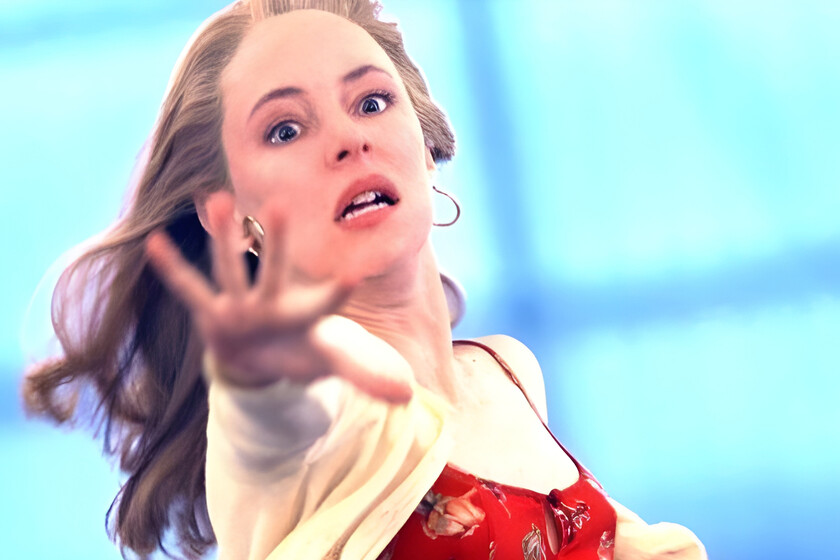
Cole’s objective is not to prevent the outbreak—a task the scientists deem impossible—but to gather information on the virus’s original, unmutated form so that a cure can be developed in the future. His primary lead is a mysterious group known as the "Army of the 12 Monkeys," believed to be the primary perpetrators of the biological attack. However, the mission is plagued by technical failures. Instead of arriving in 1996, Cole is accidentally sent to 1990, where he is promptly arrested and committed to a psychiatric ward. It is here that the film’s central conflict between objective reality and perceived insanity begins to take shape.
Within the asylum, Cole meets Dr. Kathryn Railly (Madeleine Stowe), a psychiatrist who initially views him as a paranoid schizophrenic, and Jeffrey Goines (Brad Pitt), the fanatical son of a prominent virologist. This intersection of characters creates a complex web of cause and effect, where Cole’s attempts to save the future may ironically be the very catalyst for the disaster he is trying to investigate.
Chronological Context and Production Origins
The development of Twelve Monkeys was an ambitious undertaking that sought to bridge the gap between European art-house sensibilities and Hollywood production values. Producer Robert Cavallo secured the rights to Chris Marker’s La Jetée and recruited the screenwriting duo of David and Janet Peoples—the former known for his work on Blade Runner—to expand the story.

Terry Gilliam, formerly of the Monty Python troupe and director of the acclaimed Brazil (1985), was brought on to direct. Gilliam was known for his distinct visual style and his historical friction with major studios over creative control. For Twelve Monkeys, Universal Pictures granted Gilliam final cut privileges, provided the film remained within its $29.5 million budget and maintained a "R" rating.
The production timeline was marked by several key milestones:
- 1962: Release of La Jetée, the foundational inspiration for the narrative.
- 1993: Development of the script by David and Janet Peoples.
- 1994: Casting of Bruce Willis and Brad Pitt. Willis notably took a significant pay cut to work with Gilliam, moving away from his "invincible action hero" persona.
- February 1995: Principal photography took place in Philadelphia and Baltimore, utilizing decaying industrial architecture to create a grimy, authentic atmosphere.
- December 1995: Limited release in the United States, followed by a wide release in January 1996.
Statistical Performance and Critical Reception
Twelve Monkeys defied the expectations of a typical mid-90s science fiction release, which were often dominated by high-octane action rather than philosophical inquiry. According to data from Box Office Mojo, the film was a significant financial success, grossing $168.8 million worldwide against its modest $29.5 million budget. Of this total, $57.1 million was generated domestically, while $111.7 million came from international markets, signaling the film’s broad global appeal.
Critically, the film maintains a high standing. It currently holds an 88% approval rating on Rotten Tomatoes, based on 74 reviews, with an average score of 7.6/10. Critics at the time praised the film for its "hallucinatory" visual design and its refusal to provide easy answers to its central mysteries. The Hollywood Reporter noted that the film "plunges the viewer into a world of madness and apocalyptic dread," while Variety highlighted the "overwhelming visual design" that characterizes Gilliam’s filmography.
The film also served as a major awards contender. Brad Pitt received his first Academy Award nomination for Best Supporting Actor for his portrayal of Jeffrey Goines. His performance—a frantic, high-energy departure from his previous roles—earned him a Golden Globe in the same category, effectively cementing his status as a versatile character actor rather than just a leading man.
Thematic Analysis and the Cassandra Complex
A primary psychological element explored in Twelve Monkeys is the "Cassandra Complex," a condition in which a person’s valid warnings or predictions are ignored or dismissed as insanity. James Cole embodies this archetype; he possesses the absolute truth about the end of the world but is confined by a society that lacks the framework to believe him. The film constantly challenges the audience to question Cole’s sanity. Is he truly a time traveler, or is he a traumatized individual whose mind has constructed an elaborate fantasy to cope with a collapsing reality?

Furthermore, the film delves into the concept of fatalism and the "closed-loop" paradox of time travel. Unlike other genre entries like Back to the Future, where the past can be altered to change the future, Twelve Monkeys suggests that history is immutable. The "Army of the 12 Monkeys" is revealed to be a red herring—a group of radical animal rights activists who, while eccentric, were not responsible for the plague. The real threat comes from a disgruntled lab assistant, a detail that Cole only realizes when it is too late to intervene. This reinforces the film’s message about the inevitability of destiny and the cyclical nature of human tragedy.
Production Design and Visual Language
Terry Gilliam’s direction is characterized by the use of "Dutch angles" (canted frames), wide-angle lenses, and a cluttered, "steampunk" aesthetic. The future of 2035 is not depicted with sleek chrome and high-tech interfaces; instead, it is a world of rusted pipes, clunky analog monitors, and improvised machinery. This "used-future" look conveys a sense of desperation and societal decay.
The filming locations in Philadelphia, including the Eastern State Penitentiary and the Girard College, provided a gothic, oppressive backdrop that heightened the film’s themes of confinement and madness. The costume design and cinematography work in tandem to create a sensory experience that feels both futuristic and ancient, reflecting the film’s non-linear approach to time.

Broader Impact and Contemporary Relevance
The legacy of Twelve Monkeys extends beyond its initial theatrical run. In 2015, the Syfy network launched a television series based on the film, which ran for four seasons and further expanded the lore of the 12 Monkeys and the mechanics of the temporal loop. While the series took its own creative liberties, its existence demonstrates the enduring power of the original concept.
In recent years, the film has seen a resurgence in viewership on streaming platforms, particularly Max (formerly HBO Max). The global experience of the COVID-19 pandemic has made the film’s depiction of a society paralyzed by a virus and the subsequent loss of civil liberties feel eerily prophetic. It serves as a stark reminder of the fragility of modern infrastructure and the speed with which a global catastrophe can reshape the human experience.
Conclusion and Current Availability
Twelve Monkeys stands as a rare example of a Hollywood blockbuster that prioritizes intellectual complexity and artistic vision over formulaic tropes. It remains a definitive work in the filmographies of Terry Gilliam, Bruce Willis, and Brad Pitt, offering a narrative that rewards multiple viewings with its intricate puzzles and emotional resonance.

For audiences looking to revisit this classic or discover it for the first time, Twelve Monkeys is currently available for streaming on Max. Its inclusion in the platform’s library ensures that a new generation of viewers can experience what many critics consider to be one of the greatest science fiction films ever made—a dark, intelligent, and visually arresting fable about the end of the world and the persistence of memory.

 Eva Lovia
 Julia Chirkova
 Julia Prastini
 Jia Lissa
 admin
admin