
 Lana Rhoades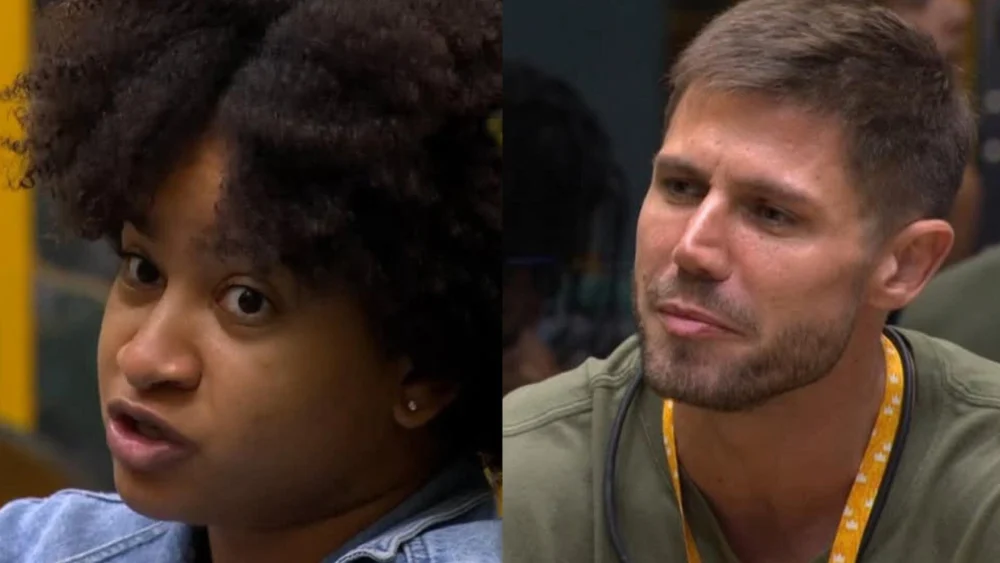
The Big Brother Brasil 26 (BBB 26) house was engulfed in a storm of strategic accusations and deeply personal reflections this week, culminating in a dramatic live confrontation between housemates Milena and Jonas on Wednesday, March 11th. This intense exchange unfolded just a day after the high-stakes elimination of Babu Santana, who, in his post-exit interviews, offered profound insights into his controversial tenure, including a candid admission regarding "machismo in desconstruction." These twin events have irrevocably altered the dynamics within the most watched reality television program in Brazil, sending ripples through alliances and sparking widespread debate among viewers and commentators alike.
The Boiling Point: Milena vs. Jonas Showdown
The living room of the BBB 26 house, typically a nexus of camaraderie and strategic whispers, became an arena for a fiery verbal battle on Wednesday evening. Milena, known for her sharp wit and unwavering resolve, directly confronted Jonas, a veteran player whose leadership skills had recently come under scrutiny. The tension, which had been simmering beneath the surface for weeks, exploded into a public spectacle that captivated both housemates and the national audience.
Milena initiated the confrontation with a pointed challenge, dissecting Jonas’s track record as a Líder (Leader). Her opening salvo was both a strategic jab and a personal triumph: "Oh, Jonas, I asked your friend and forgot to ask you. Four Leaders, you sent four to the Paredão [elimination wall], three came back. Of those three, two were me. Are you happy to see my face here? Tell me, what’s the feeling of failing three times to get someone out? Tell me the feeling of failure. None? You were wrong, you see? You were wrong three times in a row, and only Marcelinho left." This statement encapsulated her resilience and highlighted Jonas’s perceived ineffectiveness in eliminating her, positioning her survival as a direct indictment of his strategic prowess.
The role of the Líder in BBB is paramount, granting immunity, access to a luxurious suite, and, most critically, the power to nominate a housemate directly to the Paredão. For a Líder to repeatedly nominate an individual who subsequently returns, as Milena asserted, signals a significant strategic miscalculation and can erode credibility within the house. Milena, an outspoken ally of Ana Paula Renault, clearly leveraged her multiple returns from the Paredão as a symbol of her strength and the public’s support, effectively turning Jonas’s strategic failures into a weapon against him.
Jonas, visibly stung by Milena’s aggressive line of questioning, attempted to defend himself by shifting the blame and invoking collective responsibility. "Don’t forget that it was me and you who put Babu," he retorted, aiming to remind Milena of their shared strategic decision-making. However, Milena swiftly parried this defense, branding him a "coward" (cagão) and asserting her dominance in the nomination process. "But you’re a coward. In there, you didn’t mention anyone’s name. I gave the three names, okay?" she fired back, claiming authorship over the entire nomination slate.
The argument intensified as Jonas attempted to list other names he supposedly mentioned, "I mentioned Boneco and Breno…" but Milena cut him off, emphatically stating, "I said ‘Boneco no and Breno no.’ Who mentioned the three names? Milena. You mentioned the first one I mentioned: Babu." This exchange underscored Milena’s meticulous recall of past events and her determination to control the narrative, painting Jonas as hesitant and indecisive, particularly in moments of high pressure.
The confrontation reached its peak when Milena launched a scathing personal attack, accusing Jonas of cowardice during a Paredão formation where she was vulnerable and he was immune. "Every time, just because you were immune, you would say: ‘What if we don’t reach a conclusion?’ And Tadeu [the host] said ‘there’s nowhere to get to,’ because it was somewhat unfair, since you had the immunity collar and I didn’t, and damn it, I was going to the Paredão. A coward, weak, fearful… that’s what you are, dear. Live!" Her accusations of "cagão, frouxo, medroso" (coward, weak, fearful) were not merely insults but strategic labels designed to dismantle Jonas’s public image and undermine his standing within the house and with the viewing public. This direct reference to an incident where Jonas, protected by immunity, allegedly hesitated to commit to nominations while Milena faced potential elimination, highlighted a perceived imbalance of courage and fairness.
Jonas, allied with Cowboy, eventually resorted to sarcasm, telling Milena to "cry" and "release her little beasts," adding, "She’s so brave." This dismissive response, while perhaps an attempt to regain composure, only served to further emphasize the deep chasm of animosity between the two housemates. The confrontation, broadcast live, immediately became a trending topic across social media platforms, with viewers polarizing in their support for either Milena’s aggressive truth-telling or Jonas’s defensive posture. Analysts of reality television often point to such strategic confrontations as pivotal moments that can redefine alliances, expose character flaws, and significantly influence the trajectory of a contestant’s journey.
Babu Santana’s Elimination: A Game-Changer
The heated exchange between Milena and Jonas was amplified by the recent departure of Babu Santana, who was eliminated from BBB 26 on Tuesday, March 10th. Babu faced a formidable Paredão against Milena and Chaiany, ultimately receiving 68.62% of the public’s votes. His high percentage of elimination votes indicated a decisive public sentiment, signaling the end of a tumultuous yet memorable journey within the house.
Babu, a respected figure outside the house, had carved out a unique and often controversial path during his time on BBB 26. Known for his passionate personality, strong opinions, and sometimes volatile reactions, he was a "veteran" in the sense of being an established public figure entering the game, bringing a certain gravitas. His gameplay was characterized by fierce loyalty to his allies, but also by intense clashes with housemates, which often became central to the season’s narrative. His elimination, particularly against Milena (who then confronted Jonas), underscored the shifting power dynamics and the unpredictability of public favor. Milena’s survival in this Paredão not only solidified her position but also emboldened her, directly leading to her assertive confrontation with Jonas.
Post-Elimination Confessions: Babu’s Path to Self-Reflection
In a compelling turn of events, Babu Santana used his post-elimination platform on the Mesacast BBB, broadcast on Wednesday, March 11th, to engage in a remarkable act of public self-reflection and accountability. His interview provided a rare glimpse into the psychological toll and personal growth that can emerge from the intense scrutiny of reality television.
Babu began by analyzing his trajectory, acknowledging what he perceived as his "greatest error" in the house: "The great error was when I brought all the revolt of the world, which I carry and is legitimate. […] But, I unload all my fury onto one figure, and that is wrong and I recognize it." This confession alluded to his often-fiery temperament and instances where his passion for broader social justice issues might have manifested as direct, intense confrontations with specific housemates. His acknowledgment of "legitimate world revolt" suggests a recognition of his own lived experiences and frustrations, but also a critical understanding of how he channeled those emotions in the confined environment of the BBB house.
Following this profound self-assessment, Babu extended heartfelt apologies to several housemates with whom he had contentious interactions. "Here are my thousand pardons for Sol, Ana Paula [Renault], Samira, and to every person who felt hurt by each of my attacks of fury," he stated. These apologies were significant as they addressed specific individuals who had been at the receiving end of his more explosive moments. The mention of Ana Paula Renault is particularly notable, given her alliance with Milena, further illustrating the interconnectedness of house dynamics and post-show reflections. These apologies, delivered with sincerity, aimed to mend fences and perhaps reshape public perception of his character, demonstrating a capacity for humility and growth.
However, the most impactful and widely discussed statement from Babu’s Mesacast interview revolved around his candid admission of "machismo in deconstruction." He articulated, "I am a man living in a patriarchal society, so, therefore, my attitudes will contain machismo. This issue in me is very much worked on. I am a potentially sexist man in deconstruction." This powerful declaration resonated deeply, extending the conversation beyond mere reality TV drama into a critical societal dialogue.
Babu’s willingness to openly discuss his own machismo on a national platform is groundbreaking. In a country grappling with entrenched patriarchal norms and gender inequality, such an admission from a public figure is a potent catalyst for broader introspection. It highlights the pervasive nature of machismo, not just as overt sexism, but as ingrained attitudes and behaviors that even well-intentioned individuals may unconsciously perpetuate. His phrase "in deconstruction" signifies an ongoing process of learning, unlearning, and actively challenging these ingrained biases, acknowledging that personal growth in this area is a continuous journey rather than a destination. This statement has been widely praised by commentators and social justice advocates, who view it as a crucial step towards fostering greater awareness and accountability regarding toxic masculinity in Brazilian society. It transformed his post-elimination interview into a moment of significant social commentary, elevating the typical reality TV exit interview into a platform for genuine societal reflection.
Broader Implications for BBB 26
The combined impact of Milena’s assertive confrontation with Jonas and Babu’s reflective post-elimination confessions is poised to profoundly reshape the landscape of BBB 26. Milena’s continued presence, emboldened by her survival in multiple Paredões and her direct challenge to a former Líder, solidifies her as a formidable force. Her alliance with Ana Paula Renault will likely gain strategic leverage, potentially leading to new targeting strategies against Jonas and his allies, including Cowboy. The direct and public nature of her attack on Jonas’s leadership and character could also serve as a warning to other housemates contemplating nominations against her.
Babu Santana’s elimination, while a loss for his immediate allies, also creates a vacuum in the house, forcing remaining players to realign and forge new bonds. His departure means one less "veteran" presence, potentially allowing newer or less dominant players to step into leadership roles. The public’s reaction to his elimination and, more significantly, to his post-show reflections on machismo, will undoubtedly influence how future interactions within the house are perceived. Housemates, aware of the external narrative, may become more cautious or performative in their discussions around sensitive social issues.
Moreover, the discourse sparked by Babu’s "machismo in deconstruction" statement has far-reaching implications for the show’s narrative and its role as a mirror to society. It elevates BBB from mere entertainment to a platform for critical social commentary, prompting viewers to reflect on similar issues in their own lives. This kind of public introspection, particularly from a prominent figure, contributes to the season’s unique identity and ensures its legacy extends beyond typical reality TV drama.
In conclusion, the past week in BBB 26 has been a microcosm of strategic warfare and profound personal reckoning. Milena and Jonas’s fiery clash underscored the intense competitive spirit and personal rivalries that define the game, while Babu Santana’s thoughtful post-elimination analysis offered a rare and impactful moment of public self-awareness and social commentary. These events collectively ensure that BBB 26 continues to be a dynamic, unpredictable, and culturally significant phenomenon, blending high-stakes gameplay with vital societal discussions that resonate far beyond the confines of the most watched house in Brazil.



 Eva Lovia
 Julia Chirkova
 Julia Prastini
 Nila Kartika Wati
 Lina Irawan
 Jia Lissa