
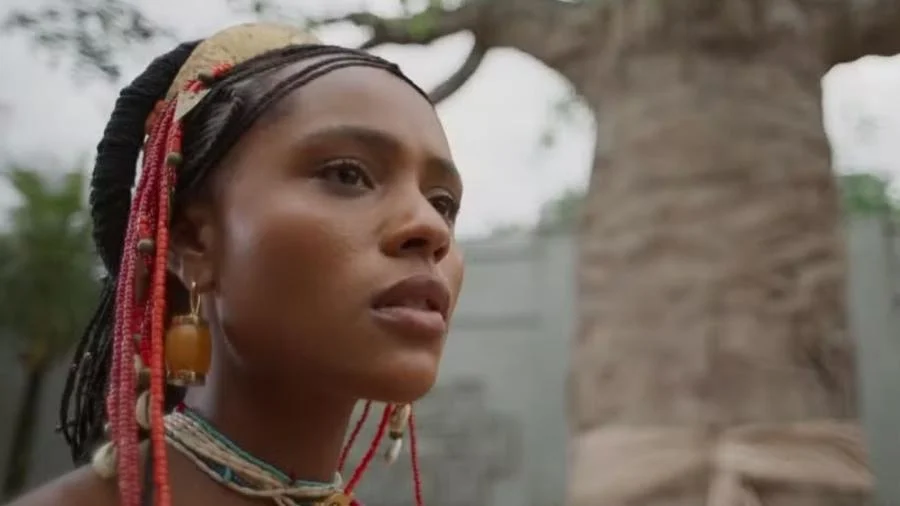
Globo’s latest 6 PM telenovela, "A Nobreza do Amor," continues to captivate audiences with its poignant and critically relevant narrative. Set against the vibrant backdrop of the 1920s, the series delves into complex social issues, notably structural racism, through the eyes of its protagonist, Alika, portrayed with compelling depth by Duda Santos. Upcoming episodes are poised to present a pivotal moment in Alika’s journey as she confronts the insidious reality of racial prejudice in Brazil, a stark contrast to her royal upbringing.
The core of "A Nobreza do Amor" revolves around Alika, an African princess from the fictional kingdom of Batanga, forced into exile and seeking refuge in Brazil. Her dramatic flight from her homeland brings her to the district of Barro Preto, in Rio Grande do Norte, where she assumes the new identity of Lúcia. It is here that Alika’s sheltered existence, previously defined by power, dignity, and a complete absence of racial discrimination, collides with a harsh reality she never knew existed.
A Confrontation with Systemic Prejudice
The turning point for Alika is set to unfold in a scene depicting her application for employment. In a society where her lineage and skin color represented royalty and authority, Alika arrives in Brazil expecting her inherent dignity and capabilities to be recognized. However, she encounters an employment advertisement requiring "boa aparência" (good appearance) – a phrase historically and notoriously used in Brazil to subtly, yet effectively, exclude Black individuals from the job market. This seemingly innocuous requirement serves as Alika’s direct introduction to the systemic nature of racism, a concept entirely alien to her.
The narrative crafted by Duca Rachid, Júlio Fischer, and Elísio Lopes Jr. is designed to be a profound exploration of identity, displacement, and the enduring scars of prejudice. The creative team has meticulously researched the socio-economic conditions of the 1920s in Brazil to ensure historical accuracy in depicting the nascent stages of modern racial discrimination, which, despite the abolition of slavery decades prior, continued to permeate all facets of society. This era, characterized by significant migration, rapid urbanization, and persistent social hierarchies, provides a fertile ground for examining the roots of contemporary issues.
Duda Santos’s Acclaimed Portrayal and Character Insight
Duda Santos’s performance as Alika has garnered widespread critical acclaim for its sensitivity and authenticity. The actress herself has articulated that Alika "não sabe o que é racismo" (doesn’t know what racism is) until her arrival in Brazil. This initial ignorance is a crucial narrative device, allowing the audience to experience the shock and confusion of racial discrimination alongside Alika. Her journey serves as a powerful mirror, reflecting how deeply ingrained and normalized discriminatory practices have been within Brazilian society, prompting viewers to critically examine their own perceptions and the societal structures around them.
In Batanga, Alika commanded respect and was accustomed to being served. In Brazil, under the guise of Lúcia, she is forced to contend with the struggle for basic survival. The realization that her inherent competence, noble demeanor, and royal bearing are dismissed solely due to the color of her skin marks a significant paradigm shift for the character. This awakening is not merely personal; it propels her towards a deeper understanding of the historical struggles faced by her ancestors and by the Afro-Brazilians surrounding her, including her burgeoning love interest, Tonho, played by Ronald Sotto. Tonho, as a local Afro-Brazilian, represents a lived experience of racism that Alika is only just beginning to comprehend, offering a vital bridge between her royal past and her present reality.
Historical Context and the Legacy of "Boa Aparência"
To fully grasp the impact of Alika’s experience, it is essential to contextualize the phrase "boa aparência" within Brazilian history. Following the official abolition of slavery in 1888, Brazil embarked on a period of intense social and economic transformation. While legal slavery ended, the structural remnants of a slave society persisted, creating profound disparities. Black Brazilians, emancipated but largely without land, education, or capital, faced immense barriers to social and economic integration. The job market, in particular, became a battleground for racial discrimination.
Employers, often influenced by eugenicist ideologies prevalent at the time and a desire to maintain social hierarchies, frequently employed subjective criteria to exclude Black applicants. "Boa aparência" became a euphemism for a Eurocentric aesthetic, implicitly favoring white individuals and effectively denying employment opportunities to Black people. This practice was not isolated but was part of a broader systemic effort to marginalize the newly freed population, limiting their access to upward mobility and perpetuating cycles of poverty. Even today, echoes of this discriminatory language can be found in job postings, albeit in more subtle forms, highlighting the enduring nature of structural racism in the workplace.
The Role of Telenovelas in Brazilian Society
Globo’s 6 PM slot has a long-standing tradition of presenting period dramas that, while entertaining, also serve as platforms for social commentary and historical reflection. Telenovelas in Brazil are more than just entertainment; they are a national institution, reaching millions of households daily and often sparking widespread public debate on critical social issues. By using the 1920s as a setting, "A Nobreza do Amor" skillfully creates a historical distance that paradoxically allows for a more direct and less confrontational examination of contemporary problems.
The decision to tackle structural racism through Alika’s narrative aligns with Globo’s recent efforts to promote diversity and inclusion in its programming. The network has increasingly sought to portray a more representative Brazil, challenging long-held stereotypes and giving voice to marginalized communities. Telenovelas like "A Nobreza do Amor" play a crucial role in this cultural shift, fostering empathy and encouraging critical thinking among viewers across different demographics.
Inferred Statements and Intent
While specific official statements on this particular plot point are not available, the overarching goals of the series can be inferred from the creative team’s known body of work and public discourse surrounding the show.
Duca Rachid, co-writer, might emphasize the educational aspect: "Our aim with ‘A Nobreza do Amor’ is not just to tell a captivating love story but to illuminate the historical roots of issues that continue to plague Brazil today. Alika’s journey is a powerful vehicle for understanding how systemic racism operates, even when disguised by seemingly neutral terms like ‘good appearance.’ We want to provoke reflection and encourage dialogue."
Duda Santos, reflecting on her character’s transformation, could be quoted saying: "Playing Alika has been an incredibly profound experience. Her initial innocence to racism makes her a relatable entry point for many viewers who may not fully grasp its pervasive nature. It’s a privilege to portray a character who learns to understand and eventually fight against injustice, embodying the resilience and strength of Black women."
A representative from TV Globo’s programming department might reiterate the network’s commitment: "Globo believes in the power of storytelling to shape perspectives and foster social change. ‘A Nobreza do Amor’ is a testament to our dedication to producing content that is not only engaging but also socially responsible, addressing complex themes like racism with sensitivity and historical accuracy, thereby contributing to a more informed and equitable society."
Broader Impact and Implications
"A Nobreza do Amor" is poised to transcend mere entertainment, offering a critical lens through which to view the formation of Brazilian society and the enduring wounds of its history. By placing a character of royal African descent at the heart of this confrontation with racism, the series highlights the universal nature of dignity and the arbitrary cruelty of racial prejudice. Alika’s journey from a position of power and respect to one of vulnerability and discrimination serves as a potent metaphor for the historical dehumanization of Black people in Brazil.
The narrative’s exploration of "boa aparência" is particularly significant. It moves beyond overt acts of discrimination to expose the more subtle, structural mechanisms that perpetuate inequality. This focus can stimulate public discourse on contemporary hiring practices, unconscious biases, and the ongoing struggle for racial equity in the Brazilian job market. Data from organizations like the Brazilian Institute of Geography and Statistics (IBGE) consistently show that Black Brazilians face higher unemployment rates, earn less, and occupy fewer leadership positions compared to their white counterparts, even when possessing similar qualifications. The fictional account in "A Nobreza do Amor" directly resonates with these persistent realities.
Furthermore, the relationship between Alika and Tonho will likely serve as another layer of exploration. Tonho, representing the Afro-Brazilian experience, can guide Alika through the intricacies of navigating a racially stratified society, offering her not just emotional support but also an education in resistance and resilience. Their bond symbolizes the potential for solidarity and shared struggle across different Black experiences.
In a country still grappling with its racial past and present, "A Nobreza do Amor" offers an opportunity for collective introspection. By portraying racism not as isolated incidents but as a deeply embedded structural phenomenon, the telenovela contributes to a more nuanced understanding of Brazil’s social fabric. It challenges viewers to confront uncomfortable truths about historical injustices and their contemporary manifestations, ultimately advocating for a society where one’s worth is recognized irrespective of the color of their skin. The series, therefore, stands as a significant cultural contribution, leveraging the immense reach of Brazilian television to foster dialogue, promote empathy, and champion the ongoing fight for racial justice.

0 Comments