
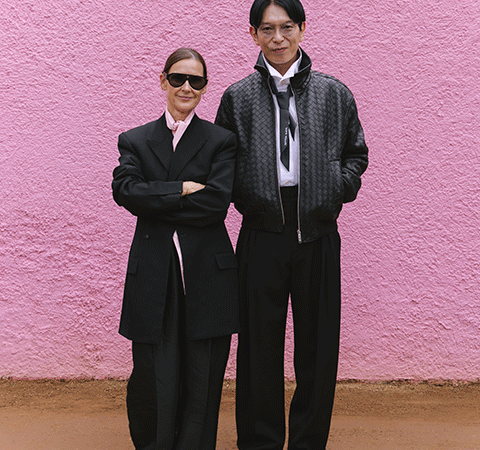
The intersection of luxury fashion and high-concept architecture reached a new milestone on October 9 as Bottega Veneta, the storied Italian maison, officially inaugurated the Barragán Prize in Mexico City. In a strategic move that extends the brand’s creative influence beyond the runway, the first edition of this prestigious accolade was awarded to the acclaimed Japanese architect Junya Ishigami. Held at La Cuadra—an architectural masterpiece designed by the legendary Luis Barragán—the event served as a definitive statement on the brand’s commitment to fostering a multidisciplinary dialogue between the worlds of design, art, and the built environment. Under the creative direction of Louise Trotter, Bottega Veneta is increasingly positioning itself not merely as a purveyor of leather goods, but as a significant patron of global cultural heritage and avant-garde intellectual inquiry.
The choice of Mexico City as the backdrop for this initiative underscores the growing importance of the Latin American cultural landscape in the global luxury sphere. By aligning itself with the legacy of Luis Barragán, the only Mexican architect to have received the Pritzker Prize, Bottega Veneta taps into a rich history of "Emotional Architecture." This partnership with La Cuadra and the subsequent establishment of the Barragán Prize reflect a sophisticated brand strategy that prioritizes "cultural capital" over traditional marketing. The event brought together an international assembly of creative luminaries, including performance artist Marina Abramović, architect Fernando Romero, and various diplomatic figures, signaling the high stakes of this new architectural institution.

A Legacy of Multidisciplinary Engagement
Bottega Veneta’s foray into architectural patronage is the latest chapter in a long-standing history of artistic collaborations. For decades, the house has cultivated relationships with prestigious institutions such as the Solomon R. Guggenheim Museum, supporting initiatives that explore the boundaries of modern and contemporary art. Recent projects have included photographic explorations with multidisciplinary artist Taryn Simon, whose work often dissects the hidden systems of power and nomenclature in the modern world. These collaborations are not peripheral to the brand’s identity; rather, they inform the very "Intrecciato" of its creative process, allowing the maison to absorb and reinterpret diverse aesthetic languages.
The establishment of the Barragán Prize represents a formalization of these impulses. While many luxury brands engage in temporary art installations or gallery sponsorships, Bottega Veneta is seeking to create a lasting intellectual legacy. By focusing on architecture—a discipline defined by permanence, structure, and human utility—the brand aligns its own reputation for craftsmanship and durability with the timeless values of the built environment. The prize aims to recognize individuals who, like the brand itself, push the boundaries of their craft to create something that resonates on a multisensory and emotional level.
The Inaugural Ceremony at La Cuadra
The presentation of the award took place at La Cuadra, part of the San Cristóbal Estates (Los Clubes), which Barragán completed in 1968. The site is world-renowned for its bold use of color—specifically the iconic "Barragán pink"—and its masterful orchestration of light and water. Originally designed as a private residence and equestrian facility, the space provided a poetic setting for an evening dedicated to spatial innovation. Louise Trotter, Creative Director of Bottega Veneta, was joined by Mexican architect Fernando Romero to host a guest list that mirrored the prize’s multidisciplinary ambitions.

Attendees included German architect Jürgen Mayer H., Italian architect Benedetta Tagliabue, and the influential curator Raymund Ryan. The presence of Kozo Honsei, the Japanese Ambassador to Mexico, highlighted the international nature of the award and the specific cultural bridge being built between Japan and Mexico. The evening was characterized by a focus on "slow luxury" and intellectual exchange, moving away from the frenetic pace of the fashion calendar to honor the more deliberate, enduring pace of architectural development.
Junya Ishigami: A Vision of Ethereal Structure
The selection of Junya Ishigami as the first recipient of the Barragán Prize was met with widespread acclaim within the design community. Ishigami, a graduate of the Tokyo University of the Arts and a former protégé of Kazuyo Sejima at SANAA, has spent the last two decades redefining the relationship between the man-made and the natural. Since founding his firm, junya.ishigami+associates, in 2004, he has become known for projects that challenge the perceived weight and opacity of traditional buildings.
Ishigami’s portfolio is a testament to what he calls "new landscapes." His work often features extremely thin structures, vast expanses of glass, and an almost invisible boundary between interior and exterior spaces. Notable projects cited during the award ceremony include:

- KAIT Workshop and KAIT Plaza: Located at the Kanagawa Institute of Technology, these structures use hundreds of slender white columns to create a forest-like interior that lacks a traditional floor plan, encouraging spontaneous movement and interaction.
- The 2019 Serpentine Pavilion: A massive slate roof that appears to grow out of the ground like a rocky outcrop, supported by a grid of impossibly light pillars.
- The House & Restaurant: A subterranean project in Ube, Japan, where concrete was poured into holes in the earth to create a cavernous, organic space that feels both ancient and futuristic.
- The Zaishui Art Museum: A kilometer-long museum built over a lake in China, where the water surface serves as the floor, further blurring the lines between nature and architecture.
Ishigami’s philosophy aligns perfectly with the spirit of Luis Barragán. While Barragán used heavy walls and vibrant colors to create "pockets of serenity," Ishigami uses transparency and lightness to achieve a similar sense of spiritual repose. Both architects view the building not as an object, but as an experience that must be felt through the senses.
Chronology of Excellence: Ishigami’s Rising Influence
The Barragán Prize adds to an impressive list of accolades that have solidified Ishigami’s status as a leader of his generation. His career trajectory has been marked by a steady accumulation of international honors:
- 2009: Received the Prize of the Architectural Institute of Japan.
- 2010: Awarded the Golden Lion for the best project at the 12th International Architecture Exhibition of the Venice Biennale.
- 2024: Again honored by the Architectural Institute of Japan, demonstrating his continued relevance in his home country.
- 2025/2026: Named an Honorary Fellow of the American Institute of Architects (AIA) and recipient of the Arnold W. Brunner Memorial Prize, respectively.
By recognizing Ishigami at this juncture, Bottega Veneta is identifying a creative force whose influence is projected to grow significantly over the coming decade. The prize serves as both a validation of his past work and a catalyst for his future experimental practices.

The Architectural Philosophy of Luis Barragán
To understand the significance of the Barragán Prize, one must look at the enduring impact of its namesake. Luis Barragán (1902–1988) revolutionized modern architecture by rejecting the cold, clinical functionalism of the International Style in favor of a more humanistic approach. His work is characterized by the use of "silent" walls, the dramatic interplay of shadows, and a deep respect for the Mexican landscape.
Barragán’s most famous works—the Casa Luis Barragán (a UNESCO World Heritage site), the Capilla de las Capuchinas, and the Casa Gilardi—are masterclasses in the use of color as a structural element. He believed that an architect should create "gardens for the soul," and his influence can be seen today in the work of everyone from Tadao Ando to the minimalist fashion designers of the 1990s. In 1980, when he accepted the Pritzker Prize, Barragán famously spoke about the importance of "serenity, joy, and solitude" in architecture—values that Bottega Veneta seeks to evoke through its own craft-focused designs.
Strategic Analysis: The Intersection of Craft and Space
The alliance between Bottega Veneta and La Cuadra is more than a philanthropic gesture; it is a sophisticated branding exercise that highlights the parallels between high-end leatherwork and architectural design. Both disciplines are obsessed with materiality, proportion, and the way an object occupies space. Bottega Veneta’s signature "Intrecciato" weave is, in essence, a structural technique—a way of creating strength and form through the repetition of a single element.

Furthermore, this initiative positions Bottega Veneta as a leader in the "Cultural Luxury" movement. Modern consumers, particularly in the high-net-worth segment, are increasingly looking for brands that offer intellectual depth and a sense of purpose. By championing architectural preservation and innovation, Bottega Veneta differentiates itself from competitors who may rely more heavily on celebrity endorsements or fleeting trends. The brand is betting on the idea that by associating itself with the "timelessness" of architecture, it can enhance the perceived value and longevity of its own products.
Broader Impact and Global Implications
The inauguration of the Barragán Prize has broader implications for the global architectural community. It represents a shift toward more diverse, international recognition systems that move beyond the traditional hubs of London, Paris, and New York. By honoring a Japanese architect in a Mexican landmark through an Italian brand, the prize embodies the truly globalized nature of contemporary culture.
For Mexico, the prize shines a renewed spotlight on its architectural heritage, encouraging the preservation of Barragán’s sites and fostering a new generation of Mexican designers who are inspired by his legacy. For the architectural world at large, the prize provides a much-needed platform for experimental practitioners like Ishigami, whose work may not always fit within the commercial constraints of traditional urban development.

As Bottega Veneta continues to expand its "creative dialogue," the Barragán Prize is expected to become a permanent fixture on the cultural calendar. The success of this first edition sets a high bar for future years, suggesting that the house will continue to seek out visionaries who can bridge the gap between the ephemeral world of fashion and the enduring world of stone, light, and space. In doing so, Bottega Veneta is not just selling a lifestyle; it is actively participating in the construction of the cultural landscape of the 21st century.

0 Comments