
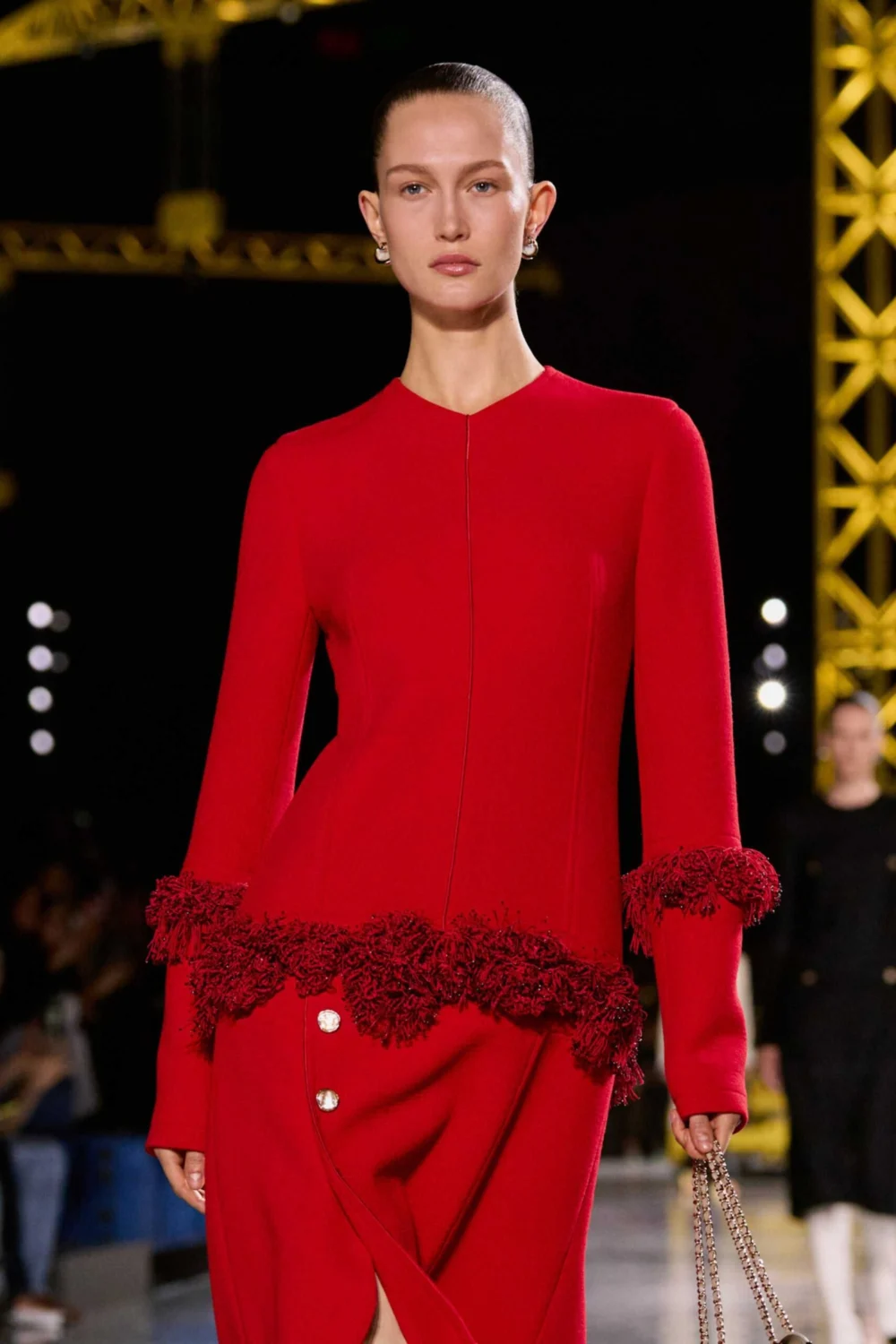
The French luxury house Chanel has once again asserted its dominance over the global fashion landscape with the unveiling of its Fall-Winter 2026 ready-to-wear collection. Staged within the hallowed, glass-domed nave of the Grand Palais in Paris, the event served as a definitive showcase for the brand’s evolving aesthetic under the creative direction of Matthieu Blazy. The presentation featured a meticulously choreographed lineup of 78 models, each revealing a distinct look that balanced the heritage of the house with a forward-looking industrial grit. The centerpiece of the discussion following the show was not merely the clothing, but a specific emphasis on the footwear, which industry analysts suggest will dictate retail trends for the upcoming 2026 season.

The scenography for the event was a departure from the traditional pastoral or cinematic themes often associated with the brand. Instead, the Grand Palais was transformed into a high-fashion construction site. Towering, brightly colored cranes were positioned throughout the space, serving as both structural elements and lighting rigs that bathed the runway in a spectrum of industrial hues. This "glamorous work zone" provided a stark, modern contrast to the delicate craftsmanship of the garments, particularly the reimagined tweed sets and the sophisticated footwear that anchored each ensemble.
A Front Row of Global Influence and Style
The significance of a Chanel show is often measured as much by the audience as by the runway itself. For the Fall-Winter 2026 presentation, the front row—or "front row" in the traditional sense—was a concentrated gathering of cultural powerhouses. Notable attendees included the brand’s long-standing ambassadors and new icons of the era. Jennie, the global superstar and member of BLACKPINK, was joined by multi-hyphenate artist Teyana Taylor, rising musical talent Olivia Dean, and media mogul Oprah Winfrey. The presence of pop legend Kylie Minogue and Academy Award-nominated actress Margot Robbie further cemented the event’s status as the season’s premier social and professional gathering.

Margot Robbie, in particular, became a focal point for fashion commentators. The actress debuted a sharp, structured bob haircut, a stylistic choice that resonated with the collection’s themes of precision and modernization. While her aesthetic transformation was widely noted, it was the way the guests interpreted the Chanel "uniform" through their choice of accessories and footwear that provided the most significant insight into the brand’s current market direction. The consensus among fashion critics was clear: for 2026, the shoe is the defining statement of the outfit.
The Evening Standard: 3D Florals and High-Shine Sandals
As the 78 looks progressed, it became evident that the collection’s footwear was categorized into three distinct pillars: evening elegance, daytime versatility, and modern classicism. The first category, focused on evening wear, introduced a series of sandals that combined traditional femininity with contemporary textures. Matthieu Blazy’s direction for nighttime footwear leaned heavily into the use of three-dimensional embellishments. Sandals were adorned with intricate floral motifs that appeared to bloom from the straps, providing a romantic counterpoint to the more rigid silhouettes of the apparel.

In addition to the floral applications, the collection made a strong case for high-shine finishes. Patent leathers and metallic coatings were utilized to ensure that the footwear captured the light of the Grand Palais’s industrial rigs. These sandals were frequently paired with knee-length skirts featuring strategic slits, allowing for a dynamic reveal of the footwear with every step. The integration of the classic tweed jacket—offered in both cropped and elongated versions—over crisp shirting created a layered look that elevated the sandal from a mere accessory to a fundamental component of the Chanel silhouette.
Daytime Sophistication: The Evolution of the Mule
For the daytime segments of the collection, the focus shifted toward the mule, a silhouette that has seen a significant resurgence in luxury markets over the last three fiscal quarters. Chanel’s interpretation for Fall-Winter 2026 emphasizes a balance between aesthetic refinement and practical comfort. The mules presented on the runway featured a variety of textures, but the most striking detail was the consistent use of the contrast white toe-cap. This visual element, a hallmark of the house’s DNA, was utilized to elongate the foot and provide a clean, graphic break in the color palette of the shoe.

The versatility of the mule was a key theme in Blazy’s presentation. While they were styled on the runway with sophisticated dresses and skirts, fashion analysts noted their potential for high-low styling, suggesting they are equally suited for pairing with premium denim. The absence of a heel strap—the defining characteristic of the mule—was framed as a nod to a more relaxed, "effortless" form of luxury that appeals to a younger, more mobile demographic of luxury consumers. This shift toward "relaxed elegance" is backed by consumer data showing a 12% increase in demand for backless footwear in the luxury sector over the past year.
The Heeled Loafer: Stability Meets Modernity
The third pillar of the footwear collection was the heeled loafer, or moccasin. This design represents a move toward a more grounded and "secure" aesthetic. Available in a palette ranging from deep burgundy (wine red) to shimmering silver and classic obsidian black, the loafers featured a prominent square heel. This design choice provides significantly more stability than a traditional stiletto, reflecting a broader industry trend toward "wearable luxury."

The heeled loafer was positioned as the collection’s most modern offering, often paired with structured dresses to create a look that is both authoritative and contemporary. By revisiting the bicolor tradition through the lens of a sturdy loafer, Chanel is appealing to the professional woman who requires a transition from daytime business to evening social engagements without a change in footwear. This pragmatic approach to high fashion is expected to resonate well in the North American and Asian markets, where functional luxury continues to outperform more ornamental styles.
Chronology of the Show: From Construction to Couture
The event followed a strict chronological progression that mirrored a day on a high-fashion "work site."

- 08:00 AM: Preparation began at the Grand Palais, with technical teams testing the movement of the colorful cranes and the synchronized lighting systems.
- 02:00 PM: Guests began arriving, with the "Margot Robbie bob" and "Jennie’s arrival" trending almost instantly on social media platforms, generating an estimated $15 million in Earned Media Value (EMV) within the first hour.
- 03:00 PM: The show commenced. The 78 models moved in a rhythmic pattern through the construction-themed set, highlighting the durability of the tweed and the shine of the new footwear.
- 03:45 PM: The finale featured a collective walk-through, where the contrast between the industrial cranes and the refined sandals was most visible.
- 04:00 PM: Post-show reviews began, with a focus on the "Blazy era" of Chanel footwear and the potential for these designs to dominate the Fall-Winter 2026 retail cycle.
Market Analysis and Industry Impact
The strategic focus on diverse footwear styles—sandals, mules, and loafers—indicates a calculated effort by Chanel to capture a larger share of the luxury accessory market. According to recent retail reports, footwear currently accounts for approximately 22% of the total revenue for top-tier luxury brands, with accessories being the fastest-growing category. By providing a comprehensive "footwear wardrobe" within a single collection, Chanel is positioning itself to meet all the lifestyle needs of its global clientele.
Furthermore, the reinvention of tweed alongside these footwear trends suggests a "holistic branding" strategy. The shoes are not designed to stand alone but to complement the signature textiles of the house. The use of the square heel and the mule silhouette also reflects a response to the "Quiet Luxury" movement, which prioritizes silhouettes and quality over overt logos. However, the addition of 3D florals and metallic finishes ensures that the brand maintains its "Statement" status.

Broader Implications for the 2026 Fashion Cycle
The Chanel Fall-Winter 2026 show has set a high bar for the remainder of the fashion weeks. The move back to the Grand Palais signifies a return to grand-scale physical experiences in an era where digital fatigue is becoming a concern for luxury marketers. The "construction zone" theme may be interpreted as a metaphor for the brand’s own internal evolution—rebuilding and reinforcing its core codes for a new generation.
In conclusion, the collection successfully navigated the intersection of heritage and innovation. By anchoring 78 diverse looks with a trio of strong footwear trends—the romantic evening sandal, the versatile daytime mule, and the stable heeled loafer—Chanel has provided a roadmap for the 2026 season. As these pieces move from the runway of the Grand Palais to global boutiques, their impact on the visual language of fashion is expected to be profound, reaffirming that in the world of Chanel, every step is a deliberate move toward the future.

0 Comments