
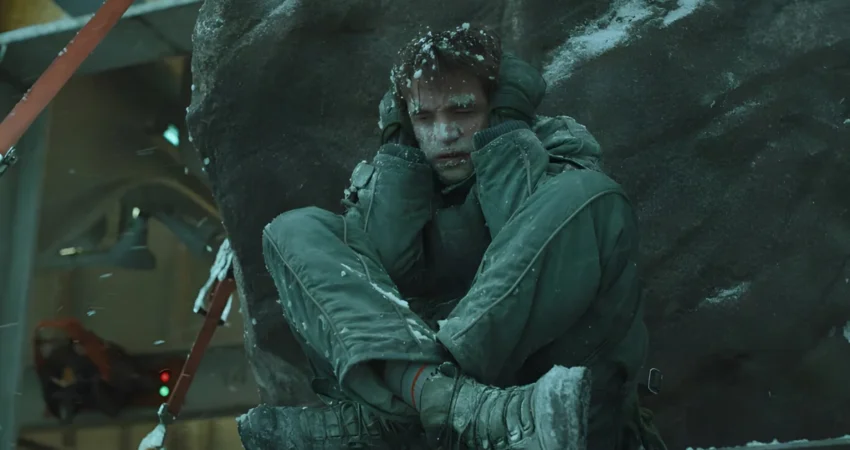
The landscape of contemporary cinema often struggles to categorize ambitious projects that blend high-concept science fiction with biting social commentary. One of the most prominent examples of this phenomenon is Mickey 17, the latest directorial effort from Academy Award winner Bong Joon-ho. Starring Robert Pattinson in a dual role, the film explores themes of labor exploitation, identity, and the devaluation of human life through a futuristic lens. Despite a challenging theatrical run characterized by polarized audience reactions and a significant production budget, the film has found a new lease on life following its debut on major streaming platforms, including Netflix and HBO Max. This transition marks a pivotal moment for a film that many critics argue was misunderstood during its initial release, positioning it for a potential reassessment as a cult classic within the science fiction genre.
The Conceptual Framework: The "Expendable" and the Cost of Survival
At the heart of Mickey 17 is a premise derived from Edward Ashton’s 2022 novel, Mickey7. The narrative follows Mickey Barnes, played by Robert Pattinson, an individual who occupies one of the most unenviable positions in the future of space colonization: the "Expendable." In a desperate bid to escape mounting debts on Earth, Barnes signs a contract with a colonization mission destined for the ice world of Niflheim. His role is to undertake the most hazardous tasks required for the colony’s survival—tasks that involve lethal levels of radiation, atmospheric toxicity, and physical peril.
The technological conceit of the film lies in the "printing" process. When Mickey dies—a frequent occurrence—his body is reconstructed via a biological 3D printer, and his memories are uploaded into the new iteration. This cycle ensures that the mission retains a worker with specialized experience without the "inconvenience" of permanent loss of life. However, the film moves beyond the technical mechanics of cloning to examine the psychological and societal implications of being a person who is legally and culturally defined as "disposable." The conflict escalates when Mickey 17 survives a mission gone wrong, only to return to base and find that Mickey 18 has already been printed, leading to a bureaucratic and existential crisis that the colony’s rigid social structure is unprepared to handle.

The Bong Joon-ho Pedigree: From Parasite to Niflheim
To understand the stylistic choices of Mickey 17, one must look at the filmography of its director, Bong Joon-ho. Known for his ability to weave complex social critiques into genre-defying narratives, Bong achieved global acclaim with Parasite (2019), which became the first non-English language film to win the Academy Award for Best Picture. Parasite was a masterclass in social satire, illustrating the widening chasm between social classes through a tense, darkly comedic thriller.
Mickey 17 represents a thematic continuation of Bong’s interest in class dynamics and the dehumanizing effects of institutional power. Much like his earlier English-language debut, Snowpiercer (2013), which used a perpetual-motion train as a microcosm for societal stratification, Mickey 17 uses the isolated environment of a space colony to critique modern labor relations. In Bong’s vision, the futuristic setting is not merely a backdrop for spectacle but a laboratory for exploring how corporations might eventually view human consciousness as a line item on a balance sheet. Critics have noted that while the film utilizes the tropes of science fiction, its soul is rooted in the "salaryman" struggle, where the employee is an interchangeable part in a massive, uncaring machine.
Financial Realities and the Theatrical Disconnect
The production of Mickey 17 was an ambitious undertaking for Warner Bros. Pictures, with an estimated budget of $118 million. This significant investment placed the film in the "blockbuster" category, necessitating a broad appeal to achieve commercial profitability. However, the film’s performance at the box office did not meet these high financial expectations. Industry analysts point to several factors that contributed to this outcome, most notably the discrepancy between marketing strategies and the film’s actual tone.
Initial promotional materials for Mickey 17 suggested a high-octane science fiction adventure, a genre typically associated with explosive action and clear-cut heroics. Audiences, particularly those familiar with Robert Pattinson’s work in The Batman, expected a traditional cinematic spectacle. Instead, they were presented with a film that prioritized dark humor, philosophical inquiry, and a deliberate, sometimes absurdist pace.

The "action" in Mickey 17 is often subverted by the film’s satirical intent; deaths that would be tragic in a standard drama are treated with a mundane, almost comedic nonchalance by the colony’s administration. This subversion of genre expectations led to a disconnect with mainstream audiences, who found the film’s lack of traditional pacing "boring" or "confusing." Consequently, the word-of-mouth reception was lukewarm, and the film struggled to maintain momentum against more conventional tentpole releases.
A Satirical Critique of Modern Labor Dynamics
The core strength of Mickey 17, according to many cinematic scholars, is its unflinching look at the "gig economy" taken to its logical, terrifying extreme. Mickey Barnes is the ultimate flexible worker; he has no rights, no permanence, and his very existence is contingent upon his utility to the mission. The film highlights the absurdity of a system that values the data and memories of a worker more than the biological life of the individual.
This theme resonates deeply with contemporary audiences who feel increasingly marginalized by automated systems and corporate downsizing. By portraying Mickey as a man who literally dies for his job only to wake up and do it again, Bong Joon-ho creates a visceral metaphor for the burnout and "disposability" felt by many in the modern workforce. The inclusion of Mark Ruffalo as a tyrannical, quasi-religious commander of the colony adds another layer of critique, illustrating how institutional leaders often use ideology or "the greater good" to justify the exploitation of those beneath them.
Chronology of Production and Streaming Strategy
The journey of Mickey 17 from script to screen was marked by several delays and strategic shifts.

- January 2022: Development was officially announced, with Bong Joon-ho attached to write and direct.
- May 2022: Robert Pattinson was confirmed for the lead role, sparking significant media interest.
- August–December 2022: Principal photography took place at Warner Bros. Studios, Leavesden, in the United Kingdom.
- 2023: Post-production was extended to accommodate complex visual effects and to refine the film’s unique tone.
- Early 2024: The film faced shifts in its release window, eventually leading to a theatrical debut that struggled to find a foothold in a crowded marketplace.
Following its theatrical run, Warner Bros. pivoted to a streaming-heavy strategy. The film’s arrival on Netflix and HBO Max is seen as a tactical move to capture the "at-home" audience—a demographic that historically shows a greater appetite for experimental or intellectual science fiction. Streaming platforms provide a space where viewers can engage with the film’s nuances without the pressure of the "blockbuster" expectation, allowing the satirical elements and Pattinson’s nuanced performance to be appreciated in a different context.
Broader Implications for the Science Fiction Genre
The trajectory of Mickey 17 underscores a growing challenge in the film industry: the survival of the "mid-to-high budget" original science fiction film. As studios become more risk-averse, favoring established franchises and sequels, standalone projects like Mickey 17 face an uphill battle. However, the film’s critical endurance suggests that there remains a vital role for science fiction that functions as social commentary.
Analysts suggest that Mickey 17 may follow in the footsteps of films like Blade Runner or Starship Troopers—movies that were initially misunderstood by audiences and critics alike but were later recognized for their prophetic vision and artistic depth. The film’s exploration of identity—specifically the question of whether Mickey 18 is truly the same person as Mickey 17—touches on classic philosophical debates that have defined the genre since its inception.
Furthermore, the film’s success on streaming services may influence how future projects of this nature are greenlit. If Mickey 17 continues to garner high viewership numbers and positive discourse on digital platforms, it may prove that the value of a film is not solely defined by its opening weekend, but by its long-term cultural impact and its ability to provoke thought long after the credits roll.

Conclusion: The Enduring Relevance of Mickey Barnes
While Mickey 17 may not have achieved the immediate commercial heights of Parasite, its arrival on Netflix and HBO Max offers a second chance for audiences to engage with one of the most provocative science fiction stories of the decade. Through the lens of Mickey Barnes’ repeated deaths and resurrections, Bong Joon-ho provides a mirror to our own world, asking uncomfortable questions about the price of progress and the value we place on the individual.
As the film reaches a global audience through streaming, the conversation around it is shifting from its box office figures to its thematic weight. In an era where the lines between labor and life are increasingly blurred, the story of a man who is "treated as a disposable part of the job" is not just science fiction—it is a timely reflection of the human condition in the 21st century. Whether Mickey 17 is viewed as a cautionary tale or a dark comedy, its presence in the digital catalog ensures that its satirical bite will continue to be felt by viewers for years to come.

0 Comments