
 Lina Irawan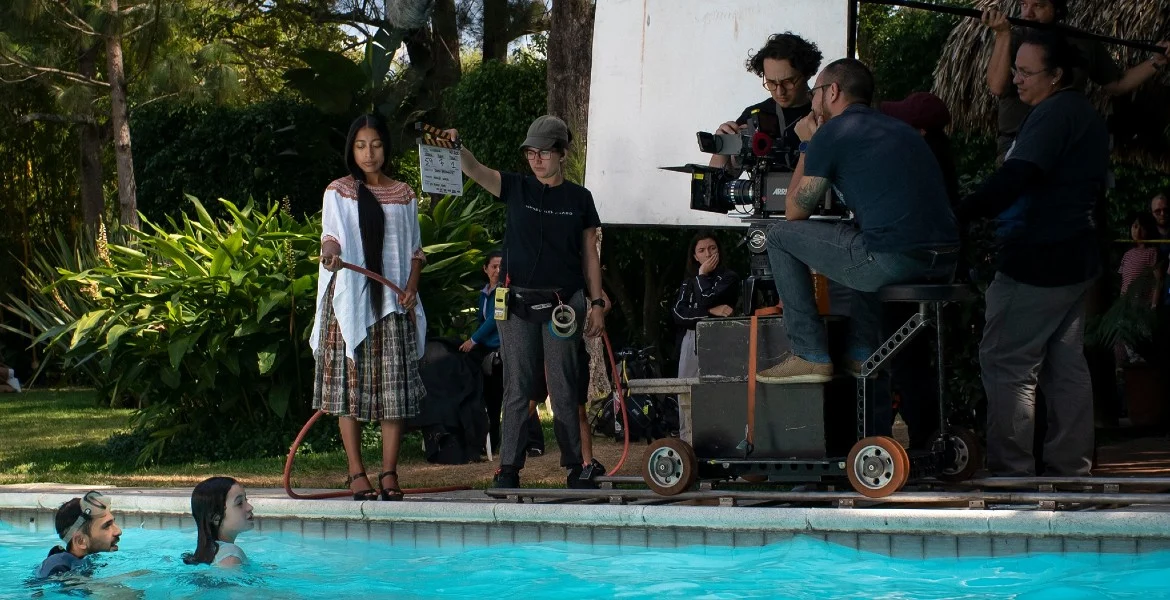
The Republic of Guatemala stands at a pivotal legislative crossroads as the nation’s Congress nears the final approval of Initiative 5906, popularly known as the National Cinema Law. This legislative package represents a comprehensive effort to formalize and stimulate an industry that has flourished in recent years despite the absence of a dedicated legal framework. Having successfully navigated its second reading in the plenary session of the Congress on February 10, the bill now awaits a decisive third debate. If passed, the law will establish a permanent institutional structure designed to transform Guatemala into a competitive hub for international audiovisual production while safeguarding and promoting its domestic cultural heritage.
For decades, Guatemalan filmmakers have operated in a vacuum of specific regulation, relying on private investment, international grants, and ad-hoc government support. The introduction of Initiative 5906 seeks to rectify this by providing the "stability, incentives, and strategic projection" necessary for long-term growth. According to a joint statement released by the Guatemalan Film Academy and the Guatemalan Association of Audiovisual and Cinematography (AGACINE), the current state of the industry is a "tangible reality" that can no longer be ignored by the state. The organizations highlight that film professionals are now being trained across various national universities and that production activity has already touched 21 of the country’s 22 departments, generating significant economic spillover in sectors ranging from hospitality to transport and technical services.
Institutional Framework and Governance
The core objective of Initiative 5906 is the "progressive, harmonious, and equitable development" of national cinematography and the broader audiovisual industry. To achieve this, the law proposes the creation of several high-level entities that will oversee different facets of the cinematic ecosystem. At the forefront is the Guatemalan Institute of Cinema (Instituto Guatemalteco de Cine), which will serve as the primary regulatory and promotional body. This institute is intended to streamline the bureaucratic processes associated with filming, acting as a "one-stop shop" for both local and foreign producers.
Complementing the Institute is the proposed National Higher School of Cinema (Escuela Superior Nacional de Cine), an institution dedicated to the formalization of technical and artistic education. While universities currently offer communications and film degrees, a state-backed national school would focus on specialized vocational training to meet the rigorous standards of international "AAA" productions. Furthermore, the law outlines the establishment of a Film Commission (Comisión Fílmica) to market Guatemala’s diverse landscapes—ranging from colonial cities like Antigua to lush tropical jungles and volcanic vistas—to global studios.
To ensure the preservation of the nation’s visual history, the law also mandates the creation of the National Cinematheque (Cinemateca Nacional). This entity will be responsible for the restoration, archiving, and public exhibition of Guatemalan films, ensuring that the country’s cultural memory is not lost to time or technological obsolescence. Governance of these bodies will be overseen by the National Cinema Council, a strategic decision-making group composed of various state ministries and elected representatives from the private film industry, ensuring a public-private synergy that aligns cultural goals with economic realities.
The Financial Engine: Incentives and the Contribution to Cinema
Perhaps the most debated aspect of Initiative 5906 is its funding mechanism. The legislation provides for a Film Promotion Fund (Fondo de Fomento del Cine), which will be distributed through a competitive public bidding process. This fund is designed to support various stages of production, including development, filming, post-production, and distribution. However, the source of this funding has been a point of intense negotiation.
The initial text of the bill included a "Contribution to Cinema," a $1 USD tax applied to every international airline ticket sold in Guatemala. This proposal sparked significant dialogue between the film sector and the aviation and tourism industries. Monica Walter Palmieri, President of the Guatemalan Academy of Cinematic Arts and Sciences and Treasurer of the Iberoamerican Federation of Academies of Cinematic Arts and Sciences (FIACINE), noted that these discussions were facilitated by Deputy Victoria Palala, who served as the primary liaison between the legislature and the industry.
In response to concerns from the tourism sector, the commission has been exploring alternative or complementary financing routes, including fiscal incentives and tax credits. Such mechanisms are common in other successful regional models, such as Colombia’s "Law 814" and the Dominican Republic’s "Law 108-10," which offer transferable tax certificates to investors. By including incentives for the exhibition of Guatemalan productions in local theaters and opening doors for international co-production agreements, the law aims to make the local industry self-sustaining while attracting foreign direct investment.
A Decade of Legislative Persistence: The Historical Context
The journey toward a National Cinema Law in Guatemala has been a long and arduous one. The current Initiative 5906 is the culmination of efforts that began more than a decade ago. Since 2011, four distinct legislative projects have been presented to Congress, each failing to reach the final approval stage due to shifting political priorities or a lack of consensus on funding.
The timeline of these efforts reflects the growing maturity of the Guatemalan film community:
- 2011–2014: Initial drafts focused on cultural protection but lacked robust economic incentive structures.
- 2015–2018: Increased advocacy from the emerging "New Guatemalan Cinema" movement, which saw films like Ixcanul gain international acclaim, though legislative progress remained stalled.
- 2019–Present: The introduction of Initiative 5906, which adopts a more holistic view of cinema as both a cultural asset and an industrial powerhouse.
"As a cinematographic guild, we have been supporting the cinema law since its inception," stated Palmieri. "We need a legal framework that strengthens the industry, among other things, because it is a source of direct and indirect jobs that dynamize the local economy." The hope among stakeholders is that this current iteration will finally overcome the parliamentary hurdles that stymied its predecessors.
The Economic and Cultural Case for the Law
The push for the law is backed by impressive, albeit currently unregulated, growth. In the last ten years, Guatemalan cinema has transitioned from a niche hobby to an international contender. Productions like Jayro Bustamante’s La Llorona—which earned a Golden Globe nomination and was shortlisted for the Academy Awards—have demonstrated that Guatemalan stories have a global market. However, without a film law, these successes often remain isolated incidents rather than the result of a sustainable system.
From an economic perspective, the film industry is a high-impact sector. A single large-scale production can employ hundreds of people, including electricians, carpenters, caterers, makeup artists, and drivers. Furthermore, the "film tourism" effect cannot be understated. Locations featured in successful films often see a surge in international visitors, providing long-term benefits to the hospitality sector. By positioning the country as a premier filming destination, the government hopes to tap into the multi-billion dollar global content market currently dominated by streaming giants like Netflix, Amazon, and Disney.
Public Support and the Final Push
The Guatemalan film community has not remained passive during the legislative process. A digital petition hosted on Change.org has gathered over 4,000 signatures, reflecting broad public support for the measure. This grassroots movement is bolstered by the backing of international bodies like FIACINE, which views the passage of the Guatemalan law as a vital step for the regional integration of Ibero-American cinema.
The sector is now calling on the general citizenry and the remaining members of Congress to recognize the urgency of the moment. The argument is clear: without a law, Guatemala risks falling behind its regional neighbors who have already enacted similar protections and incentives. Countries like Panama and Costa Rica have already established themselves as competitive locations, and Guatemala’s delay could result in the loss of millions in potential investment.
Analysis of Implications and Future Outlook
If Initiative 5906 is approved in its third debate, the immediate challenge will be the implementation of its ambitious institutional structure. The transition from a grassroots industry to a state-regulated one requires significant administrative capacity and transparent management of the Film Promotion Fund.
The inclusion of co-production agreements is particularly significant. These treaties allow films to be recognized as "national" in two or more countries, granting them access to multiple funding pools and distribution networks. For a country with a limited domestic market like Guatemala, co-productions with Mexico, Spain, or the United States are essential for achieving financial viability.
Furthermore, the law’s focus on "equitable development" suggests an intent to decentralize film production. By encouraging filming in diverse departments beyond the capital, the law could provide economic lifelines to rural areas, showcasing the cultural and linguistic diversity of Guatemala’s indigenous communities on the world stage.
As the Congress of the Republic prepares for the final debate, the eyes of the Latin American film world are on Guatemala. The passage of Initiative 5906 would not only be a victory for filmmakers but a strategic move for the nation’s economy and its international image. It represents a shift from seeing cinema as a luxury to recognizing it as a vital engine for development, identity, and modern diplomacy. The "tangible reality" of Guatemalan cinema is ready for its next act—one backed by the full force of the law.




 Eva Lovia
 Julia Chirkova
 Julia Prastini
 Nila Kartika Wati
 Jia Lissa