
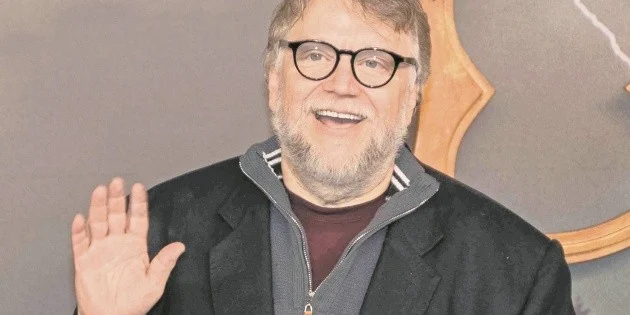
Guillermo del Toro, the visionary Mexican director renowned for his fantastical and often melancholic cinematic narratives, recently commanded attention at the annual Producers’ Luncheon for films nominated for the Academy Awards. Amidst the glittering assembly of Hollywood’s elite, Del Toro conveyed a profound sense of serenity, stating he felt "more relaxed than ever." His presence at this prestigious gathering, a customary precursor to the Oscars ceremony, offered a unique opportunity for the acclaimed filmmaker to share insights into his deeply personal and long-anticipated "Frankenstein" project, a dream he has harbored for half a century.
A Deep-Seated Contentment Amidst Cinematic Peers
The atmosphere at the Producers’ Luncheon, held at the sophisticated surroundings of the Academy Museum of Motion Pictures, was one of camaraderie and mutual respect. Del Toro, a two-time Oscar winner, expressed genuine joy and comfort within the film community, emphasizing his desire to savor the moment and celebrate the collective achievements with his team. "I feel happy and comfortable within this film community," Del Toro articulated. "I want to enjoy this weekend celebrating everything achieved with the ‘Frankenstein’ team." This sentiment underscores a career built on collaboration and a deep appreciation for the craft, a recurring theme in his public appearances. He reminisced about various industry events he has attended, including the Saturn Awards, where he had the memorable experience of meeting iconic actor William Shatner, illustrating his continuous engagement with diverse facets of cinematic culture.
During the event, the Mexican auteur took a moment to pose for photographs with fellow producers whose films were vying for the coveted Best Picture Oscar. Among them was veteran producer Jerry Bruckheimer, known for his high-octane blockbusters, with whom Del Toro shared a warm embrace. Such interactions highlight the unique blend of competition and collegiality that characterizes the Academy Awards season, bringing together artists from varied backgrounds and genres under a shared banner of cinematic excellence.
The Genesis of a 50-Year Dream: "Frankenstein"
At the heart of Del Toro’s discourse was his profound connection to the "Frankenstein" narrative, a project that has been a lifelong ambition. "It’s impossible not to feel emotional after 50 years carrying the dream of making this film," he confessed during a poignant question-and-answer session with the production teams of the nominated films. His fascination with Mary Shelley’s gothic masterpiece began in his formative years, specifically at the tender age of 11, growing up in Guadalajara, Mexico. He recounted a nostalgic yearning for the cinematic grandeur of yesteryear. "In those years, I loved going to see a film and feeling its grandiosity, something I don’t find much in today’s cinema," Del Toro lamented, drawing a subtle contrast between the immersive experiences of his youth and certain contemporary filmmaking trends.
This profound, almost spiritual, connection to the material has shaped his vision for the upcoming adaptation. Del Toro revealed that from the earliest stages of pre-production, his conceptualization of "Frankenstein" was as an "opera," drawing inspiration from the rich visual and narrative traditions of 1960s classics. This artistic approach signals a departure from conventional horror adaptations, promising a rendition steeped in dramatic weight, visual splendor, and profound emotional resonance, characteristic of an operatic production. His commitment to this long-held dream has been unwavering, navigating through various iterations and challenges over decades to bring his unique perspective to the iconic monster and its creator.
The Unwavering Defense of Handcrafted Art in the Digital Age
A significant portion of Del Toro’s discussion centered on his passionate advocacy for artisanal filmmaking, a stance that has become increasingly relevant in an era dominated by digital effects and the burgeoning influence of Artificial Intelligence. "The only way to achieve it was to tell the audience that we cared about handmade art, made by humans for humans," he explained, unequivocally championing human creativity and craftsmanship over algorithmic generation. This philosophy is not merely theoretical but deeply embedded in his production methodology.
He offered tangible examples from the "Frankenstein" set, emphasizing the dedication to practical effects and meticulous detail. "We wanted people to know that we built the ship, and when it moves, it’s really moving; we brought hundreds of fabrics for the costumes," Del Toro elaborated, his words painting a vivid picture of a production deeply invested in tactile authenticity. This commitment to physical sets, meticulously crafted props, and bespoke costuming stands in stark contrast to an industry increasingly reliant on computer-generated imagery. His impassioned defense of the artisans and technicians who bring these visions to life resonated deeply with the audience, earning him a round of applause. Seated alongside his fellow "Frankenstein" producers, J. Miles Dale and Scott Stuber, Del Toro’s remarks served as a powerful reminder of the enduring value of human skill and artistic intent in a rapidly evolving technological landscape. This stance places him at the forefront of an industry-wide debate concerning the role of AI in creative processes, positioning him as a vocal advocate for preserving the human touch in cinematic artistry.
Navigating Casting Challenges: The "Miracle" of Jacob Elordi
Del Toro also candidly shared one of the significant pre-production challenges for "Frankenstein": the unexpected withdrawal of actor Andrew Garfield just nine weeks before filming was slated to begin. Such a last-minute change could derail a major production, but Del Toro, drawing upon decades of experience and a philosophical outlook, viewed it through a unique lens. "I am 61 years old, and I know that when something goes wrong, it is going well," he mused, revealing a perspective shaped by resilience and an intrinsic belief in serendipity. This personal philosophy guided him through the crisis. "I told myself: ‘Something is going to come that will be a miracle, and that miracle was Jacob Elordi,’" he recalled, acknowledging the pivotal role the rising star played in salvaging the project’s casting.
Jacob Elordi, known for his compelling performances and commanding screen presence, was quickly brought on board to take on a crucial role in Del Toro’s "Frankenstein." While the original source material erroneously suggested Elordi was nominated for a Best Supporting Actor Oscar at the time of this event, his casting by a director of Del Toro’s caliber nonetheless highlights his burgeoning talent and the significant anticipation surrounding his performance in the upcoming film. Elordi’s rapid ascent in Hollywood, marked by critically acclaimed roles in recent projects, aligns perfectly with Del Toro’s recognition of his potential as a "miracle" for the production. This episode underscores the unpredictable nature of filmmaking and the often-fortuitous turns that can ultimately shape a project’s destiny.
The Broader Canvas: Guillermo del Toro’s Enduring Legacy
Guillermo del Toro’s presence at the Producers’ Luncheon extends beyond his immediate "Frankenstein" project. It symbolizes his enduring stature as a titan of contemporary cinema and a consistent voice for artistic integrity. His past triumphs at the Academy Awards serve as a testament to his unique vision and storytelling prowess. In 2018, he won Best Director and Best Picture for the critically acclaimed fantasy romance "The Shape of Water," a film that garnered 13 Oscar nominations and four wins, including Best Original Score and Best Production Design. More recently, in 2023, his stop-motion animated masterpiece "Pinocchio" secured the Oscar for Best Animated Feature Film, further cementing his reputation for pushing creative boundaries across different genres and mediums. Even his darker, more grounded thriller "Nightmare Alley" received four Oscar nominations in 2022, including Best Picture, showcasing his versatility.
These accolades underscore Del Toro’s profound impact on the global film landscape. His films often explore themes of otherness, monsters (both literal and metaphorical), and the power of imagination, all imbued with a distinct visual flair and emotional depth. He has consistently used his platform to advocate for storytelling that resonates with the human condition, often through the lens of fantasy and horror, challenging conventional perceptions and celebrating the marginalized.
Implications for the Future of Filmmaking
Del Toro’s impassioned defense of handcrafted filmmaking against the rising tide of Artificial Intelligence carries significant implications for the future of the film industry. As AI tools become more sophisticated, capable of generating scripts, visuals, and even entire digital characters, the debate between technological efficiency and human artistry intensifies. Del Toro’s articulate stance serves as a powerful reminder that while technology can be a valuable tool, it should not supersede the irreplaceable value of human creativity, intuition, and the artisanal skills passed down through generations of filmmakers.
His "Frankenstein" project, therefore, becomes more than just another adaptation of a classic tale; it is poised to be a manifesto for a particular philosophy of filmmaking. By deliberately choosing practical effects and emphasizing the human element in every stage of production, Del Toro is making a powerful artistic and ethical statement. This approach challenges the industry to reflect on what truly constitutes cinematic art and the role of the human artist in an increasingly automated world. The anticipation surrounding his "Frankenstein" is not just for the story itself, but for the craftsmanship and artistic integrity that it promises to embody, reinforcing the idea that authentic, human-made art continues to hold immense power and resonance.
As the industry gears up for the Academy Awards ceremony, discussions like Del Toro’s at the Producers’ Luncheon serve as crucial touchstones, reminding participants and audiences alike of the passion, dedication, and profound artistic vision that underpin the creation of cinema’s most memorable works. The Oscar ceremony, historically scheduled in late February or early March, remains the pinnacle event where these achievements are celebrated, and where the enduring legacy of filmmakers like Guillermo del Toro continues to be honored.

0 Comments