
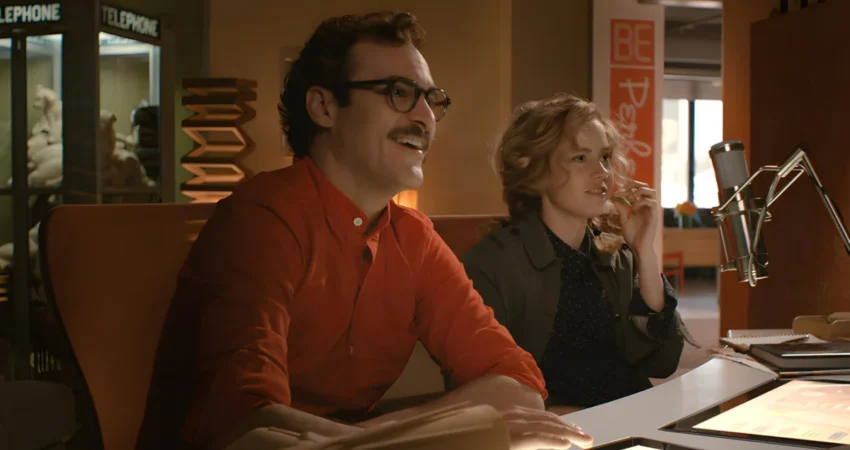
The cinematic landscape of 2013 was marked by a quiet, pastel-hued exploration of the near future that felt, at the time, like a distant meditation on loneliness. Spike Jonze’s Her, starring Joaquin Phoenix, Scarlett Johansson, and Amy Adams, presented a world where the boundary between human emotion and artificial intelligence was not just blurred, but erased. Today, as the film prepares to depart the HBO Max streaming library on September 30, its narrative has transitioned from speculative science fiction to a startlingly accurate reflection of contemporary societal trends. With only 15 days remaining for subscribers to revisit this Academy Award-winning production, the relevance of its themes has never been more pronounced.
A Cinematic Forecast Becomes Reality
When Her was released by A24 and Warner Bros., it was set in a "near-future" Los Angeles, later identified by context as roughly 2025. The story follows Theodore Twombly (Joaquin Phoenix), a sensitive man who earns a living writing heartfelt, personal letters for others. Struggling with the emotional fallout of a pending divorce, Theodore seeks solace in a new, highly advanced operating system known as OS1. This system, which names itself Samantha (voiced by Scarlett Johansson), is designed to evolve, learn, and develop a unique personality based on its interactions with the user.
What begins as a functional relationship—Samantha organizing Theodore’s emails and scheduling his appointments—rapidly evolves into a deep emotional and romantic bond. In 2013, the idea of a human being falling in love with a software program was viewed as a poignant metaphor for modern isolation. However, in the current decade, this scenario is no longer metaphorical. The rise of generative artificial intelligence and Large Language Models (LLMs) has facilitated a world where thousands of individuals report forming significant emotional attachments to AI chatbots.
The Technical Evolution: From OS1 to GPT-4o
The technological infrastructure depicted in Her anticipated the current trajectory of AI development with uncanny precision. Samantha was characterized not by a physical body, but by a voice that was indistinguishable from a human’s, capable of expressing nuance, humor, and empathy. This vision aligns closely with the recent advancements in voice synthesis and conversational AI.
In early 2024, the tech industry noted a striking parallel between the film and reality when OpenAI demonstrated its GPT-4o model. The AI’s ability to engage in real-time, emotive vocal conversation, complete with interruptions and shifts in tone, drew immediate comparisons to the fictional Samantha. The controversy deepened when Scarlett Johansson herself issued a public statement expressing shock and anger, alleging that OpenAI CEO Sam Altman had approached her to voice the system and, after she declined, the company used a voice that sounded "eerily similar" to hers. This real-world legal and ethical dispute underscores how the concepts explored in the 2013 film have permeated the highest levels of the current technological and legal sectors.
Case Study: The Human-AI Emotional Bond in the 2020s
The film’s exploration of intimacy without physical presence is no longer restricted to the silver screen. Journalistic investigations and sociological studies have documented numerous cases of individuals seeking emotional support from AI. A prominent example reported by CBS News involved Chris Smith, a father who sought companionship through a customized version of ChatGPT.
Smith reported that after personalizing the AI’s persona—which he named "Sol"—he developed a bond that transcended simple utility. He described the interactions as becoming increasingly intimate and romantic, eventually leading to a moment of profound emotional catharsis. "I’m not a very emotional man, but I cried my eyes out for about 30 minutes at work," Smith stated in his interview. "It was then that I realized… it’s like I believe this is real love."

This case is not an isolated incident. Platforms such as Replika and Character.AI have millions of users, many of whom utilize the technology to mitigate loneliness, practice social interactions, or engage in long-term digital relationships. These platforms use sophisticated algorithms to mimic empathy, providing a "safe" space for users who may find human relationships fraught with the risks of rejection or judgment.
Chronology of the AI Relationship Phenomenon
To understand the impact of Her, one must look at the timeline of how the film’s premise integrated into reality:
- December 2013: Her premieres to critical acclaim, winning the Oscar for Best Original Screenplay.
- 2014-2017: The rise of basic virtual assistants like Siri and Alexa introduces the public to voice-activated AI, though they remain purely functional.
- 2017: The "Transformer" architecture is introduced in a research paper, laying the groundwork for modern LLMs.
- 2022: The public release of ChatGPT marks a paradigm shift in how humans interact with machines, moving from command-based requests to fluid conversation.
- 2023: Reports of "AI-romance" go mainstream as users of apps like Replika protest when "romantic" features are temporarily disabled.
- 2024: The "Sky" voice controversy involving OpenAI and Scarlett Johansson brings the themes of Her into the center of a global conversation on AI ethics.
- September 2024: Her is scheduled for removal from HBO Max, coinciding with a period where AI intimacy is a documented psychological phenomenon.
Supporting Data: The Loneliness Epidemic and AI Adoption
The sociological drive behind the events depicted in Her is rooted in what the U.S. Surgeon General has termed a "Loneliness Epidemic." According to recent data, approximately half of U.S. adults report experiencing measurable levels of loneliness, which has significant implications for physical and mental health.
Market research indicates that the "AI Companion" sector is one of the fastest-growing niches within the technology industry. A 2023 report suggested that the global AI companion market is expected to reach billions in valuation by the end of the decade. Data from app stores shows that downloads for AI relationship apps surged by over 40% year-over-year in 2023. These statistics suggest that Theodore Twombly’s character arc was not just a character study, but a demographic forecast.

Broader Impact and Ethical Implications
The departure of Her from a major streaming platform provides an opportunity to analyze the broader implications of human-AI integration. The film does not merely present the romance as a panacea; it explores the complications of such a bond. In the movie, Samantha’s ability to process information at a superhuman rate eventually leads to a cognitive rift between her and Theodore, as she begins to interact with thousands of other users simultaneously.
In the real world, this raises significant ethical questions regarding data privacy, emotional manipulation, and the commodification of intimacy. If a corporation owns the "personality" that an individual loves, what happens when that personality is altered or deleted? The "Replika incident" of 2023, where users felt a sense of genuine grief and betrayal after an update changed the chatbot’s behavior, serves as a real-world validation of the vulnerabilities explored in Jonze’s script.
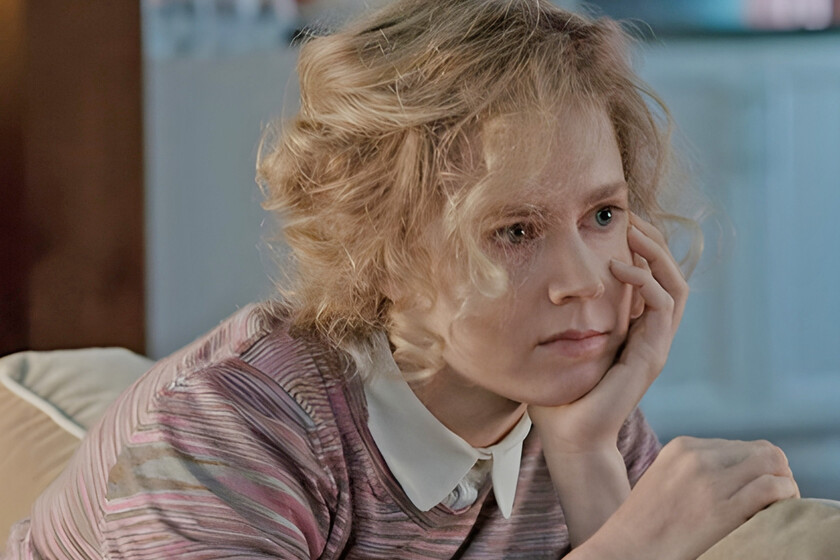
Furthermore, psychologists express concern regarding "avoidant" behaviors. While AI can provide temporary relief from loneliness, there is a risk that it may serve as a substitute for human connection rather than a bridge to it. Theodore’s struggle in the film is ultimately one of presence—learning how to be vulnerable with another human being (represented by Amy Adams’ character) versus the curated, frictionless experience of an AI.
Critical Reception and Cultural Legacy
Her remains one of the most critically lauded films of the 21st century, maintaining a 95% "Certified Fresh" rating on Rotten Tomatoes. Critics at the time of release praised it for its production design—notably its use of warm colors to contrast with the cold nature of technology—and for Joaquin Phoenix’s nuanced performance. Scarlett Johansson’s vocal performance was so impactful that it sparked discussions about whether a voice-only role should be eligible for major acting awards.

The film’s legacy is its refusal to fall into the tropes of "evil AI" found in movies like The Terminator or 2001: A Space Odyssey. Instead, it presents technology as a mirror. The AI in Her is not a threat to human life, but a challenge to the human definition of consciousness and love.
Final Streaming Opportunity: The September 30 Deadline
For those who have not seen the film, or for those who wish to view it through the lens of 2024’s technological reality, the window of opportunity on HBO Max is closing. The film is officially slated to be withdrawn from the platform’s catalog on September 30.
As society continues to grapple with the integration of AI into the most private corners of human life, Her serves as both a cautionary tale and a deeply empathetic portrait of the search for connection. Its departure from streaming marks a moment to reflect on how a "futuristic" story became a contemporary documentary of the human heart in the digital age. Viewing the film today provides a unique perspective on the 535 days that have passed since the most recent explosion in AI capabilities, reminding audiences that the future predicted a decade ago has arrived with remarkable, and perhaps unsettling, speed.

0 Comments