
 Julia Prastini
Certain films, born from a seemingly minor anecdote, evolve to capture and comically dissect profound generational truths. Such is the case with "Hijo de Familia," a poignant and sharply observed comedy currently captivating audiences in Mexican cinemas. This film transcends mere entertainment, acting as a reflective mirror on contemporary societal realities. The narrative centers on "Bobby," a man well into his thirties who, like an increasing number of his peers, continues to reside in his parents’ home. While this premise might initially appear lighthearted, the film masterfully leverages this situation to explore a spectrum of broader and more resonant themes: the escalating difficulty of achieving independence, the pervasive fear of maturation, the complexities of familial attachment, the insidious trap of comfort, and ultimately, the harsh reality of a city that progressively displaces those who grew up within its embrace.
In an exclusive interview with EL INFORMADOR, director Rafa Lara, alongside lead actor Ianis Guerrero and actress Alicia Jaziz, articulated how "Hijo de Familia" emerges as both an affectionate portrayal and a critical examination of a phenomenon widely recognizable across Mexico. The choice of comedy as a genre was far from superficial; instead, it served as a deliberate strategy to address these pressing contemporary issues without sacrificing the inherent pleasure and communal experience of cinema. The film’s journey, from its conceptual genesis to its triumphant premiere at the Guadalajara International Film Festival (FICG) in 2025 and its subsequent theatrical release, underscores a commitment to both artistic integrity and social relevance.
The Genesis of a Generational Reflection: From Anecdote to Screen
For director Rafa Lara, the pivotal realization was that "Hijo de Familia" offered more than just an amiable premise. "It’s a film that, despite being a comedy, speaks to transcendent, human, and current issues. It wasn’t a superficial comedy," Lara stated, emphasizing his directorial philosophy. "For me, a good comedy must stem from very serious, human, and universal premises." This approach aligns with a growing trend in Mexican cinema, where comedic narratives are increasingly employed to dissect complex social issues, moving beyond traditional slapstick or romantic comedy tropes to offer nuanced critiques of modern life. Films like "Nosotros los Nobles" or "Qué culpa tiene el niño?" have previously demonstrated the genre’s capacity for social commentary, but "Hijo de Familia" delves into a particularly timely and widespread phenomenon.
The initial spark for the story, however, did not originate from the director’s chair but from a tangible, almost domestic observation. Ianis Guerrero, who not only stars but also played a significant role in the film’s development, recalled how the idea emerged from a universally relatable experience that swiftly transformed into a compelling dramatic structure. "I started researching this phenomenon, which is experienced differently in various countries, but I realized that in Mexico, it’s probably where we leave our parents’ homes the latest," Guerrero explained. This observation forms the bedrock of "Bobby’s" character and the central conflict of the film.
Guerrero’s research likely touched upon prevailing socioeconomic data. According to various studies by institutions like the National Institute of Statistics and Geography (INEGI) in Mexico or regional analyses by the Inter-American Development Bank (IDB), the average age at which young adults leave their parental homes in Mexico and other Latin American countries is notably higher than in many OECD nations. Factors contributing to this trend include a combination of cultural norms emphasizing strong family cohesion, the escalating cost of living in urban centers, and economic instability affecting youth employment and wages. For instance, data from recent years indicates that a significant percentage of Mexicans between 25 and 34 years old still live with their parents, a figure that has seen an upward trajectory, particularly in major metropolitan areas where housing prices have soared.

This empirical starting point allowed Guerrero to craft a narrative that avoids judgmental stances, instead offering a blend of irony, social observation, and profound empathy. The film acknowledges that behind the facade of the "hijo de familia" (family son) lie multifaceted and often compelling reasons. "There are these men who don’t want to finish growing up, who want to continue without maturing. Everyone grows, but not everyone matures," Guerrero elaborated. "There are also economic reasons: it’s increasingly expensive to live in the city, especially in central and well-connected areas. Other reasons include comfort, because often these men don’t want to leave the warm blanket, mom, the bed, the neatly folded clothes. And there’s also a certain fear of the unknown, fear of renting, of seeking a life outside that comfort." This comprehensive understanding of the phenomenon allows the film to resonate deeply with a broad audience, as many can identify with at least one of these contributing factors, either personally or through their acquaintances.
Guadalajara: A Character and a Homage
"Hijo de Familia" was not merely filmed in Guadalajara; its story is inextricably woven into the fabric of the city, allowing it to emerge as a living, breathing character within the narrative. This deliberate integration of the urban landscape into the film’s dramatic structure was a cornerstone of the production.
For Rafa Lara, the decision to film in Guadalajara was central from the very beginning. "It was one of the first things we had very clear, and that I, as a director, wanted to propose: that it should be Guadalajara, not just the dramatic location of the film, but also an additional character," Lara affirmed. "The film is consciously a visual, cinematographic, and sonic homage to Guadalajara." This dedication to the city goes beyond superficial tourism; it’s an immersive portrayal that captures its unique rhythms, architecture, and social nuances.
Lara, who identifies as a Tapatío by adoption, having grown up there despite being born in Mexico City, explained that he had harbored a long-standing desire to film in the city with a consolidated team and a local perspective that avoided clichés. "I was born in Mexico City, but I consider myself a Tapatío by adoption. I grew up in Guadalajara. For many years in my career, I tried to do something in Guadalajara, but the conditions weren’t there," he recounted. The realization of this project thus represents a personal and professional milestone for the director, allowing him to channel his intimate understanding of the city into a cinematic work.
Beyond personal affinity, there was a more profound reason for choosing Guadalajara: the specific family structure portrayed in the film feels particularly legible and prevalent in this city. "The film speaks of traditional families, of those more united, more ‘muégano’ families, as we say [a Mexican term for very close-knit or clingy families]," Lara noted. "And that phenomenon is more common in Guadalajara even than in Mexico City. Guadalajara is more traditionalist. For all these reasons, Guadalajara was the perfect point." This cultural insight highlights the film’s meticulous grounding in specific regional realities, allowing it to explore universal themes through a localized lens.
Ianis Guerrero echoed this sentiment, emphasizing his affective bond with the city and its vibrant artistic community. "I am in love with Guadalajara. I have returned to film several times. I am in love with the city, with the people, with the atmosphere, with the brutal talent that exists there," Guerrero enthused. "We compete with anyone in Mexico and outside of Mexico." This synergy between the filmmakers’ personal connections and the city’s inherent character enriches the film, making Guadalajara an active participant in Bobby’s journey rather than a mere backdrop.

The film’s theatrical release in Jalisco includes screenings at significant cultural venues, further cementing its local connection: Cine Mayahuel in Guadalajara, Cine San Javier in Arandas, Cineteca FICG in Zapopan, Cine + Lago in Ajijic, and Cineplex in Atotonilco el Alto. This localized distribution strategy ensures that the film reaches the communities it so lovingly portrays, fostering a sense of ownership and resonance among local audiences.
The Nuance of Laughter: Making Audiences Reflect Without Trivializing
Ianis Guerrero posits that comedy is neither a minor genre nor a simple vehicle for entertainment; rather, it is a powerful tool for community building. "It’s a film to share with family. And I believe that, as a Mexican society, that is very necessary, very rich. That part of cinema is vital for me," Guerrero stated. He contrasts the communal experience of watching a film with the isolated nature of social media consumption: "Unlike social media, which is totally personal, a film belongs to society, to the community. Comedy, for me, is a noble, beautiful genre, and laughter also lowers your guard." This perspective underscores the film’s ambition to foster shared experiences and collective introspection.
The film’s initial journey through the Festival Internacional de Cine en Guadalajara (FICG) in 2025, where it was part of the Official Selection, served as a crucial validation. For actress Alicia Jaziz, this festival recognition holds significant value, as it effectively discredits the notion that comedy is inherently at odds with cinematic quality. "Sometimes it seems that comedy is minimized or underestimated as if it were less cinematographic, less artistic," Jaziz observed, challenging a common misconception within film circles. "For me, doing comedy seems quite complex. I believe it involves a knowledge of cause, a technique, a dramaturgy, a form, and a very special sensitivity." This argument highlights the sophisticated craft required to execute effective comedic storytelling, particularly when it aims to convey deeper messages.
What Jaziz most celebrates about the film’s transition from festival screenings to commercial theaters is the enduring magic of the shared cinematic experience itself. "I love that we are also returning to the culture of going to the cinema. For me, it’s something very beautiful: going, queuing, buying popcorn, inviting people, sitting in the cinema and saying, ‘we are going to give ourselves this hour to watch this movie’," she shared passionately. "I really like that experience, because we have lost it with so many phones, with so many things. We have lost being accompanied in that way, contact, laughing in a room and infecting each other." Her sentiment resonates with a global movement to revive theatrical attendance, emphasizing the unique social and emotional benefits that communal viewing offers, particularly in an increasingly digital and isolated world.
Beyond its exploration of the housing crisis, humor, and family conflict, "Hijo de Familia" is also conceived as a heartfelt love letter to Guadalajara. For Rafa Lara, the city is not merely a stage but a reflection of his own emotional history and connection to it. The film successfully navigates the balance of being locally specific while remaining universally intelligible. "Hijo de Familia" champions a distinctive city, portrays an at once suffocating and loving family, depicts a man who delays his departure, and ultimately, invites genuine laughter.
Insights from the Cast: Constanza Andrade’s Artistic Voyage
Adding another layer to the film’s narrative, Tapatía actress Costanza Andrade shared her experience within the project, noting that its premiere signifies more than just a step in a film’s life; it confirms a process sustained by persistence, collective effort, and an unwavering love for cinema in theaters. "Watching a film in cinemas is a whole experience… I watch little streaming, honestly, because I like to go to theaters. I think preserving that tradition is very important," Andrade affirmed, echoing her co-stars’ sentiments about the communal aspect of film.
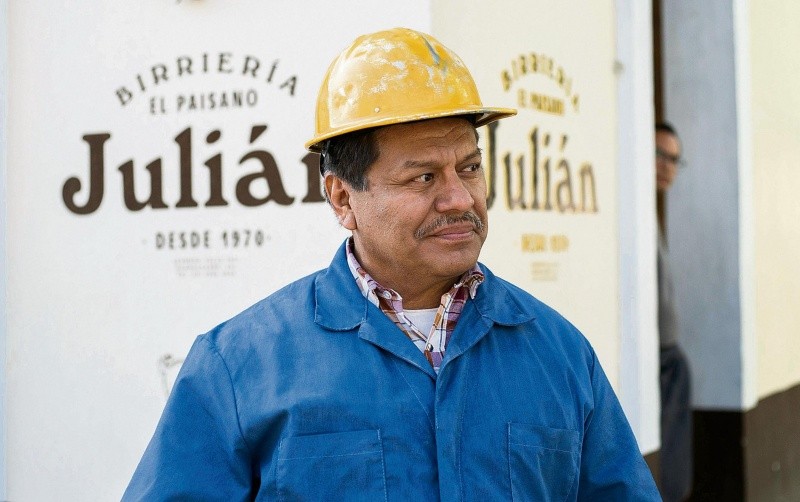
The film’s humorous take on a young man over thirty still living with his parents struck a chord with Andrade, who recognized it as a pervasive generational reality. "Many colleagues of my generation… live this situation. And it’s not that they don’t want to become independent: many times, they can’t," she observed. This perspective further underscores the film’s empathy, showcasing how it uses comedy to navigate complex issues like family dependence, emotional maturity, and contemporary socioeconomic pressures without resorting to judgment.
Andrade joined the project through an invitation from director Rafa Lara, with whom she had previously collaborated, though she still underwent a casting process. She described the filming experience as one marked by profound collaboration and creative freedom. "It was super fun… in a communal art like cinema, that’s important: who you work with," she highlighted. She particularly praised Lara’s directorial style: "You have a lot of freedom to propose, to improvise, to make mistakes… and he also knows what he wants." This dynamic fostered an environment where actors could fully inhabit and enrich their characters.
This collective vision of cinema is reflected in Andrade’s acting methodology. She actively seeks characters that allow her to explore and build layers beyond the initial script. "Even if the character seems flat on paper, it’s my job to give it layers of humanity… so that it feels real and not like a sticker," she explained. In "Hijo de Familia," she portrays "Melissa," a character she defines by her sweetness, patience, and bravery within a predominantly male-dominated work environment.
Andrade’s creative process is deeply sensorial and imaginative. "With her, I worked a lot with the color yellow… I’m intense: I work a lot with images, I make collages," she revealed. She even employs intimate metaphors to embody her characters; for Melissa, "She was a bee to me." For the actress, each role presents a mystery to be solved through intuition and imagination, making every performance a unique journey of discovery.
Her vocation for acting emerged in childhood, initially through ballet. The decisive moment arrived when she watched Guillermo del Toro’s "El laberinto del fauno" (Pan’s Labyrinth). "That’s when I realized that the girl who worked there: she was an actress… ‘I want to do that’," she recalled. Years later, she formalized her training in musical theater in Guadalajara. Since then, she lives by a personal maxim inspired by Joseph Campbell: "Follow the bliss," which she translates as "sigue tu gozo" (follow your joy).
Regarding her aspirations, Andrade seeks complex characters with inherent contradictions, drawing inspiration from performances that demand total immersion and dedication. She also expresses a keen interest in developing her own projects, currently writing and producing a film in which she will also star. This ambition reflects a growing trend among actors to take greater creative control over their careers and storytelling.
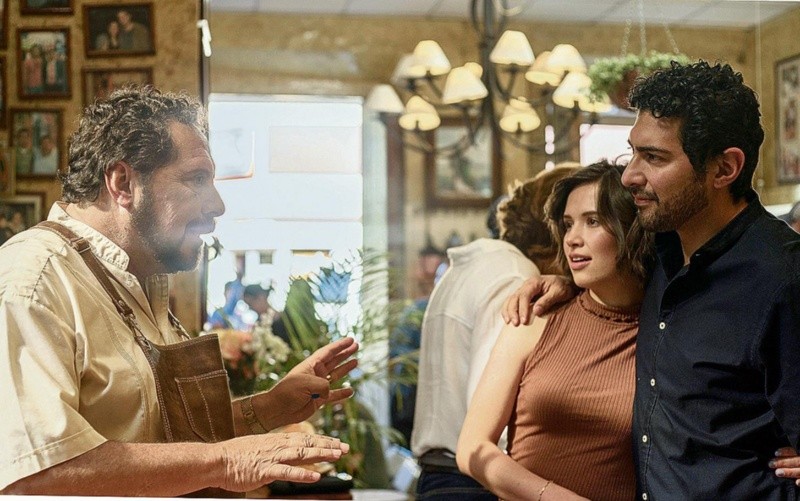
Andrade reiterates that Guadalajara occupies a central place in her personal history and within the film. The city emerges as a vibrant space, replete with its inherent tensions between rootedness and growth. The actress describes her relationship with Guadalajara as ambivalent: "I feel that Guadalajara expelled me," she admitted, though she acknowledges that her work, particularly on this film, has allowed for a powerful reconciliation. "This film is a reconciliation, it’s an embrace to Guadalajara." This personal connection adds another layer of authenticity to the film’s portrayal of the city.
Ultimately, Costanza Andrade’s expectation for "Hijo de Familia" is clear: "I want them to have a great time… To laugh, to leave with a good feeling." Without being didactic or preachy, the film successfully prompts reflection on family dynamics, empathy, and the contemporary moment, leaving a light yet significant imprint on its audience.
Broader Impact and Implications for Mexican Cinema
"Hijo de Familia" is more than just a successful comedy; it represents a significant contribution to contemporary Mexican cinema, particularly in its capacity to blend entertainment with profound social commentary. The film’s critical reception at FICG and its current theatrical run underscore the growing appreciation for comedies that dare to tackle complex societal issues with nuance and wit. Its exploration of delayed independence resonates not only in Mexico but globally, as similar phenomena are observed in many developed and developing nations grappling with economic shifts and changing family structures.
The film’s success also highlights the increasing importance of regional filmmaking hubs like Guadalajara. By consciously featuring the city as a character, "Hijo de Familia" demonstrates that compelling stories can be told with distinct local flavors that simultaneously achieve universal appeal. This regional focus helps to diversify the narratives coming out of Mexico, moving beyond the often-Mexico City-centric perspectives that have historically dominated the national film industry. It provides opportunities for local talent, crews, and creative visions to flourish, contributing to a richer and more varied cinematic landscape.
Furthermore, the emphasis placed by the cast and director on the communal experience of going to the cinema serves as a vital reminder of the cultural significance of theatrical releases in an era dominated by streaming platforms. In a society increasingly fragmented by digital consumption, films like "Hijo de Familia" offer a shared space for collective laughter, reflection, and connection, reinforcing the cinema’s role as a public forum and a communal ritual. This push for theatrical engagement is crucial for the health and vibrancy of the film industry, supporting local theaters and fostering a continued appreciation for the big-screen experience.
"Hijo de Familia" thus stands as a testament to the power of well-crafted comedy: a film that entertains heartily while subtly provoking thought, celebrating a city, and shedding light on the intricate, often humorous, realities of modern Mexican family life. It invites audiences not just to laugh, but to recognize a piece of themselves, their families, and their cities on screen, fostering a connection that lingers long after the credits roll.




 Eva Lovia
 Julia Chirkova
 Nila Kartika Wati
 Lina Irawan
 Jia Lissa