
The Origins and Cinematic Lineage of the Body Snatchers
To understand the context of the 2007 film, one must examine the enduring power of Jack Finney’s original narrative. The story of extraterrestrial spores falling to Earth and replacing humans with emotionless "pod people" has served as a versatile metaphor for societal anxieties across different eras. The first adaptation, 1956’s Invasion of the Body Snatchers, directed by Don Siegel, is widely interpreted as a commentary on either the "Red Scare" of McCarthyism or the stifling conformity of 1950s suburban America.
In 1978, director Philip Kaufman reimagined the story in a gritty, paranoid San Francisco. This version, starring Donald Sutherland, is frequently cited by critics as one of the greatest horror films ever made. It replaced the 1950s optimism with a bleak, nihilistic ending that reflected the post-Watergate disillusionment of the late 1970s. A third version, Abel Ferrara’s Body Snatchers (1993), shifted the setting to a military base, exploring themes of institutional rigidity. By the time Warner Bros. greenlit The Invasion in the mid-2000s, the challenge was to find a new resonance for the 21st century—a task that proved more difficult than anticipated.
A Troubled Production: From Cerebral Drama to Action Thriller
The production of The Invasion was marked by a fundamental clash in creative visions. Originally, the studio hired German director Oliver Hirschbiegel, who had gained international acclaim for his claustrophobic portrayal of Adolf Hitler’s final days in Downfall (2004). Hirschbiegel’s initial vision for the film was reportedly a slow-burn, psychological drama that emphasized the eerie, internal loss of humanity rather than external spectacle.

Principal photography began in late 2005, primarily in Baltimore and Washington, D.C. However, after viewing Hirschbiegel’s initial cut, executives at Warner Bros. expressed significant dissatisfaction. Internal reports suggested that the studio found the film too "European"—a industry euphemism for a pacing that was deemed too slow for a summer blockbuster. Fearing a commercial disaster, the studio took the unusual step of hiring the Wachowskis (famed for The Matrix) to rewrite portions of the script. They also brought in James McTeigue, who had directed V for Vendetta, to oversee extensive reshoots.
These reshoots, which took place nearly a year after the original filming had wrapped, accounted for roughly one-third of the final movie. The additions included high-speed car chases, explosions, and more overt physical confrontations between the protagonists and the "infected." This tonal shift created a stylistic dissonance in the final product, where the first half of the film maintains a sense of quiet dread, while the second half descends into a conventional chase thriller.
Narrative Mechanics and Modernized Themes
The 2007 iteration attempts to ground the alien invasion in the language of modern pathology. Rather than the traditional "pods" found in earlier versions, the extraterrestrial threat is presented as a crystalline organism found on the debris of a crashed space shuttle (the Patriot). This organism is a rapidly mutating virus that rewrites human DNA during the REM cycle of sleep.
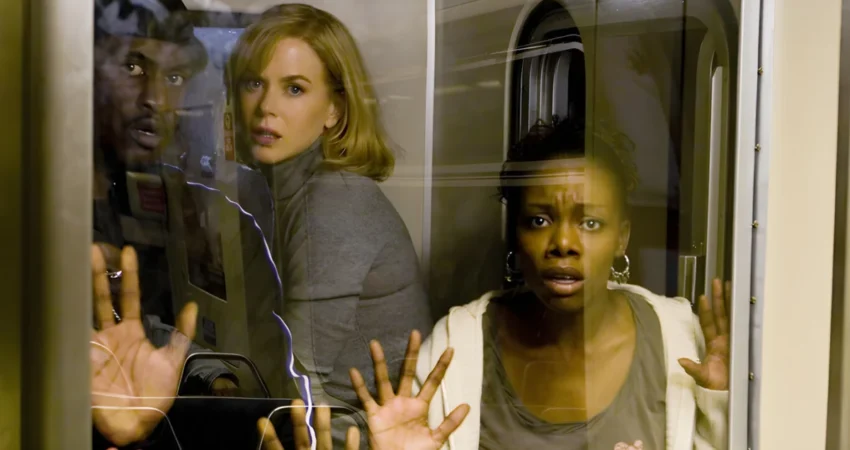
The protagonist, Dr. Carol Bennell (Nicole Kidman), is a psychiatrist who begins to notice a disturbing lack of emotional affect in her patients and neighbors. Unlike the 1978 version, which focused on the loss of individuality, The Invasion leans into the concept of a "world without war." The infected humans claim that by removing emotion, they are removing the root cause of human conflict, poverty, and violence. This provides a brief, albeit underdeveloped, philosophical core to the film: is a peaceful world worth the price of the human soul?

Daniel Craig portrays Ben Driscoll, a doctor and Carol’s close friend. His role was expanded during the reshoots to provide more of a traditional "action hero" foil to Kidman’s character. The plot eventually centers on Carol’s son, Oliver, who appears to be immune to the virus due to a childhood bout with ADEM (Acute Disseminated Encephalomyelitis). The climax involves a desperate race to extract a vaccine from Oliver’s blood, a departure from the "all is lost" endings of previous iterations.
Financial Performance and Box Office Data
The Invasion was released on August 17, 2007, and the financial results were immediate and discouraging. The film opened in 2,776 theaters across North America, earning a meager $5.9 million in its opening weekend, placing it second behind the comedy Superbad.
The final financial breakdown highlights the extent of the film’s commercial failure:
- Production Budget: Approximately $80 million (inflated significantly by the extensive reshoots).
- Domestic Gross: $15.1 million.
- International Gross: $25.0 million.
- Total Worldwide Gross: $40.1 million.
With a total gross that barely reached half of its production budget—and excluding the tens of millions spent on global marketing and distribution—The Invasion resulted in a substantial write-down for Warner Bros. and Village Roadshow Pictures. Analysts pointed to several factors for the failure, including a muddled marketing campaign that couldn’t decide if the film was a horror movie or an action flick, and the "remake fatigue" that was beginning to settle into the mid-2000s cinema-going public.
Critical Reception and Industry Responses
Critical response to The Invasion was largely lukewarm to negative. The film currently holds a 19% "Rotten" rating on Rotten Tomatoes based on 165 reviews. The critical consensus noted that while Kidman and Craig delivered professional performances, the film lacked the "psychological punch" of its predecessors.
Roger Ebert, writing for the Chicago Sun-Times, gave the film two stars, noting that "it’s not a bad movie, but it’s not a good one." Other critics were harsher, targeting the ending specifically. The 1978 version’s final shot—Donald Sutherland’s character pointing and letting out a bone-chilling scream—is one of the most famous endings in cinema history. In contrast, the 2007 version concludes with a "reset button" ending where a vaccine is distributed via the atmosphere, returning the world to normal. Critics argued this choice neutralized the inherent terror of the "Body Snatcher" premise.
Industry insiders often cite The Invasion as a textbook example of "development hell" and the dangers of "design by committee." By attempting to satisfy both the art-house sensibilities of Hirschbiegel and the blockbuster demands of the studio, the film ultimately satisfied neither audience.
The Streaming Renaissance: A Second Life on Netflix and Max
Despite its failure in theaters, The Invasion has found a surprisingly robust second life on digital streaming platforms. In recent years, the film has frequently appeared in the "Top 10" lists of services like Netflix and HBO Max (now Max). This phenomenon is often attributed to the "low-stakes" nature of streaming; viewers who might not have paid $15 for a theater ticket are often willing to spend 90 minutes on a high-production-value sci-fi thriller from the comfort of their homes.

Furthermore, the film’s central conceit—a global pandemic spread through biological means—took on a new, albeit unintended, relevance during the COVID-19 era. Modern audiences have found the film’s depiction of medical bureaucracy, quarantine measures, and the search for a vaccine to be more resonant than 2007 audiences did. The presence of Kidman and Craig remains a significant draw, as both actors have maintained their status as top-tier Hollywood talent in the decades since the film’s release.
Broader Impact and Implications for the Genre
The legacy of The Invasion serves as a milestone in the history of science fiction remakes. It marked the end of a specific era of mid-budget, star-driven sci-fi thrillers that were increasingly being replaced by massive superhero franchises. The film’s failure also temporarily cooled Hollywood’s interest in the Body Snatchers IP, though rumors of a fifth adaptation continue to circulate in the industry.
In a broader sense, the film illustrates the tension between "auteur" filmmaking and commercial viability. Hirschbiegel’s sidelined vision remains a subject of curiosity for film historians, many of whom wonder if a "Director’s Cut" exists that captures the more cerebral, disturbing tone of the original footage.
Ultimately, while The Invasion may not reach the heights of the 1956 or 1978 versions, it remains a fascinating artifact of its time. It is a film caught between two worlds: the psychological paranoia of the 20th century and the high-octane clinical thrillers of the 21st. For fans of the genre, it provides a polished, if flawed, exploration of what happens when the people we know best suddenly become strangers, and why that remains one of the most enduring fears in the human psyche.

0 Comments