
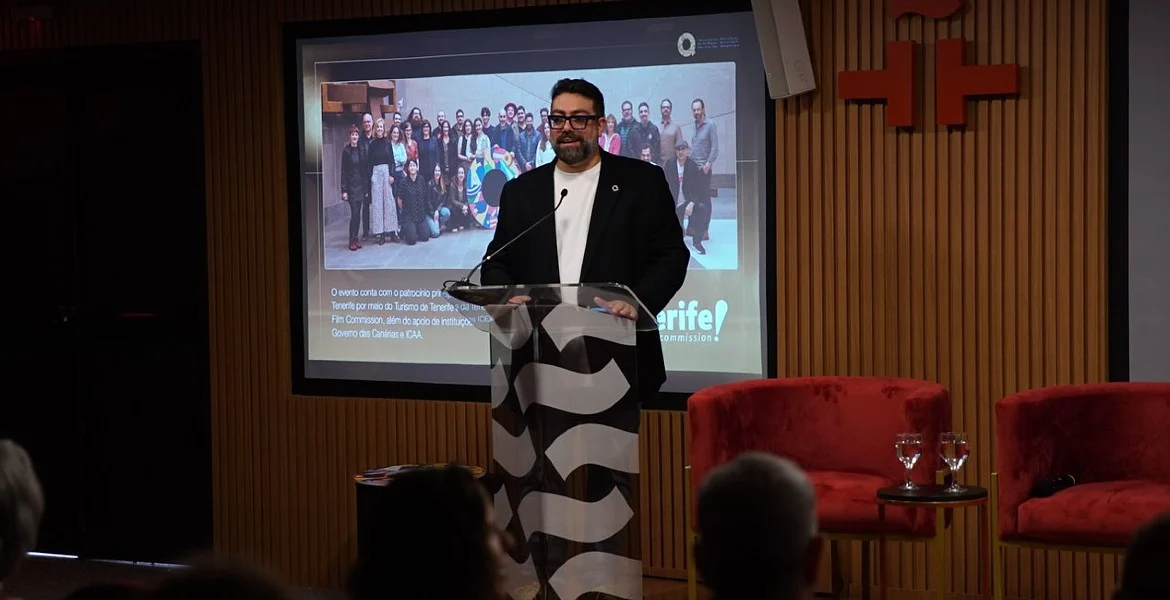
The institutional architecture of the audiovisual sector remains one of the most formidable obstacles preventing the fluid co-production of animation between Brazil and its Ibero-American counterparts. This conclusion emerged as the central pillar of the discussions held during the recent session of the Laboratorio de Futuros (Futures Laboratory) in São Paulo. Conducted on March 5, this meeting represented a significant milestone for the initiative, marking the first time the laboratory has convened outside its traditional base in Tenerife, Spain. Established in early 2025 as a collaborative venture between the Premios Quirino (Quirino Awards) and the Fundación Ortega-Marañón, the Laboratorio de Futuros is a strategic think tank dedicated to analyzing the trajectory of regional animation and fostering a sustainable, innovative, and globally competitive ecosystem for the sector.
The São Paulo session served as a critical diagnostic platform, identifying why Brazil—despite its immense creative output and technical sophistication—remains largely disconnected from the Ibero-American co-production circuit. The findings suggest that while the "giant of South America" possesses the technical capacity and narrative diversity to lead the regional bloc, it is currently hampered by a lack of institutional predictability and operational frameworks. According to the executive summary of the session, Brazil does not need to prove its status as an animation powerhouse; rather, it needs a stable environment and a sustained presence in the diplomatic and financial spaces where the Ibero-American animation bloc is being constructed.
A Statistical Overview of the Brazilian Animation Industry
The data presented during the session paints a stark picture of the current state of international collaboration. Despite Brazil’s growing reputation for high-quality animation—boosted by international accolades and a presence at major festivals—approximately 60% of Brazilian animation companies have never engaged in an international co-production. This figure highlights a profound isolation that contradicts the globalized nature of the modern animation industry.
When Brazilian firms do seek international partners, their gaze is predominantly directed toward the Global North rather than their linguistic and cultural neighbors. The statistics reveal that the United States is the primary partner, accounting for 44% of international collaborations. This is followed by Canada at 23% and France at 17%. In contrast, the Ibero-American bloc—comprising nations such as Argentina, Mexico, Portugal, Spain, and Chile—occupies a marginal position in the Brazilian co-production landscape.
This marginalization occurs despite a shared cultural heritage and the existence of established bilateral cooperation treaties. The Laboratorio de Futuros identified a "paradox of proximity," where the cultural and linguistic ties that should facilitate collaboration are undermined by systemic administrative failures. The lack of engagement with the Ibero-American space suggests that current treaties are either underutilized or poorly adapted to the specific needs of the animation industry, which operates on different timelines and budget structures compared to live-action cinema.
Identifying the Systemic Barriers to Collaboration
The Laboratorio de Futuros identified several key "frictions" that prevent Brazil from integrating more deeply with the Ibero-American animation community. Chief among these is the asynchrony of public funding calendars. Animation is a long-term endeavor, often requiring three to five years of development and production. When the funding cycles of two countries do not align, it becomes nearly impossible for producers to secure the necessary "matching funds" required by international treaties. For instance, a Brazilian producer might secure local funding only to find that the Spanish or Argentine application window has already closed, or vice versa.
Beyond timing, the laboratory highlighted the following systemic hurdles:
- The Shift Toward Intellectual Property (IP): There is an increasing focus on owning IPs rather than providing service work. However, the lack of coordinated support for IP development makes it difficult for regional partners to share ownership and risk.
- Bureaucracy as a Systemic Brake: Complex administrative requirements often deter smaller studios from pursuing international partnerships, as the legal and accounting costs can outweigh the financial benefits of the co-production.
- Absence of Specific Animation Policies: Many existing audiovisual policies are designed for live-action features. Animation requires specific considerations regarding technology, long-term employment, and international distribution that are often overlooked in general film legislation.
- Lack of Support for Short Films and Children’s Content: While these formats are the traditional "nursery" for animation talent and innovation, they frequently fall through the cracks of national funding schemes that prioritize adult-oriented feature films.
- Stagnant Private Investment: The capture of private capital remains nearly non-existent for animation in the region, leaving the sector overly dependent on fluctuating public budgets.
Chronology and Evolution of the Laboratorio de Futuros
The Laboratorio de Futuros was conceived as a response to the rapid changes in the global media landscape, specifically the rise of streaming platforms and the shifting dynamics of regional influence.
- Early 2025: The initiative was launched in Tenerife, Spain, during the Premios Quirino, with the goal of creating a permanent space for strategic reflection.
- March 5, 2025: The São Paulo session took place, marking the first international expansion of the project. This session focused on the specific "Brazil-Ibero-America" axis.
- Mid-March 2025: The "2nd Mapping of Animation in Brazil," a comprehensive study by Iniciativa Cultural, was integrated into the laboratory’s findings, providing a data-driven foundation for the policy proposals.
- April 16, 2025: The upcoming session in Santa Cruz de Tenerife, titled "New Models of Financing and Distribution," will serve as the next major milestone, where the Brazilian findings will be synthesized with broader regional strategies.
Industry Leadership and Institutional Voices
The São Paulo gathering brought together a diverse array of stakeholders, reflecting the multifaceted nature of the animation ecosystem. The session was moderated by César Cabral of Coala Filmes, a prominent figure in Brazilian stop-motion animation. The panel included high-level representation from across the industry:
- Rosa Crescente (TV Cultura): Representing the public broadcasting perspective and the role of television in disseminating local animation.
- Adriana Pinto (ABCA – Brazilian Association of Animation Film): Providing insights into the needs of individual creators and animators.
- Camila Nunes (Abranima): Representing the interests of production companies and the business side of the industry.
- Daniel Tonacci (ANCINE – National Cinema Agency): Offering the regulatory and governmental perspective on how public policy can be reformed.
- Lucas Soussumi (Brazilian Content): Focusing on the internationalization of Brazilian audiovisual products and the promotion of local talent abroad.
The participation of ANCINE was particularly noteworthy, as it signaled a willingness on the part of the Brazilian government to listen to the grievances of the sector regarding bureaucratic delays and the need for more predictable funding cycles. The presence of Federico Buyolo from the Fundación Ortega-Marañón further emphasized the academic and strategic weight of the discussions, ensuring that the conclusions reached in São Paulo would be translated into actionable policy recommendations.
Broader Impact: Building a Competitive Ibero-American Bloc
The ultimate objective of the Laboratorio de Futuros is not merely to solve administrative problems but to build a cohesive "Ibero-American bloc" capable of competing with the dominant animation industries in North America and Asia. The global animation market is projected to grow significantly over the next decade, driven by the demand for content on digital platforms. If Brazil and its neighbors can synchronize their efforts, they can offer a unique value proposition: high-quality production at competitive costs, combined with a rich tapestry of cultural narratives that resonate globally.
The findings from São Paulo suggest that the path forward requires a transition from "accidental" co-productions to a "structural" strategy. This involves the creation of a "Green Lane" for Ibero-American animation, which would include harmonized application deadlines, tax incentive reciprocity, and dedicated funds for co-development.
The upcoming session on April 16 in Santa Cruz de Tenerife will take these discussions to the next level by exploring "New Financing and Distribution Models." This session is expected to delve into the role of digital assets, such as NFTs and blockchain-based funding, and the construction of fan communities as a motor for investment. Experts like Sherry Gunther (HEEBOO/Claynosaurz) and Bobbie Page (Glitch) are slated to participate, bringing a global perspective on how emerging technologies can bypass traditional financial bottlenecks.
In conclusion, the Laboratorio de Futuros has highlighted that while Brazil is already an animation power in terms of talent and creativity, it remains an institutional island. By addressing the "asynchrony" of its policies and simplifying the bureaucratic hurdles that hinder regional collaboration, Brazil can finally integrate into the Ibero-American ecosystem, transforming a collection of individual national successes into a unified, world-class industry. The road to Tenerife in April will be a crucial step in finalizing this roadmap for the future of regional animation.

0 Comments