
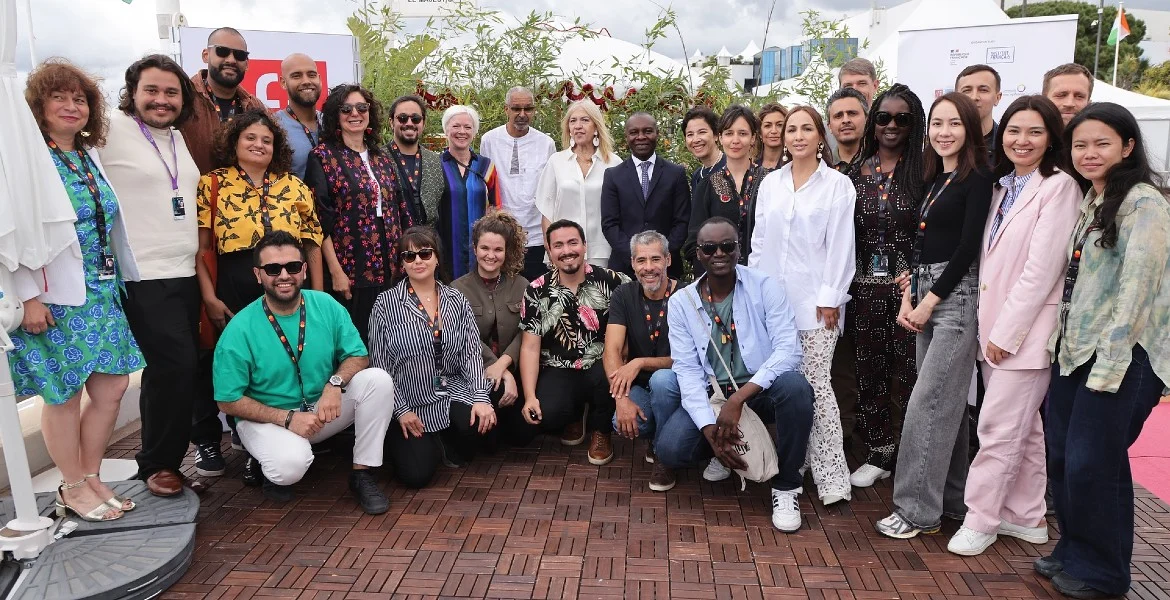
La Fabrique Cinéma, a flagship program of the Institut français held annually within the framework of the Festival de Cannes and its Marché du Film, has officially announced the ten projects selected for its 2025 edition. This initiative, specifically designed to support the development of first and second feature films from emerging cinematographies, provides a platform for directors and producers to integrate into the international market. The selected titles will receive comprehensive support, including tailored coaching and opportunities to pitch to high-level industry professionals and decision-makers during the world’s most prestigious film festival.
The 2025 selection is notable for its geographic diversity, featuring projects from Haiti, Kenya, Morocco, Nigeria, Palestine, Turkey, and Vietnam. However, a significant portion of this year’s cohort originates from Latin America, with three distinct projects from Brazil, Ecuador, and Venezuela securing spots. These selections underscore the region’s continued vitality in the global auteur cinema circuit, particularly in the realms of genre-blending narratives and socio-political exploration.
A New Frontier for Brazilian Sci-Fi: A Última Cachorra
Among the most anticipated selections is the Brazilian project "A Última Cachorra" (The Last Bitch), the debut feature film from director Nina Kopko. The film is described as a poignant work of science fiction that weaves together dystopian themes with a deeply sensitive exploration of human and animal bonds during a period of societal collapse. Set in a near-future São Paulo, the narrative follows Luana, a professional driver navigating the final day of her life. Luana’s primary objective is to secure the necessary funds for assisted euthanasia, a plan that is upended when her final passenger is discovered to be secretly transporting Laika, a dog.
In the world of "A Última Cachorra," dogs have been outlawed and driven to the brink of extinction. The discovery of Laika forces Luana into a moral crisis: she must choose between fulfilling her desire for a controlled death or protecting what could potentially be the last canine on Earth. The project is produced by Leticia Friedrich of Boulevard Filmes, in collaboration with Vitrine Filmes (Brazil) and Volos Filmes (Italy).
The film arrives at La Fabrique Cinéma with significant momentum. It is currently in an advanced stage of development and financing, having already garnered international accolades. It previously participated in the Co-Production Forum of When East Meets West (WEMW), where it secured the EWA Network’s Award for Equality & Inclusion, the Pop Up Film Residency Award, and the Ciclic Centre-Val de Loire Award. For the producers, the objective in Cannes is to solidify the financing structure, attract sales agents, and finalize European co-production agreements.
Ecuadorian Queer Narratives: Ovnis en el trópico
Ecuador is represented by "Ovnis en el trópico" (UFOs in the Tropics), the debut feature from Rob Mendoza. Mendoza’s work is recognized for its hybrid nature, blending intimate personal histories with fantastical or surreal elements. Set in 1999—a year marked by profound economic and social crisis in Ecuador—the film is a "queer tropical" story centered on Raúl, an orchid cultivator. Raúl finds himself at odds with his community as he refuses to sell his ancestral land to a predatory mining corporation.
The plot takes a turn into the supernatural when Raúl encounters Hendrick, an interstellar visitor who warns him of an impending environmental catastrophe. Raúl’s journey is supported by Rosa, a trans woman and ufologist; together, they become outcasts in a community blinded by the promises of industrial wealth. The film explores the intersection of extractivism, homophobia, and environmental defense through the lens of a budding romance between Raúl and his celestial visitor.
The production of "Ovnis en el trópico" is a multinational effort. It is spearheaded by Cinema Verano—a production house founded in 2024 by Mendoza and Isabel Carrasco—alongside Brazil’s Klaxon Audiovisual (Rafael Sampaio) and Uruguay’s Guay Films (Fernando Epstein and Daniel Dalmas). The project has already received the Open Doors Award from the CNC (Centre national du cinéma et de l’image animée) and development funding from Ibermedia. Currently in its fourth script version with locations confirmed and casting underway, the team is heading to Cannes to seek European co-producers and post-production support. Mendoza’s profile is rising in the festival circuit; his short film "Las maravillas" premiered at Locarno in 2024, and he is currently editing a documentary titled "Roy, Pirate and Poet."
Exploring Structural Silence in Venezuelan Cinema: What We Don’t Say
The third Latin American project in the 2025 selection is "What We Don’t Say" (Lo que no decimos), the first feature film from Venezuelan director Maria Gracia Saavedra. Saavedra’s work is characterized by an atmospheric focus on silence, the complexities of migration, and the subtle moral ambiguities that underpin familial violence.
The film takes place during a New Year’s Eve celebration at a beach house, where a woman named Elena reunites with her family. While the surface of the event suggests celebration, the narrative quickly peels back layers of long-held resentment and structural silence. Elena’s discovery of an unexpected intimacy with her younger brother’s partner creates a fracture in the family’s fragile equilibrium, forcing a confrontation with the "unspoken" truths that have defined their lives.
"What We Don’t Say" is produced by Beto Benites of Cromauno Audiovisuales, a Venezuelan firm founded in 1996 with a history of producing auteur cinema for international audiences. The project is a co-production with the Peruvian company Llanki Cine+Medios (Beyker Bances). Currently in the development phase, the team is utilizing the La Fabrique platform to identify European partners, international funds, and distribution networks. Saavedra previously gained international recognition when her short film "Leave" was selected for the Clermont-Ferrand International Short Film Festival in 2017.
The Role of La Fabrique Cinéma in the Global Film Economy
The inclusion of these three projects highlights a broader trend in the international film market: the increasing reliance on multi-territory co-productions to bring ambitious, high-quality independent cinema to fruition. For filmmakers in regions like Latin America, where national film funds can be volatile or limited, programs like La Fabrique Cinéma are essential lifelines.
Since its inception, La Fabrique Cinéma has acted as a bridge between the creative potential of emerging markets and the financial resources of the European industry. The program provides participants with:
- One-on-one meetings: Direct access to producers, distributors, and sales agents looking for fresh content.
- Masterclasses: Sessions led by world-renowned filmmakers who share insights into the craft and the business.
- Global Visibility: A spot in the Marché du Film, which attracts over 12,500 industry professionals and 4,000 films annually.
Historically, projects that pass through La Fabrique have a high rate of completion and often return to Cannes in later years to compete in official sections such as Un Certain Regard or the Directors’ Fortnight. By selecting projects that tackle pressing global issues—such as environmental destruction, LGBTQ+ rights, and the ethics of end-of-life care—the 2025 edition reflects a shift toward cinema that is as socially relevant as it is artistically innovative.
Timeline and Next Steps for the Selected Filmmakers
The journey for the 2025 selection began months ago with an intensive call for entries directed at filmmakers from the "Global South" and emerging economies. Following the announcement, the directors and producers will undergo a period of virtual coaching to refine their pitches and presentation materials.
The physical program will take place in May 2025 during the 78th Festival de Cannes. The schedule typically includes:
- Pitching Sessions: Where the 10 projects are presented to an audience of accredited professionals.
- Market Meetings: Pre-arranged business meetings aimed at closing financing gaps.
- Networking Events: Receptions hosted by the Institut français to foster long-term professional relationships.
For the Latin American contingent, the presence at Cannes represents more than just a search for funding; it is a validation of their unique cultural perspectives. As the global audience for non-English language cinema grows—driven in part by the success of international streaming and the continued prestige of major festivals—these three projects are positioned to become significant contributors to the 2026 and 2027 festival circuits.
Implications for Regional Cinema
The selection of Nina Kopko, Rob Mendoza, and Maria Gracia Saavedra also points toward a generational shift in Latin American filmmaking. While the region was once synonymous with gritty social realism, the 2025 La Fabrique selection shows a move toward genre-fluidity. The use of science fiction in Brazil to discuss human dignity and the use of "tropical queer" aesthetics in Ecuador to discuss land rights demonstrate a sophisticated evolution in how Latin American stories are told.
Furthermore, the collaborative nature of these projects—involving partners from Italy, Uruguay, and Peru—illustrates a strengthening of the "South-South" and "South-North" production axes. This interconnectedness is vital for the sustainability of independent cinema in a rapidly changing global landscape. As the 10 selected teams prepare for their arrival on the Croisette, the industry will be watching closely to see how these narratives develop from concepts into the cinematic milestones of the near future.

0 Comments