
 Julia Prastini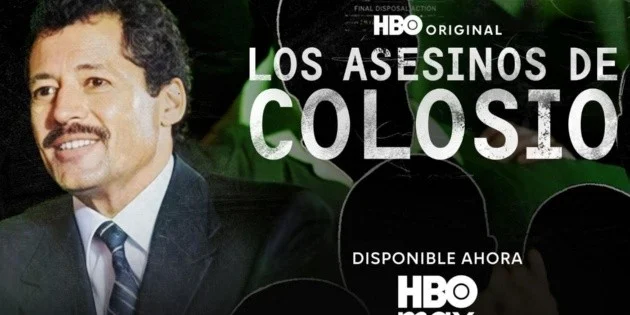
More than three decades after the assassination of Luis Donaldo Colosio, a pivotal figure in Mexican politics, the case remains an open wound in the nation’s collective memory, a point of profound uncertainty that continues to fuel debate and speculation. The official narrative, though legally settled, has never fully assuaged public skepticism, and new interpretations, judicial processes, and media revisitations consistently bring the discussion back into the public consciousness. It is from this persistent wellspring of doubt that "Los asesinos de Colosio," an HBO Max docuseries, emerges, aiming to approach the magnicide not from a definitive reconstruction, but from the fissures in the official account and the questions that stubbornly persist.
The Unsettled Legacy of 1994: A Nation in Turmoil
The year 1994 was a watershed moment for Mexico, a period marked by profound political and social tension. Luis Donaldo Colosio Murrieta, a technocrat with a reformist vision, was the presidential candidate for the Institutional Revolutionary Party (PRI), a political force that had governed Mexico uninterruptedly for over 60 years. His candidacy was not merely a routine electoral exercise; it was set against a backdrop of unprecedented national challenges. The North American Free Trade Agreement (NAFTA) had just come into effect on January 1st, promising economic modernization but also sparking fears of national sovereignty erosion and increased inequality. On the very same day, the Zapatista Army of National Liberation (EZLN) launched an armed uprising in Chiapas, exposing deep-seated indigenous grievances and challenging the state’s authority. Compounding these issues was a looming economic crisis, characterized by rising inflation and a volatile peso, further unsettling the populace.
Colosio, initially seen as a continuation of the Salinas administration, began to articulate a more critical stance during his campaign. His famous speech on March 6th, 1994, delivered on the 65th anniversary of the PRI’s founding, called for political reform, an end to authoritarianism, and a closer connection between the government and the people, signaling a potential break from the party’s entrenched practices. This speech, widely interpreted as a challenge to the existing power structures, only intensified the scrutiny and pressure surrounding his campaign.
The Day that Shook Mexico: Lomas Taurinas, March 23, 1994
On March 23, 1994, Colosio traveled to Tijuana, Baja California, for a campaign rally in Lomas Taurinas, a humble, densely populated neighborhood characterized by its informal settlements and winding, unpaved streets. The event drew thousands of supporters, creating a chaotic, fervent atmosphere. As Colosio walked through the crowd after delivering his speech, a single shot rang out, striking him in the head. Moments later, a second shot hit his abdomen. The scene quickly devolved into pandemonium, with security personnel struggling to contain the crowd and identify the assailant. Colosio was rushed to a local hospital but was pronounced dead hours later.
The immediate aftermath was a blur of shock and disbelief across Mexico. Within minutes of the attack, a man identified as Mario Aburto Martínez, a 23-year-old factory worker, was apprehended at the scene. He was found with a .38 caliber revolver and was quickly identified as the alleged lone gunman. The official version, swiftly disseminated, maintained that Aburto acted alone, driven by a personal ideological vendetta. This narrative, despite its rapid promulgation, failed to convince a significant portion of the Mexican public, planting the seeds of doubt that would fester for decades.
Mario Aburto Martínez: The Lone Gunman and Lingering Doubts
The official investigation, led initially by the Attorney General’s Office (PGR) and later by a series of special prosecutors, concluded that Mario Aburto Martínez was the sole material author of the crime. Aburto, who initially confessed, was convicted and sentenced to 45 years in prison. However, from the outset, the case was plagued by inconsistencies, conflicting testimonies, and allegations of official misconduct.
One of the most persistent controversies revolved around the "second gunman" theory. Numerous witnesses reported seeing more than one assailant, or at least a second shot coming from a different direction. Forensic evidence, including the trajectory of the bullets and the nature of Colosio’s wounds, also fueled speculation that a single shooter operating in a crowded, fluid environment would have found it challenging to inflict both shots with such precision. Furthermore, the alleged weapon, a .38 revolver, was a common firearm, but questions arose about its specific characteristics and whether it matched the wounds perfectly.
Aburto himself later recanted parts of his confession, alleging torture and coercion during his initial interrogation. He claimed he was forced to sign documents he had not read and that his physical appearance had been altered while in custody. Photographs of Aburto taken immediately after his arrest compared to those taken days later showed a noticeable difference, particularly in his hair, raising further suspicions of manipulation. The existence of multiple "Aburtos" – different individuals appearing in police photos and official records – further muddied the waters, suggesting a possible cover-up or an attempt to obscure the truth.
A Decade of Investigations and Unanswered Questions
The Colosio case proved to be a political and judicial quagmire. Over the years, four special prosecutors were appointed to investigate the assassination, each tasked with uncovering the truth and bringing closure to the nation.
- Miguel Montes García (1994): The first special prosecutor, Montes García, initially explored the "conspiracy theory" involving a second gunman, Othón Cortez Vázquez. However, his investigation ultimately concluded that Aburto acted alone, and Cortez Vázquez was later acquitted due to lack of evidence.
- Pablo Chapa Bezanilla (1995-1996): Chapa Bezanilla’s tenure was marked by controversy, including allegations of corruption and the bizarre episode of excavating a grave in search of evidence, following the testimony of a supposed psychic. His investigation also ended without concrete advancements beyond the lone gunman theory.
- Luis Raúl González Pérez (1996-1997): González Pérez, a respected legal figure, took over with a mandate to restore credibility. His team conducted a thorough review of all existing evidence, interviewing hundreds of witnesses and commissioning new forensic analyses. While he confirmed Aburto as the material author, his report highlighted numerous irregularities in the initial investigation, including the handling of evidence and witness statements. Crucially, he did not definitively rule out the possibility of a conspiracy, but stated that insufficient evidence existed to prove it.
- Luis Macedo Guzmán (1998-2000): The final special prosecutor, Macedo Guzmán, essentially reaffirmed the conclusions of González Pérez, officially closing the case in 2000 under the premise that Aburto acted alone, citing a lack of compelling new evidence to support a conspiracy.
Despite these multiple official closures, public opinion remained largely unconvinced. Surveys conducted throughout the years consistently showed that a significant majority of Mexicans (often over 70-80%) believed Colosio’s assassination was the result of a political conspiracy rather than the act of a lone individual. This deep-seated distrust reflected a broader disillusionment with the government’s ability or willingness to prosecute high-level corruption and political crimes.
"Los asesinos de Colosio": A New Lens on an Old Mystery
It is into this landscape of unresolved questions and lingering distrust that the HBO Max docuseries "Los asesinos de Colosio" steps, offering a fresh perspective on a case that has been recounted countless times. Director José Ortiz, in an interview with EL INFORMADOR, situates the project’s genesis in a persistent inquietude: the feeling that despite numerous retellings, the case has never truly been resolved.
"It was a case that always seemed relevant to us, and when the judicial discussion opened up regarding Aburto’s potential freedom, which seemed almost a technical, legal discussion, it struck us that the issue would return to the forefront," Ortiz explained. "The possibility even of Aburto being released, and from that news, we began to think about what new things we could tell, what hadn’t been told, and what could contribute to this perspective, this reflection on a case that had been told so many times in a certain way."
The docuseries consciously shifts its focus. Rather than attempting to definitively answer what occurred, it examines how the official narrative was constructed – the version that served for years as the closure of the case. This approach delves into the mechanisms of power, investigation, and media that shaped public understanding, scrutinizing the cracks in the official story rather than trying to patch them up.
The Art of Re-examining History: Methodological Challenges
This unique focus necessitated constant critical decisions in working with archives, testimonies, and often contradictory versions of events. Maintaining narrative clarity became paramount to prevent the audience from getting lost in the labyrinthine details, all while upholding the rigor of the material.
Alejandro Turner, Content Manager for Warner Bros. Discovery, elaborated on this delicate balance. "I believe that in the end, you have to try to tell the investigation with a narrative that is as simple and as straightforward as possible, without forgetting what is important, but in a way that the viewer can make their own assessment," he stated. "There are times when you have to reinforce it with the file because perhaps that person is not available or has passed away, but their testimony is important. And other times, having the witnesses themselves, the lawyers, or the relatives who lived through it, the important thing is that they narrate how they experienced it."
Turner emphasized the dual commitment: "So, you are always looking for that: to make it simple, not to forget the human part, to be very rigorous, to be very journalistic, but without losing sight of the fact that ultimately, these are people telling it." The series leverages extensive archival footage, police records, newspaper clippings, and judicial documents, juxtaposing them with fresh interviews with key figures, investigators, journalists, and even members of Colosio’s campaign team and family members where possible. This multi-layered approach aims to expose the discrepancies and subjective interpretations that have plagued the case.
The Enduring Impact on Mexican Society
The assassination of Luis Donaldo Colosio had a profound and lasting impact on Mexican society, fundamentally altering the country’s political trajectory. It shattered the illusion of stability and invincibility that the PRI had cultivated for decades, revealing the fragility of the political system and the deep-seated tensions beneath its surface.
- Political Transition: Colosio’s death directly paved the way for Ernesto Zedillo Ponce de León, his campaign manager, to become the PRI’s substitute candidate and eventually president. Zedillo’s administration would oversee the end of the PRI’s uninterrupted rule in 2000, a transition partially catalyzed by the public’s disillusionment stemming from the Colosio case and other political upheavals of the 1990s.
- Trust in Institutions: The inability of the state to convincingly resolve the assassination eroded public trust in government institutions, particularly the justice system. The widespread belief in a cover-up contributed to a pervasive sense of impunity and cynicism regarding official narratives, a sentiment that continues to influence Mexican public discourse today.
- Demand for Transparency: The Colosio case became a symbol of the need for greater transparency and accountability in Mexican politics. It fueled demands for independent investigations, press freedom, and an end to the opaque practices that had characterized the PRI’s long reign.
- Historical Memory: The assassination remains a potent symbol in Mexico’s historical memory, often invoked in discussions about political violence, state power, and the struggle for truth and justice. It serves as a reminder of a period of intense political volatility and the high stakes involved in challenging entrenched power structures.
"Los asesinos de Colosio" arrives at a moment when Mexico continues to grapple with issues of political violence, corruption, and the search for truth in historical injustices. By revisiting the Colosio assassination through a lens that prioritizes doubt and the deconstruction of official narratives, the docuseries not only sheds new light on a specific historical event but also reflects a broader societal yearning for answers and accountability. It prompts viewers to question not just who killed Colosio, but how the story was told, why it was told that way, and what implications those narratives have had for the course of Mexican history. The series ultimately suggests that true closure might not come from a definitive answer, but from a critical examination of the mechanisms that have prevented one for so long.


 Eva Lovia
 Julia Chirkova
 Nila Kartika Wati
 Lina Irawan
 Jia Lissa