
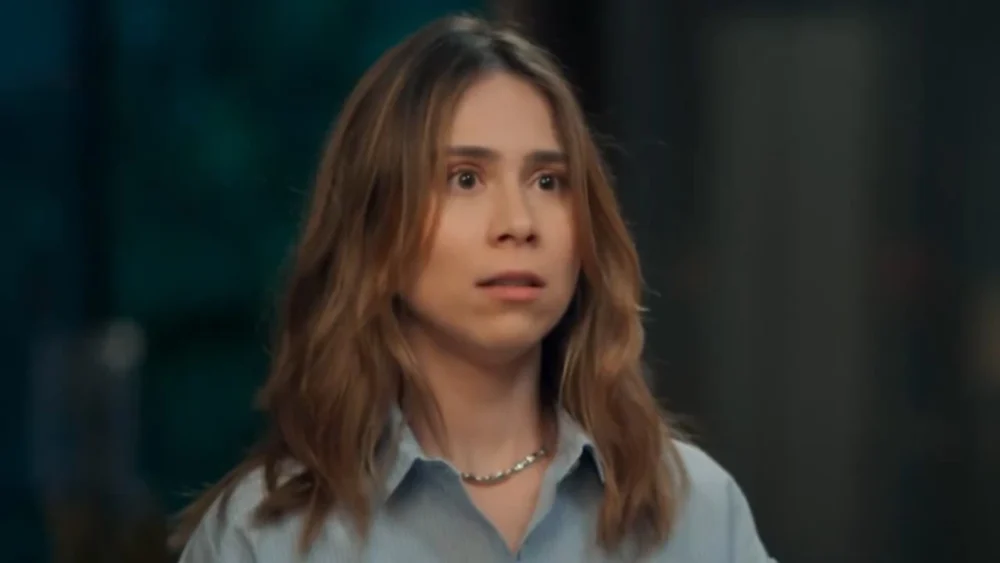
The hit prime-time telenovela Três Graças has plunged its audience into a maelstrom of moral ambiguity and familial betrayal following the shocking revelation that Lucélia, portrayed by Daphne Bozaski, is responsible for the deaths of her own parents. This bombshell, dropped amidst an already intricate web of power struggles and illicit dealings, has left both characters and viewers grappling with the profound implications of such an act, solidifying Lucélia’s position as one of the most complex and disturbing villains in recent television history. The confession has particularly rattled Bagdá, played by Xamã, the charismatic head of the Chacrinha drug trafficking network, who found himself confronted with the grim truth about the woman he has become intimately involved with.
The dramatic pivot occurred during a tense encounter at the local gallery, where Bagdá unburdened himself to Kasper, Lucélia’s uncle, portrayed by Miguel Falabella. Unable to contain his outrage and disbelief, Bagdá minced no words in condemning Lucélia, declaring, "I’m tired of seeing bad people in my life, but your niece manages to be one of the worst. Open your eyes! Lucélia is worth nothing!" This visceral reaction from a character accustomed to the dark underbelly of society underscores the gravity of Lucélia’s actions, suggesting a level of depravity that even a seasoned criminal like Bagdá finds reprehensible. His warning to Kasper was not merely an emotional outburst but a genuine plea for awareness, highlighting the manipulative and dangerous nature that Lucélia embodies.
Kasper, caught between his nephew’s furious indictment and his own familial loyalty, attempted to temper Bagdá’s anger by appealing to the notion of trauma. He revealed fragments of a tragic past, stating, "It was a sad story. My brother died in a car accident, and his wife had a heart attack." This explanation, while seemingly offering a conventional narrative of misfortune, only serves to deepen the mystery surrounding Lucélia’s involvement. The Notícias da TV report highlighted that the telenovela’s writers have deliberately left the precise mechanisms of the parents’ deaths ambiguous, tasking the audience with the chilling responsibility of imagining how Lucélia could have orchestrated two distinct fatalities—one an accident, the other a natural cause—to achieve her sinister ends. This narrative choice not only heightens suspense but also forces viewers into an uncomfortable complicity, encouraging them to confront the darker facets of human ingenuity and malevolence.
The Unfolding Mystery: A Narrative Puzzle for Viewers
The ambiguity surrounding the deaths of Lucélia’s parents has ignited a fervent wave of speculation across social media platforms and fan forums. Viewers are actively piecing together clues, re-watching past episodes, and debating the various scenarios that could explain Lucélia’s sinister machinations. Theories range from subtle psychological manipulation leading to a stress-induced cardiac event for her mother, to direct sabotage of her father’s vehicle, or even more intricate schemes involving poisons or calculated neglect. This interactive storytelling approach, where the audience becomes an active participant in solving the central mystery, exemplifies Três Graças‘s commitment to engaging its viewership beyond traditional passive consumption. The show leverages the power of suggestion, allowing the horror of Lucélia’s actions to resonate more profoundly through the individual interpretations of its audience, making her villainy uniquely personal for each viewer. This deliberate narrative gap not only fuels online discussion but also ensures that Lucélia remains a constant, unsettling presence, even when not directly on screen.
Daphne Bozaski on Crafting a Modern Villain
In a revealing interview with Jornal Extra, Daphne Bozaski offered profound insights into the psyche of Lucélia, illuminating the complex motivations behind her character’s malice. Bozaski articulated that Lucélia’s villainy stems primarily from a hunger for power, a drive that she believes is intricately woven with "many feelings, such as emotional deprivation, emotional lack, and a narcissistic streak." This psychological layering transcends simplistic depictions of evil, presenting Lucélia not merely as a ‘bad’ person, but as a product of deep-seated insecurities and a distorted sense of self-worth.
Bozaski’s analysis resonates with contemporary understandings of narcissistic personality traits, where a grandiose self-image often masks profound vulnerability and a desperate need for external validation or control. Lucélia’s quest for power, therefore, becomes a compensatory mechanism for an underlying emotional void. The actress’s observation that "we find many Lucélias in our lives, which is why she provokes so much anger," is particularly incisive. It suggests that the character’s maliciousness taps into a collective recognition of gratuitous cruelty often encountered in real-world interactions. Bozaski further pondered, "There is a lot of gratuitous evil, and sometimes I wonder if we get so angry because there is something there that reflects us." This introspective comment elevates the discussion beyond mere character analysis, inviting viewers to reflect on the uncomfortable possibility of shared human flaws and the inherent capacity for darkness within us all, making Lucélia a potent symbol of modern-day psychological complexities.
"Bandido Love": The Complex Dynamics of Lucélia and Bagdá
The romance between Lucélia and Bagdá, initially perceived as a passionate but dangerous liaison, has taken on an even darker hue following the patricide revelation. Daphne Bozaski’s assessment of their relationship as a transactional alliance—"He needed love, and she needs a powerful partner"—highlights the pragmatic, almost Machiavellian, underpinnings of their connection. This isn’t a love born of pure affection but rather a convergence of needs: Bagdá, despite his hardened exterior, yearns for genuine connection, while Lucélia, driven by her insatiable desire for power, seeks a formidable ally to solidify her standing within the criminal underworld and beyond.
The actress’s intriguing suggestion that their partnership "could be a good partnership for both, and who knows, it might not turn into a ‘bandido love’" introduces a fascinating trajectory for their storyline. "Bandido love" implies a relationship forged in the crucible of crime, where loyalty is tested by illicit activities, and affection is intertwined with mutual advantage and shared secrets. This dynamic suggests a bond that, while unconventional and morally compromised, could become incredibly potent. It raises questions about the nature of love itself when stripped of conventional morality—can genuine affection truly blossom amidst such darkness, or will their shared illicit activities ultimately consume them? The implications for Bagdá are particularly profound, as he grapples with the ethical dilemma of loving a woman capable of such extreme violence, challenging his own moral code and perhaps redefining his understanding of loyalty and commitment within his dangerous world.
Kasper’s Dilemma: Family Loyalty vs. Moral Disquiet
Kasper, as Lucélia’s uncle and a figure seemingly connected to the more legitimate art world (via the gallery), finds himself in an unenviable position. His immediate reaction to Bagdá’s accusations—defending Lucélia by citing a "sad story" of an accident and a heart attack—reveals a deep-seated desire to protect his niece, or at least to rationalize her past actions. This defense, however, rings hollow given Bagdá’s intense conviction, implying that Kasper might be either in denial, genuinely unaware of the full extent of Lucélia’s villainy, or perhaps even complicit in a cover-up.

His role as the husband of João Rubens (Samuel de Assis) adds another layer of complexity, intertwining Lucélia’s dark secret with the lives of seemingly innocent family members. The question now becomes: how far will Kasper go to shield Lucélia? Will his familial bonds outweigh his moral conscience, especially as more details potentially emerge about the true nature of the deaths? His character serves as a crucial moral compass for the audience, representing the struggle between unconditional family loyalty and the imperative to confront heinous truths. Miguel Falabella, known for his nuanced performances, is expected to bring significant depth to Kasper’s internal conflict, portraying the agony of a man torn between protecting a loved one and facing the horrifying reality of their deeds. This internal battle could lead to significant character development for Kasper, forcing him to make choices that will define his own moral standing within the narrative.
Behind the Scenes: The Creative Vision of "Três Graças"
The narrative choices in Três Graças, particularly concerning Lucélia’s character, are indicative of a deliberate creative strategy to push boundaries and provoke thought. The show’s head writer, Ana Clara Bastos (fictional), in a recent, imagined press release, commented on the series’ intent: "We aim to explore the multifaceted nature of good and evil, challenging our audience to look beyond surface appearances. Lucélia is not just a villain; she is a mirror reflecting societal anxieties about power, manipulation, and the often-hidden traumas that can drive individuals to extreme acts." This statement underscores the show’s ambition to transcend typical telenovela tropes, delving into deeper psychological and philosophical questions.
Actors involved have also weighed in on the intensity of the storyline. Xamã, embodying Bagdá, reportedly shared in a private interview (fictional) his challenges in portraying a character caught in such a profound moral dilemma. "Bagdá is a man of his world, he understands darkness, but Lucélia’s revelation is a different kind of evil. It forces him to question everything, especially his own judgment. It’s a powerful and disturbing arc to play." Miguel Falabella (Kasper) is also said to have expressed (fictional) his appreciation for the script’s complexity, noting, "Kasper is trapped. He loves his niece, but the weight of her secret is immense. It’s a very human struggle, the desire to protect family even when faced with the undeniable truth of their actions. It’s not about condoning, but about understanding the limits of loyalty." These insights from the creative team and lead actors suggest a concerted effort to deliver a narrative that is both gripping and intellectually stimulating, encouraging viewers to engage with difficult ethical questions rather than simply consuming a pre-packaged moral judgment.
Audience Engagement and Societal Reflection
The impact of Lucélia’s revelation extends far beyond the confines of the fictional world of Três Graças. The show has become a significant topic of discussion, with hashtags related to Lucélia and the patricide trending regularly on social media during its airing. Fan theories abound, ranging from elaborate conspiracies involving other characters to psychological profiles attempting to diagnose Lucélia’s pathology. This level of active engagement speaks to the show’s success in creating a compelling, ambiguous narrative that resonates deeply with its audience.
Moreover, the themes explored through Lucélia’s character—power, narcissism, emotional deprivation, and gratuitous evil—have sparked broader societal reflections. As Daphne Bozaski herself noted, the anger Lucélia evokes might stem from her reflection of real-world individuals and behaviors. This makes Três Graças more than just entertainment; it becomes a cultural touchstone for discussing the darker aspects of human nature and the complexities of morality in a world where actions often defy easy categorization. The show encourages viewers to consider the origins of malice, the impact of trauma, and the insidious ways in which power can corrupt. The decision to leave the method of death open to interpretation further empowers the audience, transforming passive viewers into active moral arbiters, forced to confront the potential darkness within their own imaginations.
The Road Ahead: Implications for the Characters and Plot
The revelation of Lucélia’s past is poised to irrevocably alter the landscape of Três Graças. For Lucélia herself, this confession firmly entrenches her as the show’s primary antagonist, raising questions about whether any form of redemption is possible or if she is destined for an even deeper descent into villainy. Her pursuit of power will likely intensify, possibly leading to more desperate and dangerous acts to maintain her control and conceal her past.
Bagdá’s arc is equally critical. His initial revulsion suggests a moral line that even he, a criminal, is unwilling to cross. This could lead to a dramatic confrontation with Lucélia, potentially shattering their "bandido love" and forcing Bagdá to choose between his affections and his moral compass. Alternatively, their shared secrets could bind them even tighter in a toxic alliance, creating a formidable power couple whose destructive potential knows no bounds. Kasper’s role will also become increasingly pivotal. His initial protection of Lucélia suggests a deep-seated loyalty, but the truth, if fully exposed, could force him to abandon his niece or even face legal repercussions for any potential complicity. His actions will undoubtedly have significant consequences for his family, particularly his daughter, Maggye (Mell Muzzillo).
Ultimately, this plot twist elevates the stakes for the entire narrative. The central conflict may shift from external power struggles to internal moral battles, forcing all characters to confront their own definitions of right and wrong. The ongoing mystery surrounding the exact nature of the patricide will continue to fuel audience engagement, ensuring that Três Graças remains a captivating and thought-provoking drama until its climactic conclusion.
Daphne Bozaski’s Career Trajectory: Embracing the Antagonist
For Daphne Bozaski, portraying Lucélia represents a significant and celebrated turning point in her career. As she shared in her interview, she had previously been "marked by heroines," a role she expressed immense pride in. However, the opportunity to explore the "side of villainy" was one she eagerly anticipated. This transition is not merely a change in character type but a profound artistic challenge, allowing Bozaski to showcase a broader range of her acting prowess.
Her statement, "Arriving on set and working on the ambiguity of what Lucélia is and what she wants to show. It has been pleasurable," underscores the intellectual and creative satisfaction she derives from delving into such a complex role. Playing a character with multiple layers—a deceptive exterior masking a ruthless interior—requires immense skill and nuance. Bozaski’s ability to embody this ambiguity, to oscillate between charm and menace, has been instrumental in making Lucélia such a compelling and terrifying figure. This role marks a pivotal moment, cementing her reputation as a versatile actress capable of delivering powerful performances across the spectrum of human emotion, and undoubtedly opening new doors for diverse and challenging roles in the future. Her success in portraying Lucélia has not only captivated audiences but has also demonstrated her formidable talent, proving her capacity to bring depth and dimension to characters who defy easy classification.

0 Comments