
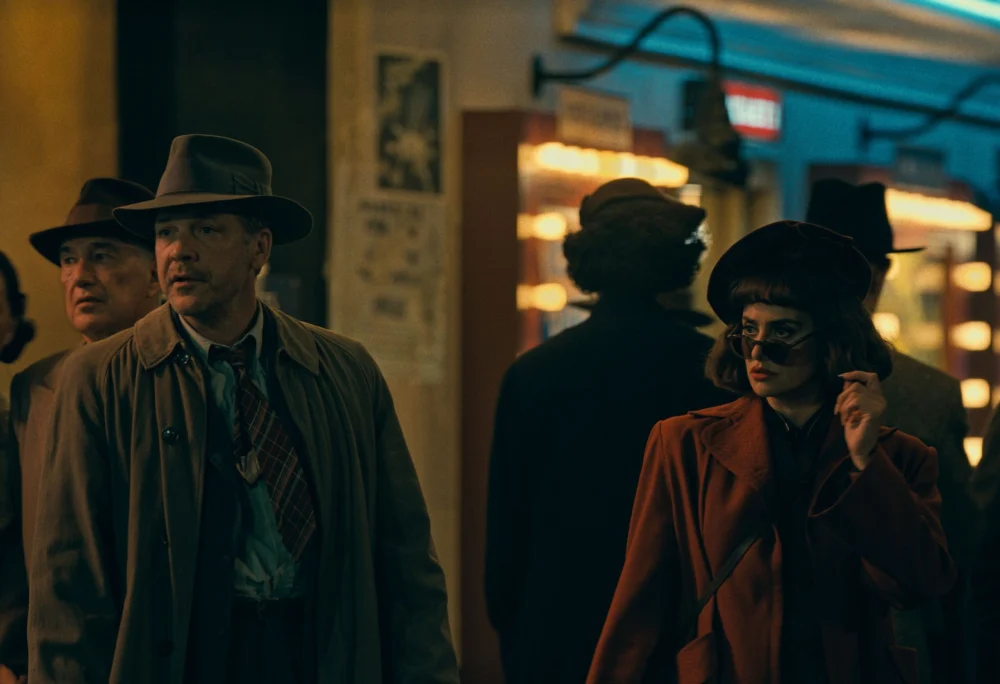
The landscape of modern cinema is witnessing a profound transformation as Maggie Gyllenhaal embarks on her second directorial feature, The Bride!, a production that has rapidly ascended to the top of the most anticipated releases for the 2026 theatrical season. Following the critical success of her directorial debut, The Lost Daughter, Gyllenhaal has pivoted from intimate psychological drama to a high-concept, surrealist reimagining of one of literature’s most enduring myths. This latest project, backed by Warner Bros. Pictures, seeks to dismantle the traditional narrative structures of Mary Shelley’s 1818 masterpiece, Frankenstein, and the iconic 1935 cinematic sequel, Bride of Frankenstein, replacing them with a "punk," visceral, and unapologetically feminine perspective.
The film stars Jessie Buckley in the titular role of the Bride, alongside Academy Award winner Christian Bale as the Monster. The production has already garnered significant attention for its aesthetic choices, blending the gritty atmosphere of 1930s New York City with hallucinatory, black-and-white sequences that serve as a direct dialogue with the spirit of Mary Shelley herself. By centering the narrative on the female experience of resurrection and societal rejection, Gyllenhaal moves beyond the "creature feature" tropes to explore the complexities of agency, consent, and the systemic violence inherent in the creation of a "companion" for a male protagonist.
A Narrative Rebirth: From Possession to Protest
The Bride! departs significantly from the source material by introducing a supernatural and psychological layer to the protagonist’s origin. The story begins with Ida, portrayed by Jessie Buckley, whose life is cut short in a tragic accident. However, the tragedy is complicated by the suggestion that Ida is possessed by the spirit of Mary Shelley, the original author of the Frankenstein mythos. Following her death, the Monster—referred to in this iteration as Frank and played by Christian Bale—seeks the assistance of Dr. Cornelia Euphronious to facilitate a resurrection.
Unlike previous adaptations where the Bride is a passive recipient of life, Gyllenhaal’s Ida regains consciousness as a volatile and unpredictable entity. Her return to the world of the living is not a homecoming but an awakening into a landscape of danger. She finds herself hunted by a local crime syndicate led by a figure named Lupino, as her previous life granted her access to incriminating information that the underworld cannot allow to surface. This plot point shifts the film from a purely gothic horror into a genre-bending noir, where the "monster" is as much a victim of organized crime as she is of scientific experimentation.
Amidst this chaos, Penélope Cruz enters the narrative as Myrna, a detective tasked with tracking Frank and the Bride after the pair commits a series of killings in self-defense. Myrna’s character serves as the moral and social anchor of the film, representing the struggle of a professional woman navigating the deeply misogynistic corridors of the 1930s New York City Police Department.

Historical Context and the Evolution of the Bride
To appreciate the radical nature of Gyllenhaal’s approach, one must look at the cinematic history of the character. In James Whale’s 1935 classic, Bride of Frankenstein, actress Elsa Lanchester created an indelible image with her Nefertiti-inspired hairstyle and lightning-bolt scars. However, despite the film bearing her name, the Bride appears on screen for less than five minutes in the final act. She is created as a "mate" for the Monster, screams at his sight, and is promptly destroyed when the laboratory is blown up.
Gyllenhaal’s screenplay seeks to rectify this historical marginalization. By giving the Bride a name (Ida), a backstory, and a voice, the film explores what Penélope Cruz describes as the "head and soul" of the character. This version of the Bride is a symbol of multiple layers of oppression: she is brought back to life without her consent to serve as a partner to a man she does not know, and she is haunted by the collective trauma of "violated women" through her connection to Shelley’s spirit. The film eventually elevates her to a political symbol, as she becomes the face of a series of female-led protests against the violence of the mafia, effectively turning a "monster" into a revolutionary icon.
Production Timeline and Development
The development of The Bride! has been a high-priority project for Warner Bros. since its announcement in 2023. Gyllenhaal, who also wrote the screenplay, spent several years refining the tone to ensure it balanced its "punk" energy with the gravity of its feminist themes.
- August 2023: Initial casting reports linked Christian Bale and Peter Sarsgaard to the project.
- January 2024: Warner Bros. officially added the film to its slate, confirming Jessie Buckley and Penélope Cruz in lead roles.
- Spring 2024: Principal photography commenced in New York City, with set photos revealing a stylized, noir-inspired 1930s aesthetic.
- Late 2025: Post-production involving extensive sound design to achieve the "loud and punk" atmosphere described by the director.
- Early 2026: Scheduled worldwide theatrical release.
The film joins a growing trend of "prestige horror" and "feminist gothic" revivals, following the success of films like Yorgos Lanthimos’s Poor Things, which similarly explored the agency of a resurrected woman. However, Gyllenhaal’s work is distinguished by its direct engagement with the history of cinema and the specific socio-political climate of the Great Depression era.
The Role of Myrna: A Study in 1930s Gender Inequality
Penélope Cruz’s portrayal of Myrna provides a crucial lens through which the audience views the film’s broader societal critiques. In the 1930s, the presence of women in law enforcement was exceptionally rare and often restricted to clerical or social work. For Myrna to function as a detective investigating high-profile homicides, she must contend with a level of professional isolation and hostility that mirrors the Bride’s own alienation.
Cruz has stated in interviews that her character sees a reflection of herself in the Bride. Both women are operating in worlds designed by men—one in the laboratory and the underworld, the other in the police precinct. Cruz emphasizes that the film is fundamentally about the struggle for equality. "Luchando por el feminismo es luchar por una igualdad" (Fighting for feminism is fighting for equality), Cruz remarked, noting that these values were central to her upbringing and remain relevant in the modern film industry.

The actress also drew parallels between Myrna’s professional obstacles and the lingering gender disparities in Hollywood. While acknowledging progress, Cruz pointed out that the industry still lacks 100% equality, making Gyllenhaal’s "revolutionary" approach to the script both timely and necessary.
Broader Implications and Industry Analysis
The Bride! represents a significant investment by a major studio in an auteur-driven, female-led genre film. In an era dominated by franchises and intellectual property, Warner Bros.’ decision to allow Gyllenhaal to create a "surreal" and "loud" interpretation of a classic monster suggests a shift in how studios view the commercial viability of feminist-coded horror.
From a sociological perspective, the film poses questions that have remained relevant since Mary Shelley first published her novel in 1818. By asking "Who is the true monster?" the film redirects the gaze from the scarred faces of Frank and Ida toward the "civilized" men of the mafia and the indifferent structures of the state. It explores the paradox of human society: the desperate need for companionship and the simultaneous urge to segregate and destroy those who are perceived as "other."
Furthermore, the inclusion of Mary Shelley as a spectral presence in the film serves to honor the literary origins of the genre. Shelley wrote Frankenstein when she was only 18 years old, during a period of immense personal grief and social restriction. By weaving Shelley’s own "escalofriantes" (chilling) visions into the plot, Gyllenhaal acknowledges that the story of the Monster has always been a story about the creator’s own anxieties regarding birth, death, and female intellectual power.
Critical and Societal Impact
While the film is not intended solely as a political manifesto, the cast and crew have expressed hope that its themes will resonate with modern audiences. Penélope Cruz highlighted that while films aren’t necessarily made to change the world, those that touch on important themes with depth and artistry can have a profound effect on society.
The Bride! is poised to be a landmark release, not only for its star-studded cast and high production values but for its willingness to challenge the foundations of the horror genre. By giving the "Bride" her own life, her own memory, and her own rage, Maggie Gyllenhaal is not just remaking a movie; she is reclaiming a narrative that has been silenced for nearly a century. As the film moves toward its 2026 debut, it stands as a testament to the power of the female gaze in transforming the monsters of the past into the icons of the future.

0 Comments