
 Raisa Andriana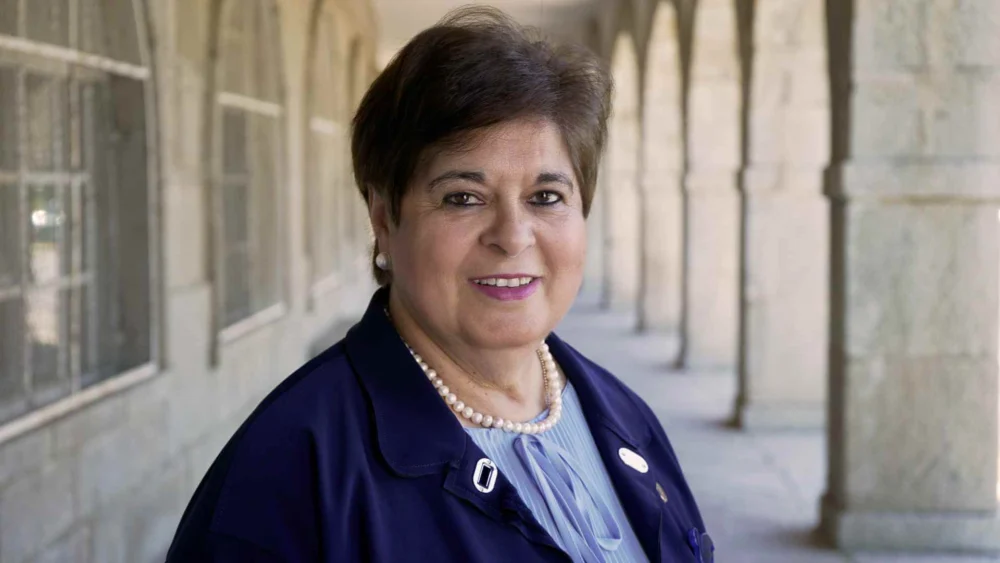
The landscape of Spanish higher education has undergone a profound transformation over the last two decades, marked by a shift toward digitalization, internationalization, and a gradual but steady increase in female representation within institutional leadership. At the center of this evolution stands María del Rosario Sáez Yuguero, the Rector of the Catholic University of Ávila (UCAV). Since assuming her position in 2007, Sáez Yuguero has not only served as a pioneer for women in academic administration—becoming the first female rector in the region of Castilla y León—but has also overseen the transition of a traditional institution into a modern, digitally integrated university. As the international community observes International Women’s Day, her career offers a case study in the intersection of professional vocation, institutional management, and the ongoing dialogue regarding gender parity in the public and private sectors.
The Professional Trajectory of a Pioneer
The path to the rectory for Sáez Yuguero was not a conventional administrative climb. A physician by training, her early professional life was defined by a commitment to rural medicine, a sector that demands both technical proficiency and a high degree of community integration. This background in healthcare provided a foundation for her later philosophy of "leadership as service." After transitioning into the academic sphere, she served in various capacities at the University of Murcia, including a tenure as dean. Her appointment to the head of the Catholic University of Ávila in 2007 occurred at a time when female rectors were a rarity in Spain.
According to data from the Conference of Rectors of Spanish Universities (CRUE), the percentage of women leading universities has historically lagged significantly behind the percentage of female students and faculty. Even as recently as the early 2020s, women occupied fewer than 25% of rectorate positions across Spain’s 80+ universities. Within this context, Sáez Yuguero’s 18-year tenure represents an anomaly of stability and institutional confidence. Her leadership has been characterized by a rejection of "numerical obsession" in favor of "effective equality," arguing that the true measure of progress is the removal of structural barriers that prevent women from choosing their own professional and personal paths.
Institutional Evolution: From Local to Global Digitalization
Under the leadership of Sáez Yuguero, the Catholic University of Ávila has aggressively pursued two strategic pillars: online education and internationalization. This shift was not merely a response to the global pandemic of 2020 but was a pre-existing strategy designed to increase the university’s reach and accessibility.
The integration of digital platforms has had a measurable impact on the demographics of the student body. Data indicates that online learning environments are particularly beneficial for "non-traditional" students, including working professionals and individuals with caregiving responsibilities. In Spain, where women still perform a disproportionate amount of unpaid domestic labor, the flexibility of asynchronous learning has proven to be a vital tool for professional advancement. Sáez Yuguero has emphasized that for online education to serve as a genuine vehicle for equality, it must maintain the same rigorous quality standards as face-to-face instruction, ensuring that a digital degree carries equal weight in the labor market.
Furthermore, the internationalization of UCAV has involved establishing partnerships with institutions across Latin America and Europe, positioning the Ávila-based university as a hub for Spanish-language higher education. This global outlook has allowed the institution to diversify its revenue streams and enhance its research capabilities, moving beyond its regional origins to become a competitive player in the private education sector.

Theoretical Frameworks of Leadership: The "Feminine Genius"
In discussing her approach to management, Sáez Yuguero frequently references the concept of the "feminine genius," a term popularized by Pope John Paul II in his 1995 "Letter to Women." This philosophical framework posits that women bring unique qualities to leadership, including a heightened focus on the person, empathy, and the creation of "family-like" environments within professional structures.
From a journalistic and sociological perspective, this approach to leadership offers an alternative to the "lean-in" style of corporate feminism. Rather than adopting traditionally masculine traits to succeed in a patriarchal hierarchy, Sáez Yuguero advocates for the valuation of traits such as "closeness" and "care." However, she remains cautious about over-generalization, noting that while these traits are often associated with female leadership, they are not exclusive to it. Her management style at UCAV has sought to balance this human-centric approach with the fiscal and administrative discipline required to run a modern university.
Addressing the Gender Gap in STEM and Education
A significant portion of Sáez Yuguero’s recent public discourse focuses on the educational pipeline and the societal pressures placed on young girls. Despite the fact that women now outnumber men in Spanish universities, significant disparities remain in Science, Technology, Engineering, and Mathematics (STEM) fields. Conversely, women are overwhelmingly represented in the humanities and social sciences.
Sáez Yuguero identifies a dual challenge in modern education. On one hand, there is a push to encourage girls to enter technical fields; on the other, she argues that young women are increasingly distracted by social media pressures regarding body image and aesthetic validation. Her analysis suggests that the "educational myth-making" surrounding girls needs to be dismantled. She posits that the focus should shift from "pleasing others" to "integral formation," encouraging young women to view themselves as future researchers, literati, and leaders. This perspective aligns with broader educational research suggesting that gender stereotypes in early education are a primary factor in the persistent "leaky pipeline" of women in high-level scientific research.
The Ethics of Equality: Beyond Quotas
One of the more provocative aspects of Sáez Yuguero’s stance is her critique of mandatory gender quotas. While acknowledging that legislative and normative advances have been essential in securing legal rights, she maintains that the ultimate goal should be "freedom of choice."
Her argument is rooted in the reality of the "double burden"—the challenge of balancing high-level professional responsibilities with family life. Sáez Yuguero suggests that a society that forces a 50/50 numerical split in every sector without addressing the underlying cultural value of caregiving may inadvertently pressure women into renouncing their personal desires for the sake of a statistic. "We should not be obsessed with having 50% women in every field," she noted in a recent reflection. "We should be obsessed with ensuring there are the same possibilities to achieve what we want, with the same freedom."
This viewpoint has drawn reactions from various sectors of the academic community. Supporters argue that it provides a more realistic and less performative approach to equality, recognizing the diversity of women’s life projects. Critics, however, suggest that without quotas, the "glass ceiling" remains too difficult to break, as institutional inertia often favors the status quo.

Overcoming the Fear of Failure
As a leader who has navigated multiple career transitions—from the clinic to the classroom to the rectorate—Sáez Yuguero identifies the "fear of failure" as a major psychological barrier for women in leadership. Her personal anecdotes regarding her appointment as dean at the University of Murcia serve as an illustration of this phenomenon. When offered the role, her initial reaction was one of surprise and hesitation, a common trait identified in psychological studies of "imposter syndrome" among high-achieving women.
Her advice to the next generation of female leaders is centered on the concept of "service." By viewing a position of responsibility as a service to the community rather than a personal accolade, she argues that the fear of personal failure is diminished. This shift in perspective allows for greater risk-taking and resilience. "One trips on a stone, and that makes one walk faster," she observed, framing failure not as a terminal point but as a necessary component of professional growth.
Conclusion: The Future of the University and Female Leadership
The 18-year tenure of María del Rosario Sáez Yuguero at the Catholic University of Ávila serves as a benchmark for the longevity and impact of female leadership in Spain. Her administration has successfully navigated the complexities of the 21st-century academic market, embracing digital transformation while maintaining a core philosophical identity.
Looking forward, the implications of her leadership style suggest a shift toward more flexible, person-oriented institutional models. As the Spanish university system continues to grapple with demographic shifts and the demands of the global economy, the lessons from UCAV’s internationalization and digital expansion provide a roadmap for other mid-sized private institutions.
Ultimately, Sáez Yuguero’s message on International Women’s Day is one of agency. Her career trajectory suggests that while the structures of power are slowly changing, the individual’s willingness to accept challenges, ignore the "fear of what others will say," and commit to a life of continuous learning remains the most potent tool for achieving real equality. The evolution of the Spanish university, much like the evolution of the role of women in society, remains a work in progress, but the presence of veteran leaders like Sáez Yuguero ensures that the path forward is informed by both experience and a clear vision for the future.




 Eva Lovia
 Julia Chirkova
 Julia Prastini
 Nila Kartika Wati
 Jia Lissa
 admin
admin