
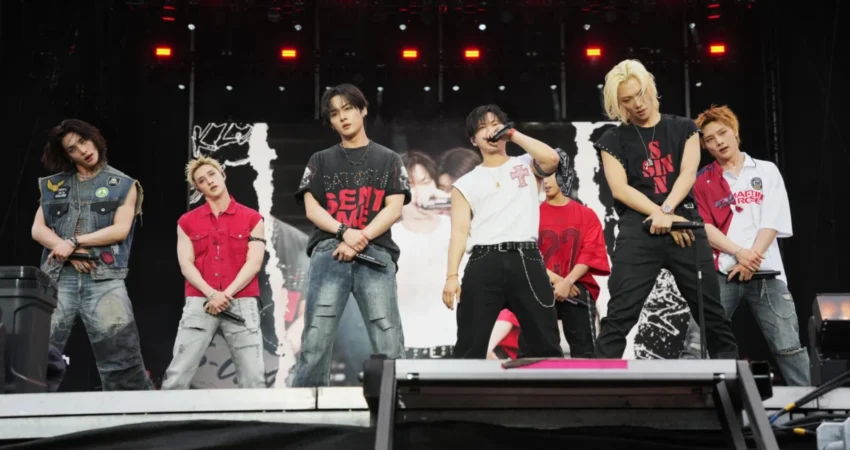
Mexican President Claudia Sheinbaum acknowledged a misunderstanding regarding the presence of the globally popular K-pop group Stray Kids at the National Palace on Thursday, September 24th. The President had previously announced that the band would be accompanying South Korean President Lee Jae Myung during his official visit to Mexico. However, Stray Kids did not appear at the presidential headquarters as anticipated, leading to the President’s public clarification of the situation.
A Case of Diplomatic Expectations and Fan Excitement
The mix-up began when President Sheinbaum, during her Thursday morning press conference, erroneously stated that Stray Kids would be present with President Lee. She described the group as being "kind of like BTS, but younger," and noted their current popularity among younger demographics. This announcement, intended to highlight a cultural exchange component of the South Korean President’s visit, generated considerable excitement among Stray Kids’ dedicated fanbase, known as "STAYs."
In response to the President’s remarks, dozens of fans converged outside the National Palace, anticipating a potential appearance by the K-pop idols. The Zócalo, the main public square adjacent to the palace, became a focal point for this gathering, with social media footage capturing the palpable anticipation of the assembled fans. Their presence underscored the significant cultural impact of K-pop and the deep connection fans feel with their favorite artists, even extending to expectations of official recognition and engagement.
The actual event saw only President Sheinbaum and President Lee Jae Myung appearing on the presidential balcony and greeting attendees at the palace entrance. The absence of Stray Kids, while likely a minor detail in the broader diplomatic agenda, created a moment of confusion and disappointment for the fans who had gathered in hope.
The President’s Clarification and Stray Kids’ Mexican Tour
Later that evening, President Sheinbaum addressed the situation in a video posted to her official TikTok account. She stated, "We are seeing off the president of the Republic of Korea, Lee Jae Myung. We thought perhaps he was coming with the group Stray Kids. They are performing tomorrow at one of Mexico City’s most important venues. And we have already invited them to come to our country on another occasion." This explanation aimed to clarify that the initial announcement was based on a misunderstanding and that the band’s presence at the National Palace was not part of the official itinerary.
Stray Kids are indeed scheduled to perform in Mexico City on Friday and Saturday, September 25th and 26th, at the prestigious Estadio GNP Seguros. These concerts are part of their highly anticipated "Dominate World Tour," which has seen immense success across various international markets. The group’s engagement with their Mexican fanbase through these live performances is a testament to K-pop’s expanding global reach.
K-Pop’s Diplomatic Currency: BTS and the New Generation
President Sheinbaum’s comparison of Stray Kids to BTS highlights the growing recognition of K-pop as a significant cultural force capable of influencing international relations and public diplomacy. The reference to BTS is particularly relevant, as the South Korean group had a memorable encounter with the Mexican President in May of the same year. During that visit, BTS members met with President Sheinbaum and appeared on the presidential residence’s balcony, waving to an estimated 50,000 members of their fanbase, ARMY, gathered in the Zócalo. This event, meticulously documented and widely shared, showcased K-pop’s ability to mobilize large, enthusiastic crowds and serve as a positive symbol of cultural exchange.
The age difference noted by President Sheinbaum – Stray Kids members ranging from 25 to 28, and BTS members from 29 to 33 – points to a generational shift in K-pop fandom and influence. While BTS has paved the way for global K-pop acceptance, groups like Stray Kids represent the next wave, attracting a new generation of fans and further solidifying K-pop’s presence on the world stage. President Sheinbaum’s comments suggest an awareness of this evolving landscape and an effort to connect with younger demographics through popular culture.
Implications of Cultural Diplomacy
The incident, though seemingly minor, sheds light on several key aspects of modern diplomacy and the role of popular culture:
- K-Pop as a Soft Power Tool: The enthusiastic response to the mention of Stray Kids underscores the power of K-pop as a soft power asset for South Korea. Their global popularity can be leveraged to foster goodwill and strengthen international ties, as evidenced by their inclusion in discussions during a presidential visit.
- Generational Appeal in Politics: President Sheinbaum’s attempt to connect with younger audiences by referencing a popular K-pop group demonstrates a strategic effort by political leaders to engage with demographics that may not typically follow traditional political discourse. Her nuanced understanding of the K-pop landscape, even if initially misapplied, suggests a deliberate attempt to bridge cultural divides.
- The Power of Fandom: The rapid mobilization of fans outside the National Palace highlights the immense power and organization of K-pop fandoms. These groups are not only dedicated consumers of music but also influential social and political actors capable of generating significant public attention.
- Navigating Cultural Nuances in Diplomacy: The misunderstanding serves as a reminder of the complexities involved in cultural diplomacy. While aiming to create positive associations, it’s crucial for official communications to be precise to avoid unintended consequences, such as raising fan expectations that cannot be met.
The invitation extended by President Sheinbaum to Stray Kids to visit Mexico on "another occasion" suggests a continued interest in fostering cultural exchange through K-pop. This approach aligns with broader efforts by governments worldwide to utilize popular culture as a means of strengthening international relations and promoting cultural understanding. As K-pop continues its global ascent, such instances of cultural diplomacy, even those marked by initial missteps, will likely become more common, reflecting the intertwined nature of entertainment, global influence, and international affairs. The success of Stray Kids’ concerts in Mexico City will undoubtedly further solidify their connection with Mexican fans and reinforce K-pop’s significant cultural footprint in the region.

0 Comments