
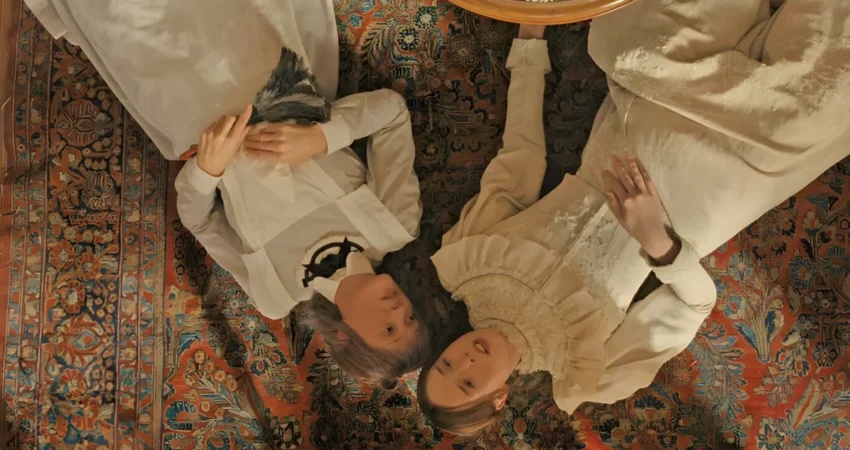
Netflix’s true crime anthology, Monster, has officially entered its fourth installment, shifting its focus from the notorious male serial killers of the 20th century to a historical figure whose name has been synonymous with American Gothic horror for over a century. Following the massive commercial success of seasons dedicated to Jeffrey Dahmer, the Menendez brothers, and the upcoming exploration of Ed Gein, creator Ryan Murphy has turned his lens toward Lizzie Borden. This latest iteration, titled Monster: The Lizzie Borden Story, marks a significant departure for the franchise by featuring its first female lead and employing a non-linear narrative that connects Borden’s 19th-century trial with other infamous female killers across history. The eight-episode miniseries has rapidly ascended to the top of the streaming giant’s global charts, reigniting public fascination with one of the most controversial acquittals in the American legal system.
The 1892 Murders and the Legend of Lizzie Borden
To understand the impact of the series, one must look at the historical foundation of the Borden case. On August 4, 1892, the quiet town of Fall River, Massachusetts, was rocked by the brutal axe murders of Andrew Borden and his wife, Abby Borden. Andrew, a wealthy but notoriously frugal businessman, was found slumped on a sofa, his face unrecognizable after being struck 11 times with a sharp object. Upstairs, Abby Borden was found in a pool of blood, having been struck 19 times.
The primary suspect was Andrew’s youngest daughter, Lizzie. The subsequent trial became a media sensation, often cited as one of the first "trials of the century." Despite significant circumstantial evidence—including Lizzie’s attempt to purchase prussic acid shortly before the murders and her burning of a blue dress she claimed was stained with "old paint"—she was acquitted by an all-male jury. The prevailing social sentiment of the Victorian era made it nearly impossible for the public to believe that a "well-bred" woman of her social standing could commit such a visceral act of violence.

The Netflix series utilizes this historical ambiguity to craft a narrative that is less about "did she do it?" and more about "why would she do it?" By leaning into the psychological toll of Gilded Age patriarchy, the show presents Borden not merely as a cold-blooded killer, but as a woman pushed to the brink by domestic stifling and psychological abuse.
A Trio of Infamy: Connecting Borden, Báthory, and Wuornos
One of the most discussed creative choices in Monster: The Lizzie Borden Story is its decision to interweave Lizzie’s narrative with two other historical figures: Elizabeth Báthory and Aileen Wuornos. This "triptych of terror" serves to highlight the series’ central theme of female rage and the different ways it has manifested—and been punished—across centuries.
Elizabeth Báthory, the 16th-century Hungarian countess known as "The Blood Countess," is often cited as the most prolific female serial killer in history. Legend suggests she bathed in the blood of young virgins to preserve her youth. In the series, Báthory represents the intersection of power, vanity, and madness, providing a supernatural and folkloric counterpoint to Borden’s grounded, domestic horror.
In contrast, the inclusion of Aileen Wuornos brings the narrative into the modern era. Wuornos, a highway sex worker who killed seven men in Florida between 1989 and 1990, claimed she acted in self-defense against attempted rapes. By linking Borden to Wuornos, Ryan Murphy draws a direct line between the domestic oppression of the 1890s and the systemic failures faced by marginalized women in the 1990s. This thematic bridge suggests that while the tools of violence change, the underlying catalysts—trauma, abuse, and the desire for autonomy—remain constant.

High-Stakes Production and Financial Investment
The fourth season of Monster carries the weight of a massive production budget, reflecting Netflix’s confidence in the brand. According to industry reports from What’s on Netflix, each of the eight episodes carried a price tag of approximately $7 million. This $56 million total investment is evident in the show’s meticulous period reconstruction.
The production design team focused heavily on the claustrophobic atmosphere of the Borden household on Second Street. Unlike the sprawling mansions of the era’s elite, the Borden home was famously cramped and lacked modern plumbing, a detail the series uses to heighten the sense of physical and emotional entrapment. The costume design also plays a pivotal role, using the restrictive corsetry and heavy fabrics of the 1890s as a visual metaphor for the societal constraints placed upon Lizzie.
Furthermore, the cinematography utilizes a desaturated palette for the Borden segments, contrasting sharply with the opulent, blood-soaked visuals of the Báthory flashbacks and the gritty, neon-lit aesthetic of the Wuornos sequences. This visual distinction allows the audience to navigate the three distinct timelines while maintaining a cohesive tonal thread of psychological unease.
Chronology of the Case and Series Development
The timeline of the Borden case remains a subject of intense study for historians and criminologists alike. The series follows a specific chronological trajectory to build tension:
- May 1892: Tensions in the Borden household reach a breaking point over Andrew Borden’s transfer of property to Abby’s family.
- August 3, 1892: The family suffers from a mysterious bout of food poisoning, which some believe was an early murder attempt by Lizzie.
- August 4, 1892: The murders occur between 9:00 AM and 11:00 AM.
- June 1893: Lizzie Borden is acquitted after a 13-day trial.
- Series Premiere: Netflix releases the fourth season in late 2024, immediately securing the #1 spot in over 40 countries.
The development of the series itself followed the massive 2022 success of Dahmer – Monster: The Jeffrey Dahmer Story, which garnered over 1 billion hours of viewing time in its first 60 days. Following the polarizing but highly-watched Monsters: The Lyle and Erik Menendez Story, the shift to a female protagonist was seen by analysts as a strategic move to diversify the anthology’s appeal and address criticisms regarding the "glorification" of male violence.
Critical Analysis and Societal Implications
The release of Monster: The Lizzie Borden Story has sparked a renewed debate regarding the ethics of the true crime genre. Critics have pointed out that while the series is a technical masterpiece, it takes significant "creative liberties" by framing Lizzie Borden’s alleged crimes as a form of feminist liberation. This "justifiable homicide" narrative has been a point of contention among historians, who argue that the real Lizzie Borden was a complex figure who may have been motivated more by financial greed than by a desire to escape patriarchal bondage.
However, from a sociological perspective, the show’s success highlights a growing cultural appetite for stories that explore "female fury." In an era where themes of bodily autonomy and systemic oppression are at the forefront of public discourse, Lizzie Borden serves as a dark avatar for the consequences of repressed anger.
The series also raises questions about the "Netflix Effect"—the platform’s ability to turn historical tragedies into bingeable entertainment. While the high production values and stellar acting (particularly from the lead actress portraying Borden) have been praised, some victim advocacy groups have expressed concern that the focus on the "monster" often overshadows the lives of those lost. In this case, the victims—Andrew and Abby Borden—are portrayed as catalysts for Lizzie’s descent rather than fully realized individuals, a common trope in Murphy’s biographical works.

Broader Impact on the Streaming Landscape
The dominance of Monster on the Top 10 charts underscores the enduring power of the true crime anthology. For Netflix, the series represents a "tentpole" franchise that guarantees high engagement and social media discourse. The strategy of releasing shorter, eight-episode seasons makes the content "marathon-able," fitting perfectly into the modern viewer’s consumption habits.
As the industry moves forward, the success of the Borden season likely signals a trend toward exploring historical female figures in the crime genre. By blending factual history with surrealist elements and social commentary, Ryan Murphy has successfully evolved the Monster brand from a standard biopic series into a broader exploration of the human psyche and the societal structures that produce "monsters."
Whether viewed as a chilling historical drama or a provocative commentary on gender and violence, Monster: The Lizzie Borden Story has cemented its place as a cultural touchstone. It challenges the audience to look beyond the nursery rhyme—"Lizzie Borden took an axe…"—and confront the uncomfortable realities of a woman who, whether guilty or innocent, became a permanent fixture in the American nightmare.

0 Comments