
 Eva Lovia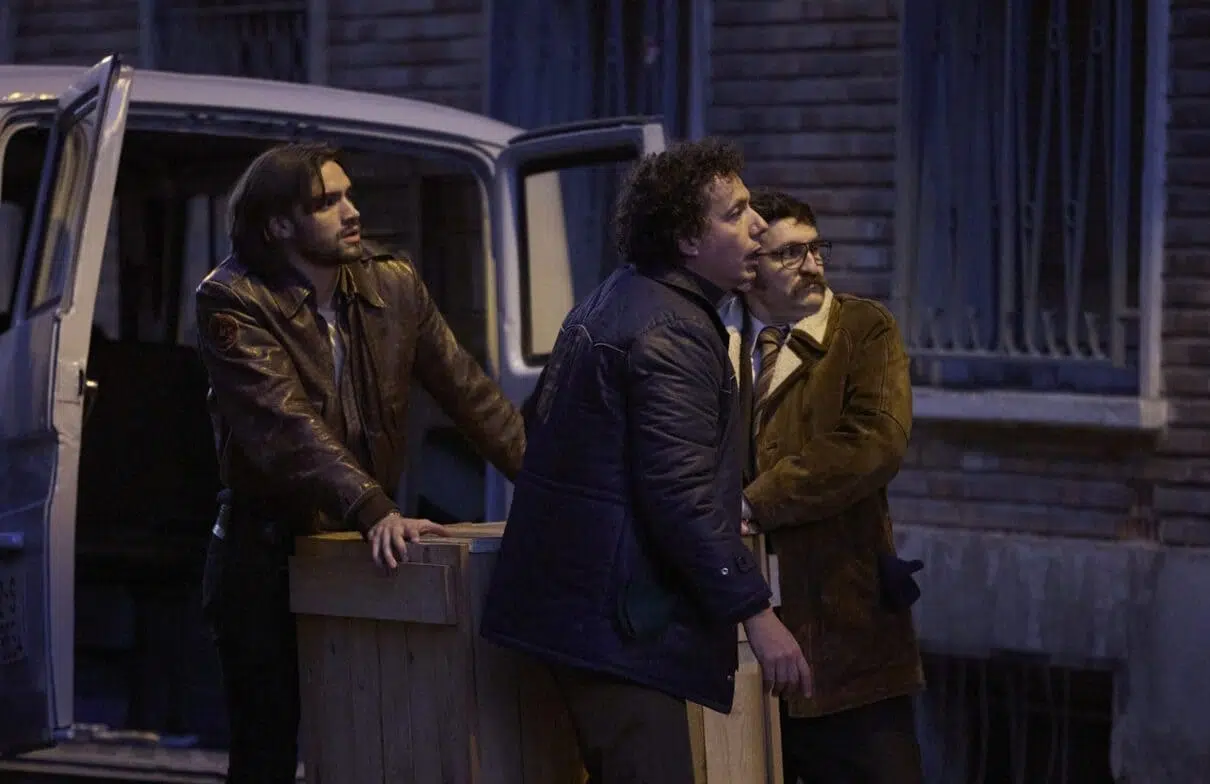
Movistar Plus+ is set to captivate audiences this March with the premiere of "Por Cien Millones" (For One Hundred Million), a highly anticipated miniseries that delves into one of the most shocking episodes in Spanish sports history: the 1981 kidnapping of FC Barcelona striker Enrique Castro, affectionately known as Quini. The complete three-episode series will be available on March 26th, promising a raw and unflinching portrayal of the events that gripped a nation.
The Unfolding of a National Crisis
The abduction of Quini, a beloved figure in Spanish football, occurred on March 1st, 1981. Following a pivotal match against Athletic Club at the Camp Nou, where Quini scored two goals in a 6-0 victory for Barcelona, the player was on his way home. He was driving his Alfa Romeo Alfetta when, according to reports, his vehicle was intercepted by another car. Eyewitness accounts at the time were scarce, adding to the immediate mystery and growing concern. Quini’s disappearance sent shockwaves through Barcelona and reverberated across Spain, paralyzing the sports world and sparking widespread public anxiety.
The football community reacted with a mixture of disbelief and solidarity. Clubs across La Liga observed moments of silence before matches, and tributes to Quini flooded the media. The Spanish national team, preparing for upcoming qualifiers, expressed their profound concern for their compatriot’s safety. The prolonged absence of Quini, a player known for his skill, dedication, and gentlemanly conduct on the field, left a palpable void.
The Miniseries: A Deeper Dive into the Perpetrators
"Por Cien Millones," created and directed by Nacho G. Velilla and Oriol Capel, aims to transcend the sensationalism of the kidnapping itself. The series focuses not only on the victim and the event but crucially on the individuals responsible. It presents the story through the eyes of three men, portrayed as desperate individuals trapped by economic hardship and a sense of futility. Their decision to embark on such a perilous act is depicted as a last resort, a crossing of a point of no return from which they could not retreat. The three-episode structure allows for a detailed reconstruction of their ill-conceived plan and the unfolding chaos that ensued, shaking the very foundations of Spanish society at the time.
The trailer for the series offers a stark preview of its tone: imbued with nerve-wracking tension and a raw, unvarnished portrayal of crime that eschews any romanticized notions. Early scenes vividly depict the moment of the kidnapping, characterized by improvisation and palpable fear. The narrative emphasizes that the plan quickly unravelled, diverging significantly from what the perpetrators had envisioned.
Voices of Desperation and Despair
The dialogue snippets released from the series underscore the desperation and amateurish nature of the crime. One of the characters can be heard exclaiming, "What the hell are we doing? Who the hell do we think we are?" This outburst reveals a dawning awareness that the situation has spiraled out of their control. The series positions these men not as hardened criminals, but as deeply flawed individuals grappling with their choices. Another line, "We’re pathetic losers playing at being bad guys," further encapsulates their perceived inadequacy and the flawed premise of their actions.
The unfolding chaos is palpable as one of the kidnappers expresses a desire to abandon the plan: "I’m going back." The urgency and disarray intensify as they intercept Quini. Commands like, "Get down. Come on, damn it," delivered with a mix of fear and haste, paint a picture of a botched operation. Even minor, unexpected details, such as the observation, "It has no clutch… it’s automatic," highlight the lack of preparation and the sheer disorganization that plagued their efforts.
This glimpse into the narrative suggests that "Por Cien Millones" is committed to presenting a true story through the lens of its protagonists’ vulnerabilities, moving away from the conventions of a typical thriller and delving into the realm of human drama.
The Cast and the Narrative Arc
The series boasts a strong ensemble cast. Raúl Arévalo, Vito Sanz, and Gabriel Guevara take on the challenging roles of the three kidnappers, bringing to life their flawed characters. Agustín Otón portrays the victim, Quini. The supporting cast includes Aixa Villagrán, Natalia Huarte, María de Nati, La Dani, Julia de Castro, Nacho Guerreros, Teresa Rabal, and Josele Román, all contributing to the authentic depiction of the era and the complex human tapestry surrounding the event.
The narrative reconstructs the harrowing 24 days Quini was held captive. After his disappearance from the Camp Nou, he was found in a hidden cellar in Zaragoza. The protracted nature of the ordeal amplified the national anxiety. The country collectively held its breath, awaiting news of the legendary footballer’s well-being. This period marked a significant moment in Spanish public consciousness, demonstrating the vulnerability of public figures and the pervasive fear that such criminal acts could instill.
Beyond the historical significance of the event, the fiction delves deeply into the motivations and circumstances of those responsible. It portrays them as ordinary men who, through a series of poor decisions and overwhelming pressures, found themselves in an extraordinary and ultimately self-destructive situation. The series suggests a central theme: that life rarely unfolds like the movies, and the perceived allure of being a "bad guy" quickly dissipates when confronted with the grim reality of criminal action.
Context and Chronology of the Quini Kidnapping
- March 1, 1981: Enrique Castro "Quini," then 31 years old and a star striker for FC Barcelona, is kidnapped after scoring two goals in a match against Athletic Club at the Camp Nou. He was driving home alone from the stadium.
- Initial Investigations and Public Reaction: Spanish police launch an immediate and intensive search. The news of Quini’s disappearance quickly spreads, causing widespread concern among football fans and the general public. Barcelona and other Spanish clubs express solidarity and offer support.
- 24 Days of Captivity: Quini is held in a hidden cellar in Zaragoza. The prolonged period of his absence fuels speculation and anxiety. Media coverage is intense, documenting every development and public reaction.
- February 25, 1981: Quini is rescued by police in Zaragoza after a tip-off. The perpetrators, identified as three working-class men from Barcelona facing financial difficulties, are apprehended. The successful rescue brings immense relief to the nation.
- Aftermath and Legal Proceedings: The kidnappers are brought to justice. The incident prompts discussions about crime, poverty, and the impact of high-profile abductions on society. Quini returns to football, though the experience undoubtedly leaves a lasting mark.
Broader Implications and Analysis
The kidnapping of Quini was more than just a criminal act; it was a moment that exposed societal anxieties and vulnerabilities. In 1981, Spain was still navigating its transition to democracy, and the crime resonated with a sense of uncertainty. The fact that the perpetrators were described as ordinary men driven by desperation added another layer of complexity to the public’s understanding of crime and its roots.
The miniseries "Por Cien Millones" is poised to reignite public interest in this historical event, offering a contemporary perspective on a crime that once dominated headlines. By focusing on the human element, both of the victim and the perpetrators, the series aims to provide a nuanced and thought-provoking narrative. Movistar Plus+ appears to be strategically positioning this series as a significant release, signaling a commitment to producing compelling, character-driven dramas based on true events. The choice to release the entire series at once allows viewers to immerse themselves fully in the story, potentially leading to widespread discussion and critical acclaim. The series’ approach, prioritizing psychological depth and the grim realities of crime over sensationalism, suggests it will be a compelling addition to the true-crime genre.



 admin
admin
 Raisa Andriana
 Pevita Pearce
 Julia Chirkova
 Julia Prastini