
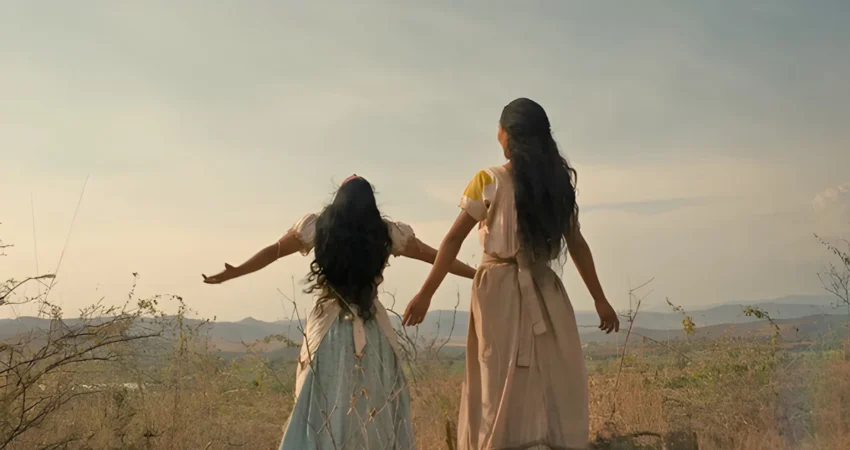
Netflix has significantly intensified its investment in high-production-value Mexican content, pivoting from generic procedurals to sophisticated adaptations of canonical Latin American literature. The latest manifestation of this strategy is the release of Mal de amores, a seven-episode miniseries that has rapidly ascended to the platform’s Top 10 rankings following its debut. Set against the turbulent backdrop of the Mexican Revolution, the series recontextualizes one of the most studied eras of the 20th century by placing female autonomy and intellectual ambition at the forefront of the narrative. By blending a classic romantic triangle with a rigorous exploration of social upheaval, the production aims to capture both the traditional "telenovela" audience and a more discerning viewership interested in historical authenticity and literary depth.
The series is an adaptation of the 1996 novel of the same name by Ángeles Mastretta, a seminal figure in contemporary Mexican letters. The project carries a unique creative lineage, as it was brought to the screen by the author’s daughter, filmmaker Catalina Aguilar Mastretta. This familial connection has been noted by critics as a primary reason for the show’s faithful adherence to the source material’s tone, which balances poetic lyricism with a gritty depiction of a nation in the throes of violent transition.
The Literary Foundation and the Rómulo Gallegos Milestone
To understand the cultural weight of the Mal de amores adaptation, one must look back to the mid-1990s. When Ángeles Mastretta published the novel in 1996, it was immediately hailed as a masterpiece of "post-boom" Latin American literature. In 1997, the work was awarded the Rómulo Gallegos International Novel Prize, arguably the most prestigious literary accolade in the Spanish-speaking world. Mastretta’s victory was a historic milestone, as she became the first woman to receive the award since its inception in 1964, joining the ranks of literary titans such as Mario Vargas Llosa, Gabriel García Márquez, and Carlos Fuentes.
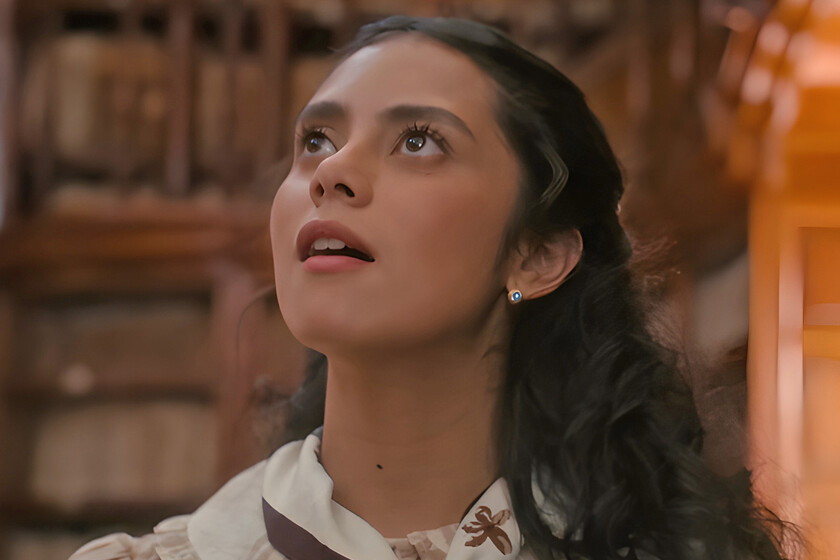
The novel was praised for its ability to weave the personal and the political. While the "Boom" generation often focused on grand male figures—dictators, generals, and revolutionaries—Mastretta shifted the lens to the domestic and professional lives of women who were navigating the same historical currents. The Netflix adaptation seeks to replicate this by focusing on Emilia Sauri, a protagonist whose desire to practice medicine serves as a radical act of defiance in a society that viewed female education as an anomaly or a threat.
Narrative Structure and the Central Conflict
The plot of Mal de amores centers on Emilia Sauri, a young woman raised in a liberal household in Puebla during the final years of the Porfiriato, the thirty-year dictatorship of Porfirio Díaz. Her father, a man of progressive ideals, encourages her intellectual pursuits, leading her to seek a career in medicine—a field almost exclusively reserved for men at the time. However, her journey is complicated by the outbreak of the Mexican Revolution in 1910 and her emotional entanglement with two starkly different men.
The first, Daniel Cuenca, is a childhood friend who matures into a fiery, restless revolutionary. He represents the visceral passion and the chaotic, often violent, pursuit of liberty that defined the era. His character serves as a conduit for the audience to witness the front lines of the rebellion, the ideological fractures within the movement, and the high cost of radicalism.
The second, Antonio Zavala, is a physician who offers a different path. Zavala represents stability, science, and the reconstruction of a broken society. Through him, Emilia finds the mentorship and the structured environment necessary to pursue her medical dreams. The conflict is not merely a choice between two suitors, but a choice between two ways of existing in a changing Mexico: one defined by the adrenaline of the battlefield and the other by the disciplined service of the clinic.

Historical Chronology and Contextual Accuracy
The series spans several decades, meticulously tracking the timeline of the Mexican Revolution. Viewers are introduced to the "Pax Porfiriana," a period of outward stability and inward inequality, before being thrust into the Maderista uprising of 1910. The narrative follows the subsequent periods of "Decena Trágica" (the Ten Tragic Days) and the constitutionalist struggle led by Venustiano Carranza.
Production designers and historians were reportedly consulted to ensure that the visual language of the series—from the architecture of Puebla to the medical instruments used by Emilia—accurately reflected the 1910-1920 period. This attention to detail extends to the portrayal of the "Soldaderas," the women who traveled with the revolutionary armies. While Emilia is not a traditional soldadera, her role as a healer provides a parallel narrative of female contribution to the war effort, emphasizing that women were not merely observers of history but active participants in its survival and documentation.
Strategic Significance for Netflix in the Mexican Market
The release of Mal de amores is part of a broader initiative by Netflix titled "Que México se vea" (Let Mexico be seen). This initiative is a response to increasing competition from other streaming giants like Amazon Prime Video and Max (formerly HBO Max), both of which have been aggressively acquiring rights to Latin American literary properties. For instance, Prime Video recently launched a high-budget adaptation of Como agua para chocolate, while Netflix itself is preparing a massive adaptation of Gabriel García Márquez’s Cien años de soledad and has recently released a film version of Juan Rulfo’s Pedro Páramo.
Data suggests that historical dramas and literary adaptations perform exceptionally well in the Mexican and broader Latin American markets. These productions offer a sense of cultural prestige that standard "binge-watch" content lacks. By securing the rights to Mastretta’s work, Netflix is tapping into a pre-existing fan base of millions who read the book over the last three decades, while also providing younger audiences with a modernized entry point into Mexican history.
Creative Direction and Production Values
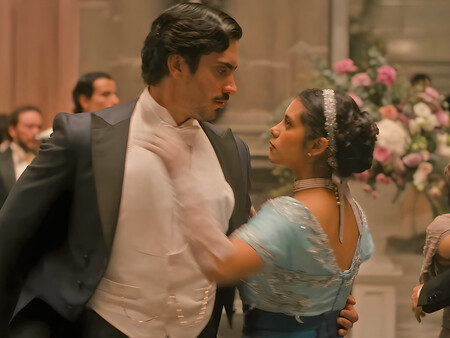
Catalina Aguilar Mastretta’s direction is characterized by a "feminine gaze" that prioritizes the internal emotional landscape of the characters. Unlike many historical epics that focus on the scale of battles, Mal de amores focuses on the intimacy of the choices made in the shadows of those battles. The cinematography uses a warm, nostalgic palette for the early scenes in Puebla, which gradually shifts to harsher, more desaturated tones as the revolution consumes the country.
The casting of the series was a critical component of its early success. By selecting actors who could portray the transition from youth to adulthood over the course of seven episodes, the production maintains a sense of continuity and growth. The chemistry between the leads has been cited in social media trends as a driving factor for the show’s "viral" status, though critics have been quick to point out that the show’s intellectual rigor prevents it from devolving into a standard period romance.
Broader Implications and Cultural Impact
The success of Mal de amores signals a shift in how Mexican history is consumed by global audiences. For decades, the Mexican Revolution was portrayed through a lens of machismo and martyrdom. This series, following the path blazed by the original novel, argues that the true revolution was also happening within the domestic and professional spheres.
Furthermore, the series addresses themes that remain relevant in contemporary Mexico, such as the struggle for female professional recognition and the tension between political activism and personal stability. By framing these modern concerns within a historical context, the show provides a mirror for current social discourses regarding gender equality and the role of the intellectual in times of national crisis.

Comparison with Contemporaneous Productions
Mal de amores does not exist in a vacuum. It follows a wave of "prestige" Mexican content that seeks to elevate the country’s cinematic reputation on the global stage. Comparisons have been drawn to Pedro Páramo, directed by Rodrigo Prieto, which also debuted recently on Netflix. While Pedro Páramo leans into the surrealism and ghost-story elements of the "Boom" generation, Mal de amores represents the more grounded, character-driven realism of the "Post-Boom."
The series also competes directly with Prime Video’s upcoming slate of Mexican originals, including science fiction projects and censored literary classics. The rivalry between these platforms is resulting in a "Golden Age" of Mexican streaming content, where budgets are higher, scripts are more sophisticated, and the talent pool—both in front of and behind the camera—is being utilized to its full potential.
Conclusion and Viewing Information
With only seven episodes, Mal de amores is designed for a focused, high-impact viewing experience. Its rapid ascent to the Top 10 confirms that there is a significant appetite for content that respects the intelligence of the viewer while delivering a compelling emotional narrative. As Netflix continues to roll out its literary adaptation roadmap, Mal de amores stands as a benchmark for how to successfully translate a complex, award-winning novel into a format that resonates with the digital age without losing its historical or literary soul. The series is currently available for streaming globally, providing an accessible gateway into the heart of the Mexican Revolution and the indomitable spirit of the women who lived through it.

0 Comments