
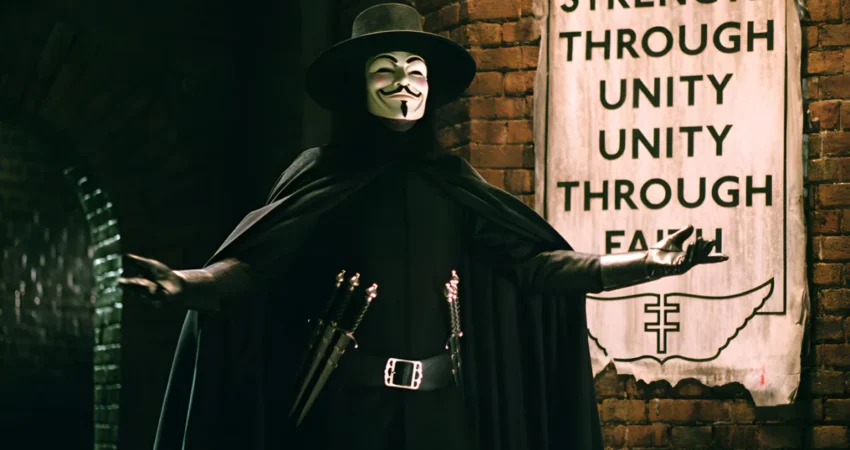
The re-release of the 2005 cinematic landmark V for Vendetta on major streaming platforms like Netflix has reignited a global conversation regarding the intersection of speculative fiction and contemporary political reality. Directed by James McTeigue and written by the Wachowskis, the film remains a definitive pillar of the dystopian genre, blending high-concept science fiction with a provocative exploration of civil liberties, state-sponsored fear, and the power of historical memory. Starring Academy Award winner Natalie Portman and Hugo Weaving, the production has transcended its status as a mid-2000s blockbuster to become a cultural touchstone for political activists and scholars alike.
The narrative, set in a near-future United Kingdom, depicts a society under the grip of the Norsefire party, a neo-fascist regime that rose to power following a period of global instability and a devastating pandemic. In this environment, the state maintains order through the strict regulation of information, the suppression of dissent, and a pervasive surveillance apparatus. The story follows Evey Hammond, a young woman who becomes the unlikely protégé of a masked revolutionary known only as "V." Clad in a stylized Guy Fawkes mask, V orchestrates a series of theatrical and violent acts designed to dismantle the government and inspire the populace to reclaim their autonomy.
The Literary Genesis and the Influence of Thatcherism
To understand the depth of V for Vendetta, one must look back to its origins in the early 1980s. The film is an adaptation of the seminal graphic novel written by Alan Moore and illustrated by David Lloyd. First serialized in 1982, the comic was born out of the specific sociopolitical climate of the United Kingdom under the administration of Prime Minister Margaret Thatcher. Moore and Lloyd envisioned a future that exaggerated the conservative and authoritarian trends they perceived in the British government of that era, including the centralization of power and the marginalization of minority groups.

While the film adaptation shifted some of the comic’s overt anarchism toward a more traditional liberal-democratic struggle against fascism, it retained the core philosophical conflict. The production arrived in theaters in late 2005, a period defined by the global "War on Terror" and the implementation of the Patriot Act in the United States. Critics at the time noted that the film’s themes of government-monitored communications and the use of fear to justify the suspension of civil rights were direct reflections of the post-9/11 legislative landscape. This layering of 1980s political critique with 21st-century security concerns has contributed to the film’s enduring status as a versatile allegory for state overreach.
Historical Foundations: The Gunpowder Plot of 1605
The central motif of V for Vendetta is inextricably linked to a pivotal event in British history: the Gunpowder Plot of 1605. The film’s recurring mantra, "Remember, remember, the 5th of November," refers to the failed attempt by a group of provincial English Catholics to assassinate King James I and blow up the House of Lords during the State Opening of Parliament.
The historical chronology of this event provides the essential context for V’s mission:
- Early 1604: Robert Catesby, the leader of the conspirators, begins recruiting individuals disillusioned with the King’s failure to grant religious tolerance to Catholics.
- May 1604: The conspirators lease a cellar extending under the House of Lords.
- October 1605: Thirty-six barrels of gunpowder are successfully moved into the cellar.
- November 4–5, 1605: Guy Fawkes, an explosives expert who had served in the Spanish military, is discovered in the cellar with a lantern and matches. He is arrested, tortured, and eventually executed.
- 1606 to Present: The Observance of 5th November Act was passed, establishing an annual public day of thanksgiving. Over centuries, this evolved into "Bonfire Night," where effigies of Fawkes are burned.
In the film, V subverts this tradition. Rather than celebrating the failure of the plot, he adopts the visage of Guy Fawkes to represent a successful rebellion against tyranny. This historical inversion serves to highlight the film’s message that "ideas are bulletproof" and that the symbolic power of an individual can survive long after their death.

Production Analysis and Performance
The technical execution of V for Vendetta remains highly regarded by industry professionals. James McTeigue, making his directorial debut after serving as an assistant director on The Matrix trilogy, utilized a visual palette that emphasized the contrast between the sterile, cold environments of the Norsefire government and the rich, chaotic, and artistic sanctuary of V’s "Shadow Gallery."
Hugo Weaving’s performance is frequently cited as a masterclass in physical acting. Because his character never removes the mask, Weaving was required to convey complex emotions—rage, sorrow, and wit—entirely through vocal inflection and body language. Opposite him, Natalie Portman underwent a significant physical transformation, famously shaving her head on camera for a pivotal scene depicting Evey’s imprisonment and psychological liberation. Portman’s portrayal of Evey serves as the emotional anchor of the film, charting a credible path from a fearful citizen to a determined revolutionary.
The film also features a robust supporting cast, including John Hurt as Chancellor Adam Sutler. In a meta-textual irony, Hurt had previously starred as Winston Smith in the 1984 film adaptation of George Orwell’s Nineteen Eighty-Four, playing the victim of a totalitarian state. In V for Vendetta, he occupies the opposite role as the architect of the oppression.
Modern Parallels and Contemporary Political Discourse
In the decades following its release, V for Vendetta has frequently been invoked during periods of social and political unrest. The most visible legacy of the film is the adoption of the Guy Fawkes mask by the hacktivist collective Anonymous. Since 2008, the mask has appeared at protests globally, from the Occupy Wall Street movement to anti-government demonstrations in Hong Kong, Turkey, and Brazil. It has become a universal symbol for the faceless citizen standing against perceived institutional corruption.
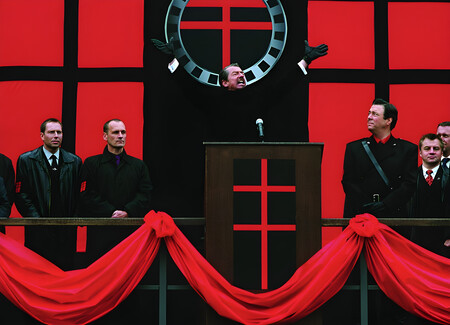
Recent years have seen a surge in analytical pieces drawing parallels between the film’s fictional "Norsefire" regime and the rise of populist and nationalist movements in the West. As noted in the original reporting, the Milwaukee Independent published a detailed comparison between the film’s depiction of authoritarian control and the political climate in the United States. Analysts point to several key features of the film that mirror modern concerns:
- Media Manipulation: The character of Lewis Prothero, the "Voice of London," serves as a precursor to modern "outrage-based" media figures who use propaganda to maintain a state of constant public anxiety.
- The Use of Emergencies: The film reveals that the ruling party manufactured a biological crisis to seize power, a plot point that has been discussed extensively in the context of how modern governments handle public health and national security emergencies.
- Surveillance Technology: The film’s "Finger" (the secret police) and "Ear" (the surveillance division) reflect contemporary debates over data privacy and the use of artificial intelligence in state monitoring.
Critical and Commercial Legacy
Upon its initial release, V for Vendetta was a commercial success, grossing over $132 million worldwide. However, its critical standing has only grown over time. On the review aggregator Rotten Tomatoes, the film maintains a high audience approval rating of 90%, reflecting its status as a "cult classic" that has successfully crossed over into the mainstream.
While Alan Moore famously distanced himself from the adaptation—as he has done with all cinematic versions of his work—David Lloyd, the illustrator, expressed support for the film, noting that it captured the essence of the original message for a new generation. The film’s ability to provoke thought while delivering high-stakes entertainment ensures its place in the pantheon of significant science fiction.
Broader Impact and Implications
The return of V for Vendetta to streaming services occurs at a time of heightened global sensitivity to the themes of censorship and civil disobedience. The film serves as a cautionary tale about the fragility of democracy and the ease with which fear can be weaponized to dismantle the rule of law. By grounding its fantastical elements in the real history of the 1605 Gunpowder Plot and the very real political tensions of the 1980s and 2000s, the movie provides a framework for viewers to analyze their own political environments.

Ultimately, V for Vendetta is more than a story of revenge; it is a meditation on the responsibility of the individual within a collective society. Its conclusion, which depicts a mass of citizens marching on Parliament while wearing the same mask, suggests that true change does not come from a single hero, but from the collective recognition of shared values and the courage to demand them. As the film begins to trend once again on digital platforms, its message remains clear: the price of freedom is eternal vigilance, and the power of the people is the only true check on the power of the state.

0 Comments