
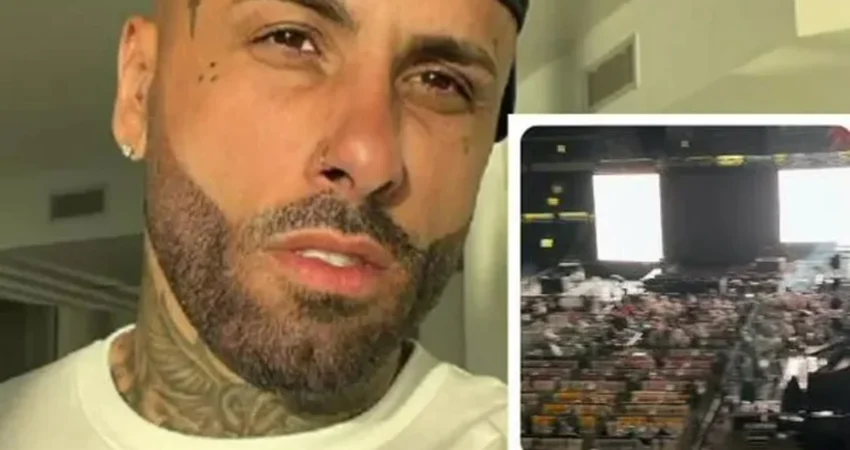
The recent concert by reggaeton superstar Nicky Jam at Cali’s Estadio Pascual Guerrero on Saturday, November 21st, has ignited a fervent debate across social media platforms, fueled by circulating videos that appear to depict hundreds of empty seats and vast unoccupied areas within the stadium. These visuals have led to widespread speculation regarding the event’s attendance and overall success, prompting questions about whether it represented a commercial shortfall or a different kind of engagement. While official statements from the artist or organizers remain absent, reports emerging from the entertainment sector suggest a nuanced explanation, pointing towards a potential social purpose behind the event and cautioning that the widely shared footage might represent isolated moments rather than the full picture of the night’s proceedings.
The controversy began to unfold as concertgoers shared videos and images captured during the event. These recordings prominently displayed large sections of the stadium’s grandstands with visibly vacant seating, contrasting sharply with the areas immediately surrounding the main stage, where a noticeable concentration of attendees was present. The stark visual disparity quickly became a talking point, with users on various social media channels questioning the turnout for a performer of Nicky Jam’s stature. The reggaeton icon, a globally recognized figure with a career spanning over two decades, is accustomed to drawing massive crowds, making the images of apparent low attendance particularly striking.
Unpacking the Discrepancy: Social Purpose vs. Commercial Expectations
In response to the burgeoning debate, several reports originating from within the Colombian entertainment industry have offered a counter-narrative. These accounts suggest that the concert at the Estadio Pascual Guerrero may not have been conceived as a purely commercial venture in the traditional sense. Instead, the emphasis is placed on a potential "social purpose" driving the event’s design and attendance strategy. While specific details of this social objective remain undisclosed, this framing implies that factors beyond ticket sales and maximizing audience numbers might have influenced the event’s execution.
This perspective suggests that the distribution of attendees, with a denser crowd near the stage and sparser attendance in the upper tiers, could be a deliberate outcome of the event’s specific aims. It’s possible that the organizers prioritized a particular atmosphere or experience for a select group, or that the ticketing and access arrangements were structured differently to accommodate a broader community outreach or charitable component. Without official clarification, this remains a point of conjecture, but it offers a plausible explanation for the visual discrepancies that have captured public attention.
Furthermore, a crucial element of the ongoing discussion involves the timing of the video recordings. Several social media users, while sharing their observations, have also raised the possibility that the viral clips were captured during transitional periods of the evening. It is not uncommon for large-scale events to experience staggered arrival times, with attendees gradually filling seats as the main performances commence. Early-bird attendees might have found themselves in less populated sections before the event reached its peak capacity. The possibility that the videos represent moments before the stadium was fully occupied, or during intermissions, is a significant factor that many have pointed to as a potential explanation for the perceived low turnout.
A History of Positive Engagement in Colombia
The controversy surrounding the Cali concert arrives on the heels of a period of positive engagement between Nicky Jam and Colombia. Days prior to his performance, the artist garnered significant media attention for announcing a philanthropic initiative to support schools in Buenaventura, a coastal city in the Valle del Cauca department. This gesture was widely lauded by his fans and underscored a commitment to giving back to the communities he visits. This earlier announcement had cast a positive light on his presence in the country, making the subsequent debate about attendance figures all the more perplexing for some.
Nicky Jam’s connection with the Colombian public runs deep. He has visited the nation numerous times throughout his illustrious career, fostering a strong rapport with his fanbase. His collaborations with local artists have further solidified this bond, and his concerts are consistently among the most anticipated events in major Colombian cities. This established history of successful and well-attended performances amplifies the surprise and scrutiny surrounding the images from Cali.
Analyzing the Implications: Beyond the Headlines
The debate over Nicky Jam’s Cali concert highlights a broader trend in the live entertainment industry, particularly concerning the interpretation of visual media and the nuances of event management. In an era dominated by social media, images and videos can be disseminated rapidly, often without full context. This can lead to swift judgments and widespread speculation, sometimes overshadowing the actual intricacies of an event.
The potential for a "social purpose" to influence event logistics also raises questions about how such events are communicated to the public. If an event deviates from a purely commercial model, clearer communication about its objectives and structure could preempt misunderstandings and manage expectations more effectively. The lack of official statements from Nicky Jam or the event organizers leaves a vacuum that is readily filled by speculation, further fueling the debate.
The current situation in Cali is not isolated. This past week has been a notable period for urban music events in Colombia, with other concerts also drawing attention for various reasons, including attendee complaints. This collective spotlight on the organization and execution of urban music festivals in the country underscores the scrutiny faced by promoters and artists alike. The outcome of this debate could have implications for how future events are planned, promoted, and perceived by the public in Colombia and potentially across Latin America.
The Artist’s Legacy and the Power of Perception
Nicky Jam’s career is a testament to his enduring appeal in the urban music genre. With over two decades of hits that have resonated globally, his tours have consistently filled stadiums and coliseums across Latin America. This impressive track record makes the images of seemingly empty seats in Cali particularly jarring for his dedicated fan base. Supporters have actively defended the artist online, emphasizing his extensive history of drawing large crowds and urging others not to judge an entire event based on limited visual evidence. They argue that the videos may have been captured at specific, unrepresentative moments, and that the overall experience for those present was likely a positive one.
The conversation is further enriched by the context of Nicky Jam’s broader philanthropic activities. His commitment to supporting educational initiatives in Buenaventura demonstrates a desire to impact communities beyond mere entertainment. This facet of his persona, when juxtaposed with the controversy, adds layers to the public’s perception of his motives and the nature of his engagement with Colombia.
As the videos continue to circulate, interspersed with memes and impassioned defenses, the discussion surrounding the Nicky Jam concert in Cali remains vibrant. The current uncertainty surrounding the attendance figures and the event’s true purpose underscores the challenges of definitively assessing large-scale events in the digital age. Until an official clarification emerges from the artist or the organizers, the Estadio Pascual Guerrero will remain a focal point for a debate that delves into the complexities of live entertainment, public perception, and the power of visual media. The lingering questions leave the public and fans alike awaiting further details that could shed light on what truly transpired that Saturday night.

0 Comments